




Tennessee HVAC Help

What to do when the AC goes out in Tennessee

RepairCentral ACTennessee
Step 1 of 2

What ZIP code is the job in?

My AC stopped working, what should I do first?

Your AC quits and the house starts warming up fast, especially with a Tennessee summer pushing heat and humidity through every window. Before you panic or start taking things apart, there are a few quick checks that tell you whether this is something simple or something that needs a qualified technician.

Check the thermostat and breaker before you call anyone

Look at the thermostat first. Make sure it's set to cool and the temperature is actually below the room temperature, and check if the display is blank or dim, which usually means a dead battery. Next, go to the breaker box and look for a tripped breaker for the air handler or the outdoor unit. If the breaker trips again right after you reset it, stop. That's a sign of a short or an electrical problem, not something to keep resetting. Also check the outdoor unit for ice on the coil or lines. If the system runs but doesn't cool, or trips breakers, or the outdoor fan isn't spinning, the problem is inside the equipment and needs a licensed technician who works on these systems regularly.

A gray-haired man in a dark sweater sits on a light gray sofa in a living room, looking toward a sunlit window with trees outside.
A gray-haired man in a dark blue sweater sits on a light gray sofa in a sunlit living room, looking off to the side, with a potted plant, shelving unit, and large glass doors behind him.
A bearded man with graying hair in a dark green sweater sits on a sofa in a living room, looking off to the side, with a sliding glass door and a dim kitchen doorway behind him.
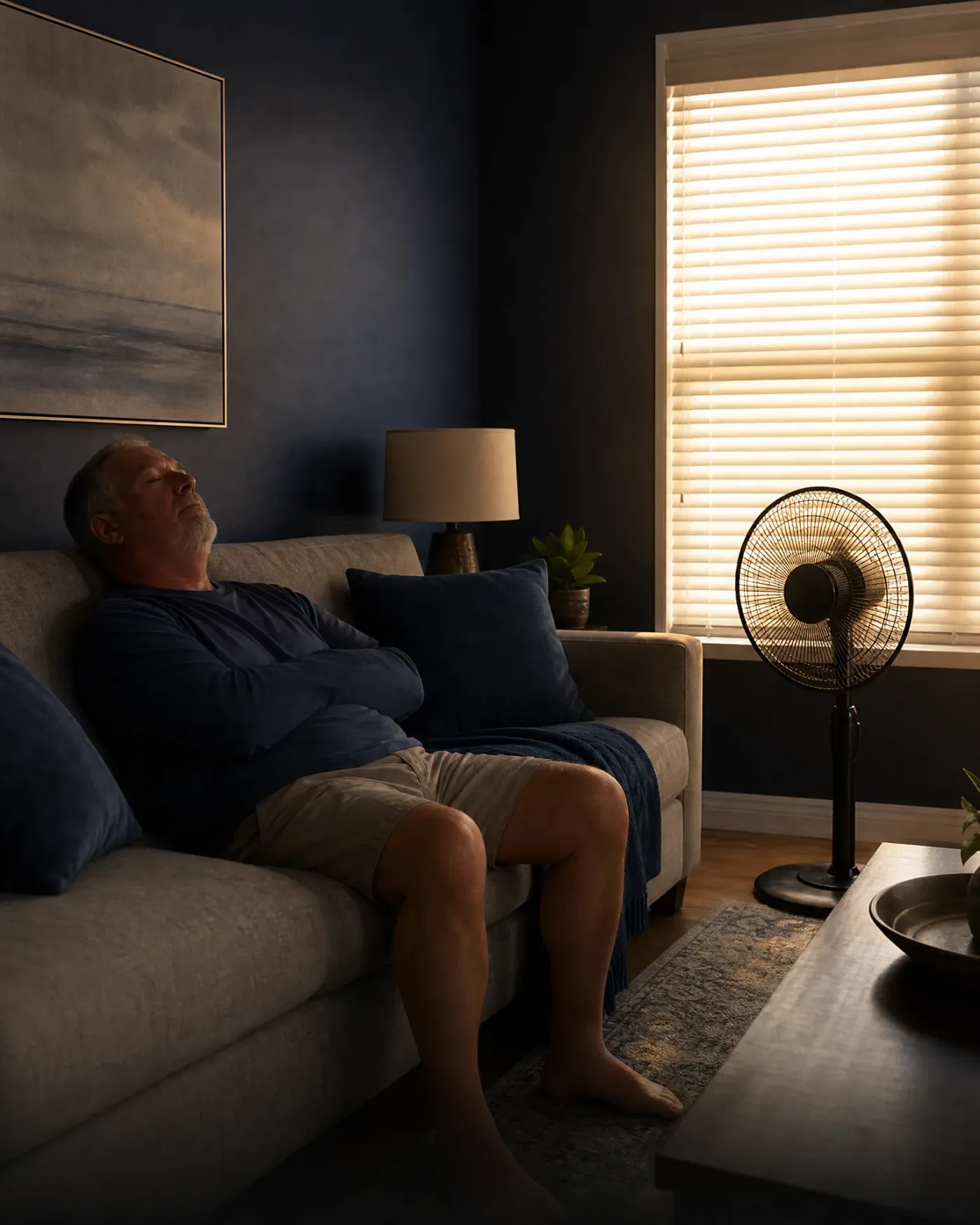
A gray-haired man in a dark knit sweater sits on a light gray sofa in a living room, looking toward a sunlit window, with houseplants, a lamp, and framed art in the background.

Fix It or Replace It

Call a Repair Tech

  • A licensed tech can usually tell what failed within minutes of checking the outdoor unit and the air handler.
  • Capacitors, contactors, and blower motors get replaced on the spot in most visits, without touching the rest of the system.
  • If the compressor and coils are sound, repair gets cold air moving again without the cost of a new system.
  • A system that was cooling fine until one part quit is a strong sign the rest of the unit still has life in it.
  • Tennessee summers don't pause for a diagnosis, so getting a tech out fast matters more than figuring out the exact part yourself.

Consider Replacement

  • A system that's needed several repairs in the last couple of summers is telling you something about what's coming next.
  • Warm electric heat bills and high summer cooling bills together point to a system losing efficiency across the board.
  • If the compressor itself has failed, that's usually the point where a tech will tell you repair isn't worth it.
  • A unit that's run since before current efficiency standards took hold may cost more to keep patched than to replace.
  • Replacing before a full breakdown means you're not stuck without cooling in the middle of a heat wave while parts get ordered.
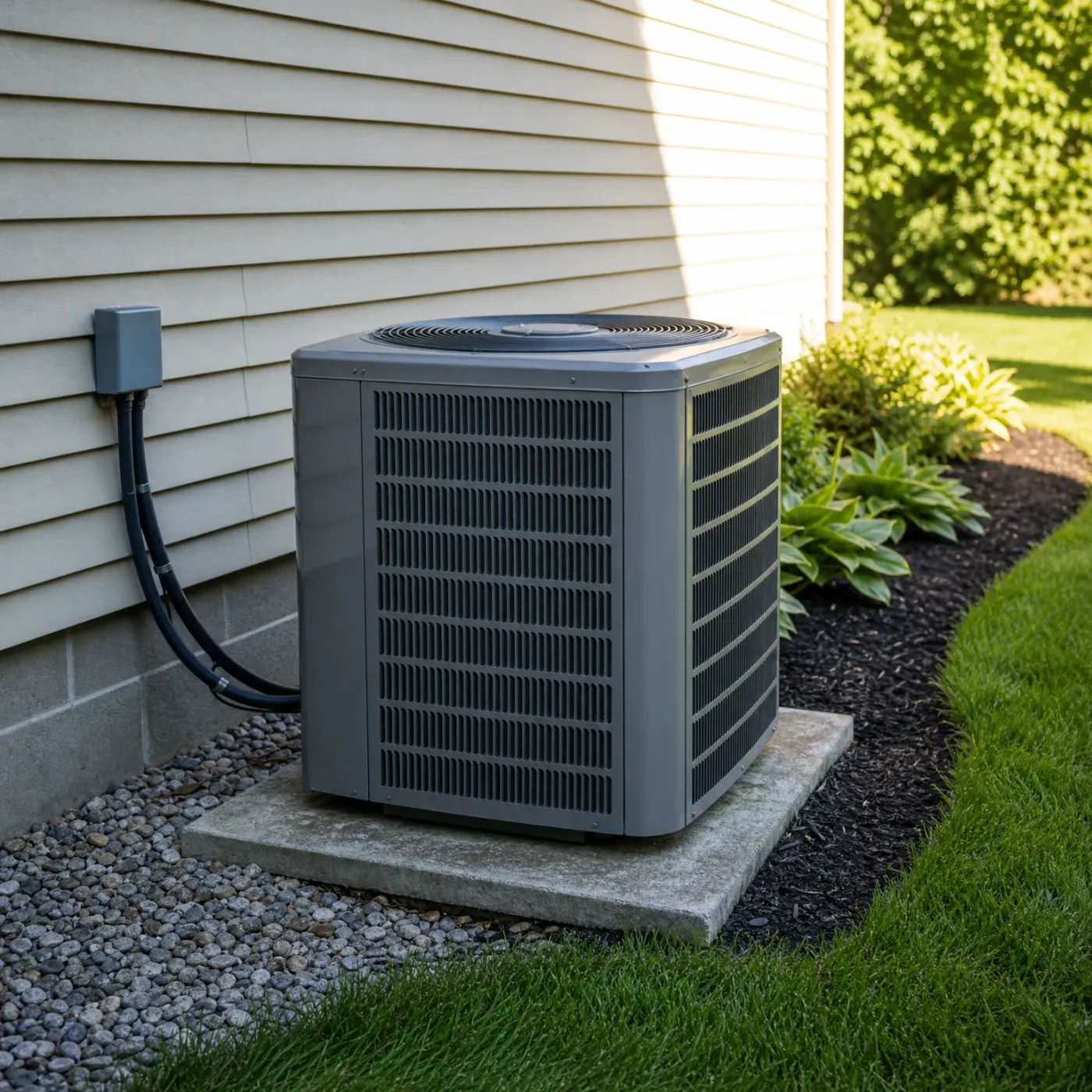
An outdoor air conditioning condenser unit on a concrete pad beside a house with horizontal lap siding, with a gray electrical disconnect box and conduit on the wall, mulch bed and shrub to the right, and mown grass in the foreground.

Running the way it should

A clean condenser like this one pulls air through the coil without a fight. The fins stay clear, the fan moves full air across them, and the system sheds heat the way it was built to. On a muggy Tennessee afternoon, that difference decides whether your house actually cools down.

An outdoor air conditioning condenser unit on a concrete pad beside a house with light blue horizontal siding, with a shrub to the left and a conduit and disconnect box on the wall to the right.

Choked with dust and debris

When the coil guards look like this, the unit is working harder to move the same amount of air. Airflow drops, the coil can't shed heat properly, and the compressor runs longer to make up for it. Left alone through a Tennessee summer, that strain is what ends in a breakdown.

Is your house getting warmer by the hour?

You might notice the air coming from the vents feels room temperature instead of cold, or the outdoor unit has gone quiet when it should be running. Some homes get a burning smell near the air handler, or water pooling around the indoor unit. On a Tennessee afternoon in July or August, a house with no air conditioning can climb past 85 degrees indoors within a few hours, and the humidity makes it feel worse than the number says. For anyone with small kids, older family members, or health conditions that don't do well in heat, that climb matters. Left alone too long, warm, damp air indoors also gives mold a place to start, especially in rooms that already run humid.

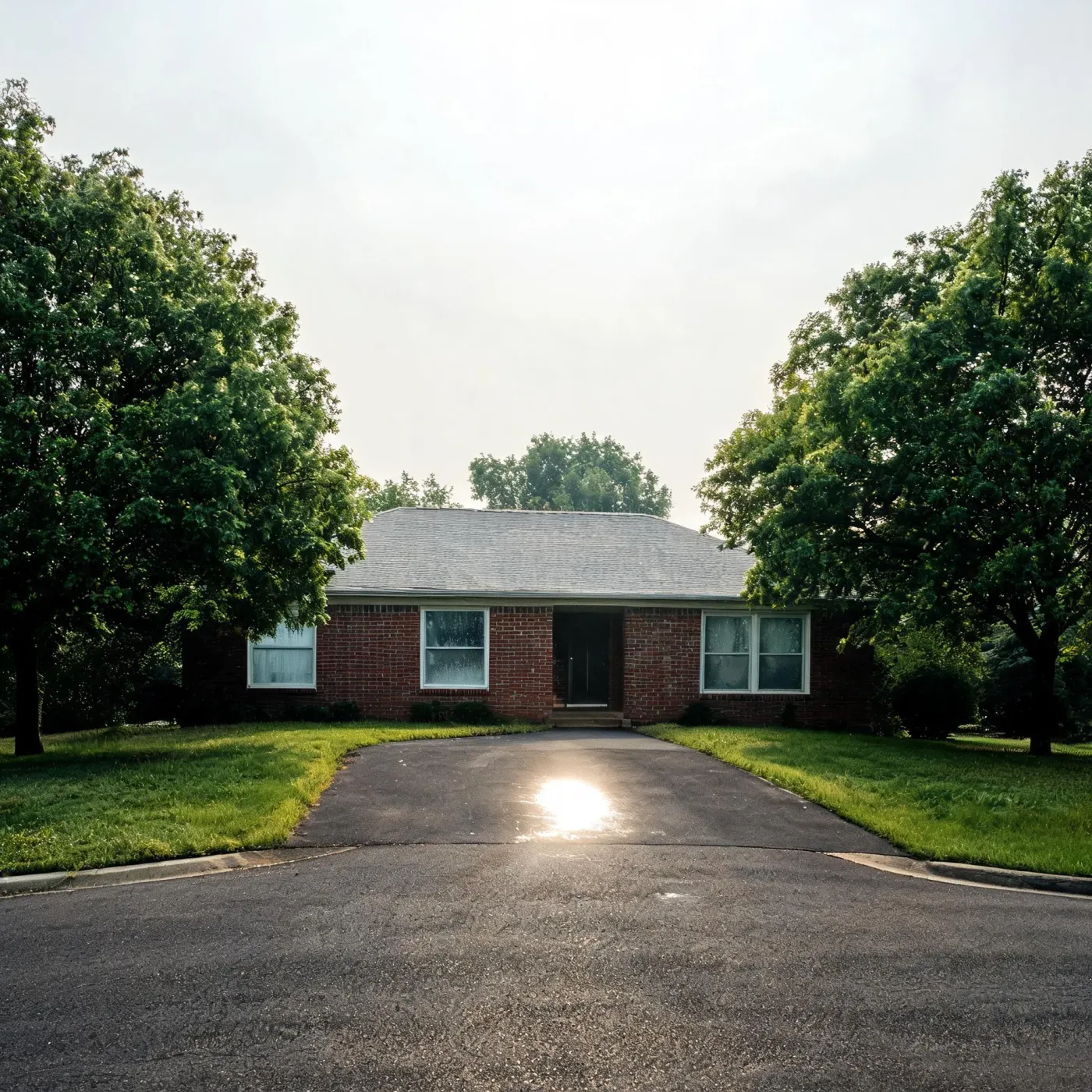
A single-story red brick ranch house with a gray shingled roof, white-framed windows and a central dark front door, fronted by a wide asphalt driveway, green lawn and large deciduous trees on both sides under a bright hazy sky.

The National Weather Service puts the average summer dew point across Tennessee at 66°F for June, July and August. That's thick, sticky air, the kind that sits on your skin instead of drying off it. Your AC isn't just cooling that air, it's also pulling the moisture out of it, and that second job is what wears on the system most through the summer. When the unit quits in air this heavy, the house doesn't just warm up, it starts feeling damp within the hour. That's the point where waiting costs you comfort fast. Send the request and the search for someone qualified is off your plate. A local tech who works this equipment all summer knows what tends to fail first in air this humid.

NASA POWER T2MDEW county cells weighted by homes

Done looking for an air conditioner pro

A broken AC in a Tennessee summer turns into a bad week fast, with the dew point as high as it's been and no sign of a break in the heat. Every hour spent calling around is an hour the house keeps climbing past 80. Send the request once and a local contractor who works on this equipment all summer long picks it up, the kind who's seen that specific blower motor or contactor fail a dozen times this season alone and knows it on sight. That's the person showing up, not a dispatcher reading you a script, and not five different companies competing for the callback while your house sits there warming up. Get the request in and let someone who knows these systems take it from here.

Why a stopped AC heats up fast

An air conditioner doesn't just cool the air, it pulls moisture out of it. Once the compressor stops, both jobs stop at once. Warm air keeps coming in through the walls and windows, and with nothing pulling the humidity out, the house feels hotter than the thermostat number suggests. That's why a stalled system in Tennessee turns into a bad afternoon within an hour or two, not a slow drift upward. The dew point in the high 60s means the air outside is already heavy with water, so the house has no dry air to borrow from while it waits on a fix.

Why a quick fix usually holds

Most AC failures trace back to one part: a capacitor that's lost its charge, a contactor with burnt contacts, or a condenser fan motor that's seized. None of these require opening up the ductwork or touching the refrigerant lines. A tech who works on this equipment all summer can usually spot the failed part on sight, test it to confirm, and swap it from a stocked truck. That's why most repair visits end with the system running again the same day, rather than a return trip or a wait on parts.

A middle-aged woman with shoulder-length dark hair, wearing a gray cardigan over a cream top, sits in an upholstered armchair and looks toward a sunlit window, with a shelf holding framed pictures and a plant behind her.
A woman with her hair in a bun holds a sleeping young child against her chest, both wrapped in a textured beige knit blanket on a sofa in a dimly lit room with a lamp, framed picture, and bookshelf behind them.

Your system has two main parts working together, the outdoor unit and the air handler inside, and either one can be the reason it quit. Outside, the compressor needs a capacitor to kick it on, and when that capacitor weakens, the unit just sits there. Sometimes the problem is simpler than that. A contactor can fail and cut power to the outdoor unit entirely, while the blower inside keeps running and pushing air that never gets cold. The condenser fan matters too. It pulls air across the coil so the system can dump heat, and if that motor seizes, the compressor can be working hard with nowhere for the heat to go. Refrigerant that's run low causes its own chain reaction, icing the coil until a safety switch shuts everything down to protect the compressor. Even the drain line inside plays a part, since a clog there can trip a float switch for the same reason. A tech checking these with a meter usually narrows it down fast.

What's Actually Happening Inside the Unit

  • The compressor sits outside and pumps refrigerant through the coil, and it won't run if the capacitor that starts it has gone weak.
  • A failed contactor can leave the outdoor unit silent while the indoor blower keeps pushing room-temperature air through the vents.
  • The condenser fan has to spin fast enough to pull air across the coil, and a seized motor stops that heat exchange even if the compressor still tries to run.
  • Low refrigerant doesn't just mean weak cooling, it can frost the coil and eventually trip a safety switch that shuts the whole system down.
  • The air handler inside has its own motor and a drain line, and a clogged drain can trip a float switch that cuts power as a safeguard against water damage.
  • Most of these parts can be tested with a meter in a few minutes, which is why a tech often knows the cause before opening the unit up.
A gray outdoor air conditioning condenser unit on a concrete pad beside a house with horizontal siding and a stone veneer base, with refrigerant line and electrical disconnect box on the wall and flowering shrubs to the left.
A clean coil and clear fins let this unit pull full airflow and shed heat the way it was designed to.
An outdoor air conditioner condenser unit on a concrete pad beside a house with light gray horizontal siding, with mulch and green shrubs on either side and a concrete walkway in the foreground.
Dirt-packed fins and a weathered cabinet make the compressor work harder and can push it toward failure.
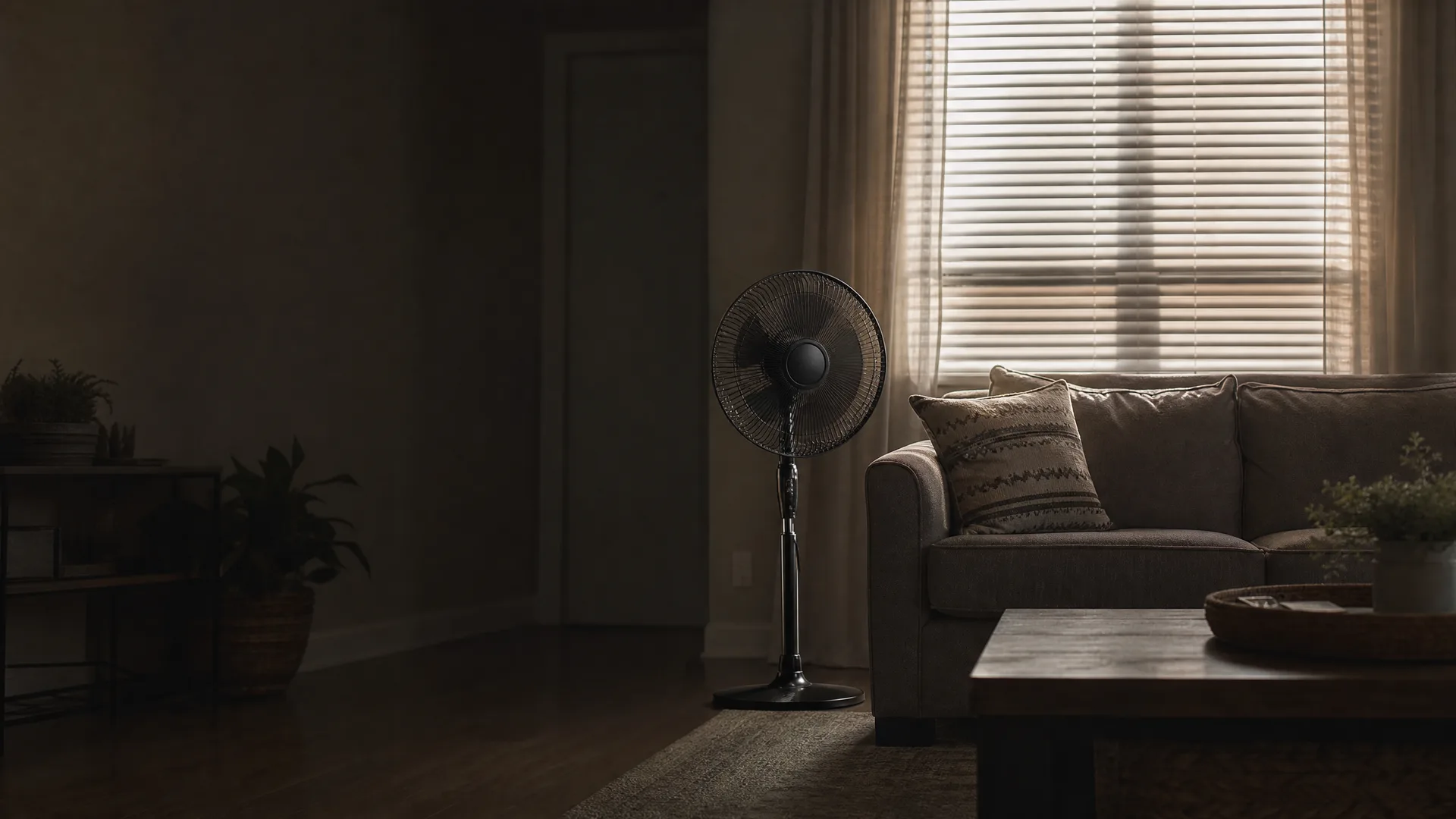
A dimly lit living room with a black pedestal fan on a wood floor beside a gray sofa with a patterned pillow, a wooden coffee table in the foreground, potted plants at left, and a curtained window with blinds behind.

By three in the afternoon the blinds are shut tight against the sun, and the living room still holds the heat anyway. The floor fan next to the couch is going on high, pushing the same warm air around instead of cooling anything. Your shirt is sticking to your back. You can feel the humidity in the room, thick enough that nothing dries off, not the fan, not the glass of ice water sweating on the side table. The vents overhead aren't moving air at all. Outside, the condenser sits quiet in the sun, and the house just keeps climbing past where it should be this time of day.

Power costs 13.22 cents per kilowatt-hour statewide

At 13.22 cents a kilowatt-hour, running your AC hard through a Tennessee summer still adds up, but it's cheap enough that a repair tech fixing the real problem beats you second-guessing the thermostat to save a few dollars. The bigger cost is a system limping along on a bad part, drawing power without actually cooling the house.

EIA-861 2025 statewide residential average

A gray outdoor air conditioner condenser unit on a concrete pad beside a house with horizontal vinyl siding, surrounded by mulch, flowering shrubs, and lawn.

Clean and clear

This condenser sits on its pad with the coil fins open and the fan unobstructed. Air moves through it the way the system was built to move it, and the unit sheds heat as fast as the compressor produces it. Mulch and shrubs nearby don't block the sides, so it keeps working the way it should.

A weathered outdoor air conditioning condenser unit on a concrete pad beside a house with light horizontal siding, an electrical disconnect box and conduit on the wall, and mulched soil on either side.

Caked in grime

This one's fins are packed with dirt and debris, and the cage around it is coated the same way. Air can't pass through a blocked coil, so the compressor runs harder and longer to do the same job. The conduit and disconnect box still work fine, but the coil behind that grime is what decides if the house cools down.

A warm house and a quiet outdoor unit mean the same thing: something failed, and it needs a licensed hand to find it. That part hasn't changed since the first section. What a stopped AC needs now is someone who works on these systems every day in Tennessee summers and knows which part tends to go first, a weak capacitor, a bad contactor, a blower motor on its way out. Send the request and it goes to one licensed contractor local to you, not a handful of companies competing for the callback. That's who shows up, already familiar with what this heat and humidity do to a condenser. The house will keep warming until the system runs again, but finding the right person for the job is no longer something you have to sort out on your own.

A gray outdoor air conditioning condenser unit on a concrete pad beside a house with light horizontal siding, with gravel, dark mulch, shrubs and lawn nearby and a conduit box on the wall.

It's off your list after this

Find a licensed air conditioner pro

The pro who reaches out is licensed in Tennessee.

No charge to send it. You decide if you hire them.