










How often to clean a dryer vent in Tennessee

A local pro who cleans dryer vents gets in touch with you.

Find a dryer vent pro

Clean your dryer vent once a year. That's the baseline for most Tennessee homes, and it holds whether you run the dryer twice a week or every day. Lint builds up inside the duct a little at a time, and once enough collects, air can't move through the way it should. The dryer then runs longer to dry the same load, and the heat that should vent outside stays trapped in the line. In summer, when the house is already working to stay cool against the humidity, a clogged vent adds heat the house then has to fight off. If your vent run is long, has several bends, or vents out through the roof instead of a wall, lint collects faster and a year is too long to wait. Watch for clothes coming out hotter than usual or taking more than one cycle to dry. Either one means the vent needs attention before the year is up.

A white hooded exhaust vent with a louvered opening mounted on white horizontal lap siding, with blank white space at right.

Why humidity changes the math

Tennessee summers run sticky, and that moisture doesn't stop at the window. Damp air gets pulled into the dryer vent along with lint, and the two combine into a paste that sticks to the inside of the duct instead of blowing through. A dry climate lets loose lint travel further before it catches on anything. Here, it catches sooner, which is part of why waiting past a year lets the buildup get ahead of you.

A metal hooded exterior vent cover screwed to beige horizontal lap siding, next to a plain white wall corner.

What a blocked vent does

A dryer forces hot, wet air out through that duct every time it runs. When lint narrows the path, the air has nowhere to go, so it backs up into the machine. The dryer runs hotter and longer to dry the same load, and the heating element works harder against the blockage. Electric rates here are low, but a dryer fighting a clogged vent still uses more power than one venting freely, cycle after cycle.

Is your dryer taking longer than it used to?

You load the same towels, the same jeans, and now it takes two cycles to get them dry. The top of the dryer feels hot to the touch. The laundry room holds onto heat long after the cycle ends, and in July that's the last thing you want. You might catch a faint burning smell, or notice lint turning up around the door seal instead of staying in the trap. Open the outside vent hood and the flap barely lifts, or doesn't lift at all. A blocked vent makes the dryer work harder to push air through, and that's wear the machine doesn't need. Left long enough, the heat has nowhere to go but back into the duct.

  1. Lint builds up along the inside walls of the duct.

  2. Trapped humidity turns that lint into a sticky paste.

  3. The paste narrows the duct and blocks airflow.

  4. A tech runs a brush through the full length of the vent.

A white hooded exterior vent cover with a louvered underside, screwed to beige horizontal lap siding above a lighter stucco lower wall.
A vent cap like this one moving air freely is what clears out on a normal cleaning visit.
A beige plastic dryer vent hood mounted on horizontal vinyl siding, with clumps of gray lint protruding from the open flap.
Lint pushing out past the louvers like this means the duct is already blocked, not just due.

Clean Now or Clean Later

Clean on schedule

  • A tech runs a brush and vacuum through the duct once a year, before the paste has a chance to form.
  • Airflow stays close to what the dryer was built to move, so the sensor cuts the cycle off at the right time.
  • The laundry room stays close to room temperature during a cycle instead of holding heat.
  • Lint gets cleared while it is still loose, before summer humidity turns it sticky.
  • A once-a-year visit is one call, scheduled around your laundry routine instead of a breakdown.

Wait for symptoms

  • Towels and jeans start taking two cycles instead of one, and that's the duct telling you airflow is down.
  • Lint has time to combine with summer humidity into a paste that clings to the inside of the duct.
  • The dryer runs hotter and longer to push air through a narrowing passage, and the laundry room holds that heat.
  • Lint pushing out past the vent cap louvers means the blockage has already reached the outside end.
  • Waiting usually means a harder cleaning job, and sometimes a second call if the first pass can't clear it all.
A smiling woman with long dark hair in a gray sweater sits at a white stone counter with a glass of white wine, with a kitchen, fireplace and sofa visible behind her.
A smiling woman with dark hair in a cream sweater sits at a marble table with a glass of red wine, with a lit lamp, sofa, fireplace and kitchen counter behind her.
A woman in a cream sweater laughs while seated at a marble countertop with a glass of red wine, with a dimly lit living room and sofa behind her.
A woman in a beige turtleneck sweater with her hair up sits laughing and looking to the side at a white marble table with a glass of red wine, in a dimly lit interior with a lamp and seating area behind her.

Get the right pro for your dryer vent

Skip calling around for someone who cleans dryer vents.

You're not committing to anything by asking.

Cleaning it yourself

A lint brush from the hardware store reaches a few feet into the duct, and that's usually as far as it goes. Most Tennessee homes run a duct longer than that, with at least one bend between the dryer and the wall cap. The paste that humidity forms doesn't come loose with a brush pass or two, and you can't see how far back the blockage runs or whether you got all of it. It's a reasonable first step for a duct you know is short and straight. For anything longer, or anything you haven't checked in a while, you're working blind.


Having it done right

A contractor brings a brush built for the full length of the duct and a vacuum strong enough to pull out what the brush loosens, including the stretch past any bends you can't reach on your own. That means not hunting for someone available this month, not calling three companies to compare quotes, not re-explaining the layout of your laundry room each time. You get matched with someone who handles this, and they reach out to set it up. The duct gets checked end to end, not just the part within arm's reach.

A white hooded dryer vent mounted on horizontal lap siding, with a thick mass of gray lint clogging the opening beneath the hood.
Before you get your dryer vent cleaning
A metal hooded dryer vent with a louvered opening mounted on beige horizontal lap siding above a concrete foundation wall.
After you get your dryer vent cleaning
A white louvered dryer vent hood mounted with four screws on beige horizontal lap siding above a gray stucco foundation and concrete walkway.

What a clear vent hood looks like

The louvers sit open and the cap stays fastened flat against the siding. Air pushes out freely every time the dryer runs, and nothing collects at the opening. This is what a visit should leave you with.

A white plastic dryer vent hood mounted on beige horizontal vinyl siding, with lint clogging its lower opening and a concrete foundation below.

What a blocked vent hood looks like

Gray lint packs the opening and pushes past the louvers instead of staying inside the duct. Air that should vent outside is fighting through a cap that's nearly sealed shut. At this point the duct behind it is likely worse than the cap shows.

Power costs 13.22 cents per kilowatt-hour statewide

Most homes here heat with electricity, and at 13.22 cents a kilowatt-hour a blocked dryer vent costs you more with every load. The dryer runs longer to push air through a narrowed duct, and that extra run time shows up on the bill long before anything breaks.

EIA-861 2025 statewide residential average

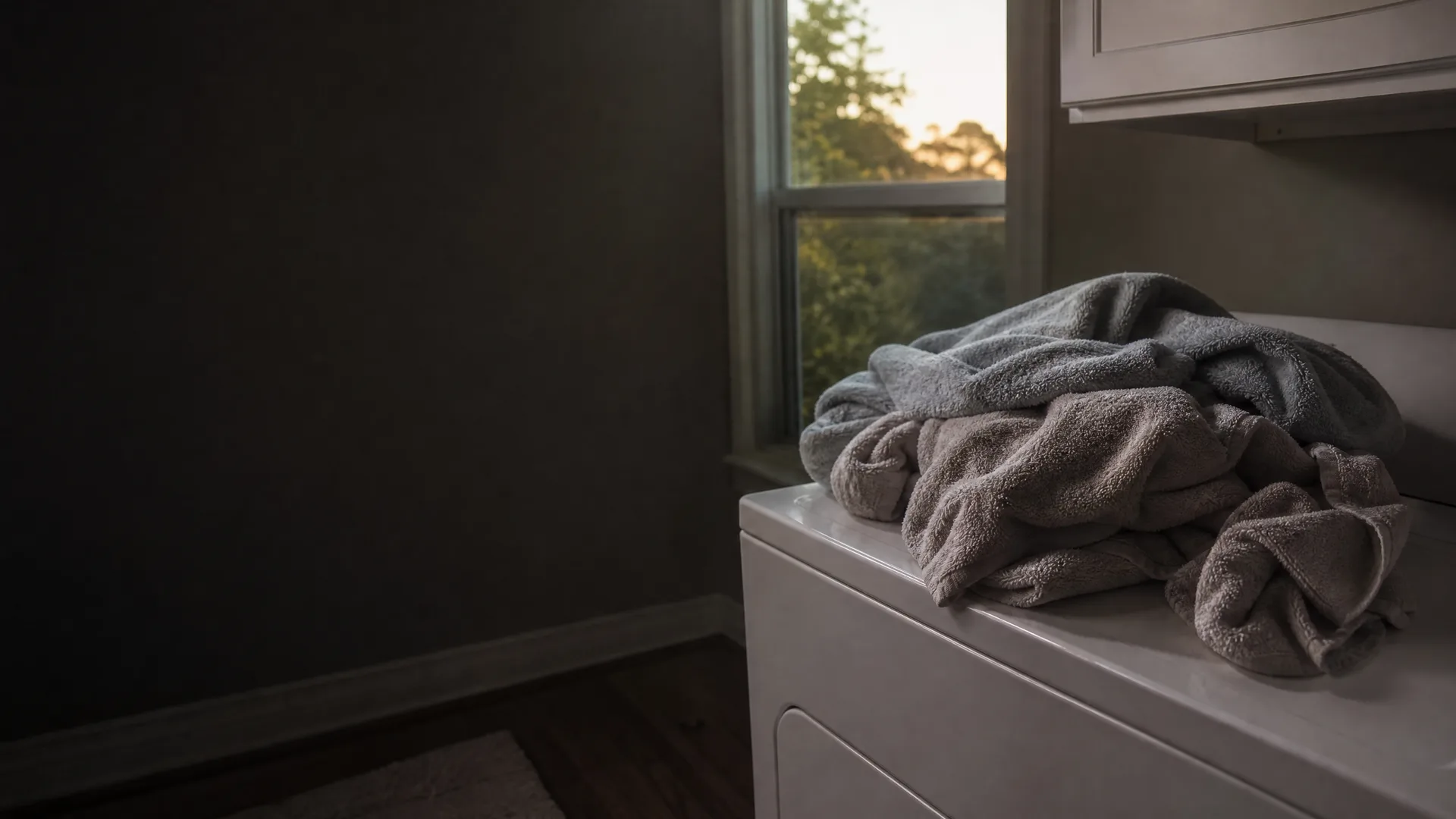
A pile of gray and taupe towels sits on top of a white laundry appliance in a dim room beside a window with trees and sunlight outside.

It's almost nine on a Tuesday and you're still in the laundry room. The dryer clicked off twenty minutes ago but the towels on top are still damp, cool at the center where your hand presses in. You run it again anyway, because what else do you do, and the room stays warm and close the way it does in a Tennessee summer with the door shut. You fold what's dry and leave the rest piled on the lid, telling yourself you'll check it before bed. Outside, the air is thick enough that opening a window doesn't help much either.

A woman stands in the open black front door of a white-sided house with a dark shingled roof while a man in a navy jacket approaches along the walkway, with lantern wall lights, a potted shrub, and flowering garden beds nearby.

Once a year, and you're done thinking about it

A dryer vent in Tennessee needs cleaning once a year. You've seen why: the humidity, the paste it makes with lint, the longer dry times, the higher bill. None of that changes by wishing the dryer worked harder. It changes by getting the duct cleared before it closes up again.

What's left is the part that actually eats your evenings, finding someone who does this, checking they know what they're doing, getting them on the phone, explaining the same thing twice. Answer a few questions here and a contractor who handles dryer vents in your area will reach out to you directly. No list of names to sort through, no second call to make. Just someone who already knows what you need, getting in touch.

A wooden table holding a stone vase with a bare branch, two stacked books and a small dark bowl, beside a window with green foliage outside and a sofa in the dim background.
A metal hooded exterior vent cover mounted on dark gray horizontal lap siding, photographed at an angle along the wall.

A pro who works on dryer vents

Answer a few questions about the dryer vent cleaning and skip the search.

Duct and vent cleaningTennessee
Step 1 of 3

What kind of equipment?