Mini Split Installation in Chattanooga, TN
A new system here will heat from October through April and cool from May through September every year. Tell us about the house, and a licensed contractor who covers Hamilton County will get in touch.
Tell us about the job
It takes about a minute.
What Hamilton County asks of a mini-split
Your mini-split works year round here. Winters average 32°F and homes need heat from October through April. Summer afternoons average 87°F and the same unit switches over to cooling from May through September. There is no real off season. The equipment runs almost every month.
A new unit installed now has to meet the federal minimum for split-system heat pumps. That is 14.3 SEER2 for cooling and 7.5 HSPF2 for heating. A ductless mini-split falls under this same standard. There is no separate rule for it.
- 7 months
- October through April, your system heats
- 5 months
- May through September, it cools
- 32°F
- the average winter night it heats against
- 87°F
- the average summer afternoon it cools against
NOAA nClimDiv, 1991–2020 normals
- Is a mini split worth it?
- For most homes here, yes, because a mini split heats and cools from the same outdoor unit. Chattanooga needs heat from October through April and cooling from May through September, so the system is working one way or the other all year. It also puts heat or cooling right into the room you're using instead of pushing air through ducts, which matters most in additions, garages, or older homes where running ductwork isn't practical.
- How many rooms can a mini split cover?
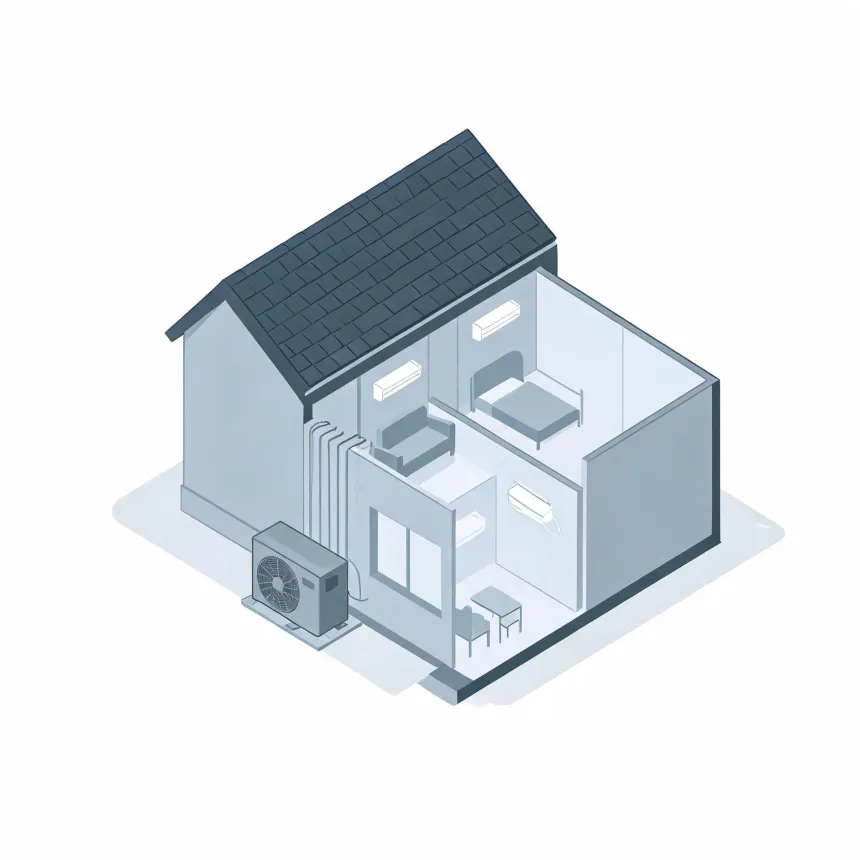
- One outdoor unit can run more than one indoor head, and how many depends on the system a contractor chooses. Each indoor head is sized and placed for the room it serves. A contractor will look at your home's layout, the size of each room, and how the rooms connect before deciding how many heads you need and where they go.
- Can a mini split heat a whole house?
- It can, with enough indoor heads placed room by room. Winters here average 32°F, so the heads have to be sized to actually cover that load, not just take the edge off. Each room needs a head matched to its heat loss, and rooms that share open space can sometimes share coverage. A contractor will need to walk the house to work out how many heads it takes and where they belong.