Mini Split Installation in Crossville, TN
A new system here will heat from October through April and cool from June through September every year. Tell us about the house, and a licensed contractor who covers Cumberland County will get in touch.
Tell us about the job
It takes about a minute.
Eleven months of work for a Crossville mini-split
Cumberland County only gets a short break from heating and cooling. Homes here need heat October through April, then cooling picks up June through September. That's 11 months out of the year the system is running.
Winter nights average 29°F, cold enough that a mini-split's heat pump has to work for most of the load rather than just taking the edge off. Summer afternoons average 83°F on the other side. A new system installed here needs to hold up to both ends, not just one. Any mini-split manufactured now has to meet 14.3 SEER2 for cooling and 7.5 HSPF2 for heating, the federal minimum for split-system heat pumps, so that efficiency is built into the unit before it ever gets to your wall.
- 7 months
- October through April, your system heats
- 4 months
- June through September, it cools
- 29°F
- the average winter night it heats against
- 83°F
- the average summer afternoon it cools against
NOAA nClimDiv, 1991–2020 normals
- Is a mini split worth it?
- For most homes here, yes. Crossville needs heat seven months of the year and cooling four, so a system that handles both without ductwork earns its keep almost year round. A mini split heat pump also keeps working room by room if part of the system ever needs service, since each indoor head runs on its own. Whether it makes sense for your house depends on how it is heated and cooled now, so a contractor should look at that before you decide.
- How many rooms can a mini split cover?
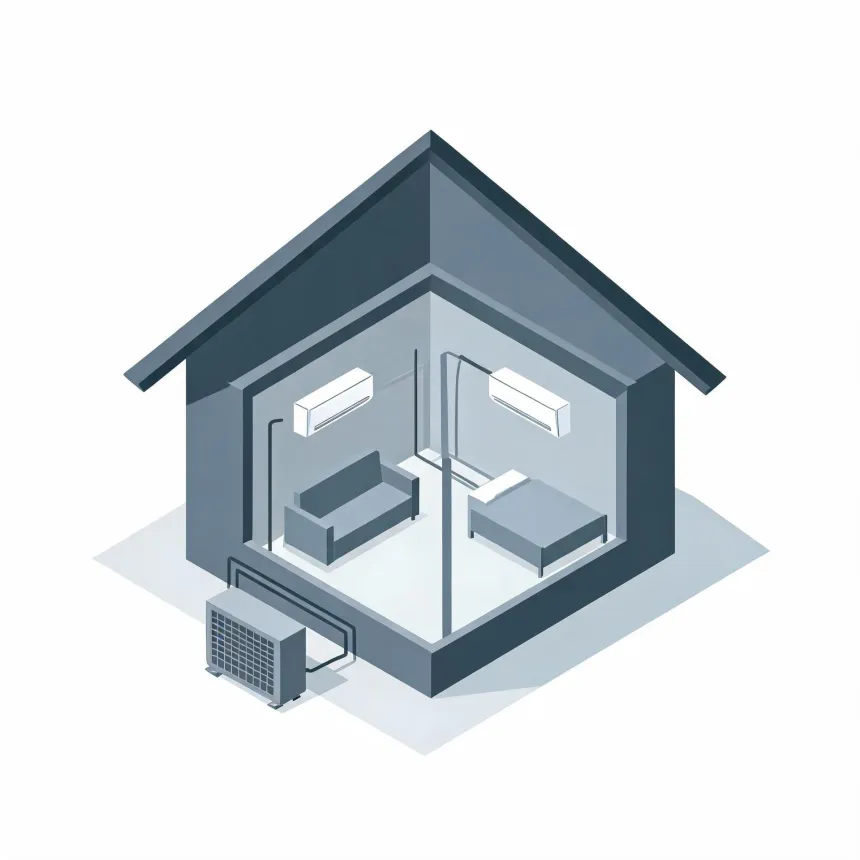
- A single outdoor unit can run one indoor head or several, depending on the system. A single zone setup heats and cools one room. A multi zone setup splits the output across a number of indoor heads, each with its own thermostat, so a bedroom and a living room can run at different temperatures at the same time. How many zones your house needs comes down to the layout, and that is something a contractor has to walk through in person.
- Can a mini split heat a whole house?
- It can, if there are enough indoor heads placed to cover every room. A mini split heat pump is built to be a home's main heat source, not a backup, and it keeps producing heat well below freezing. Winter nights here average 29°F, cold enough that the system has to be sized for that low, not just for a mild day. Getting that sizing right for a whole house takes a load calculation on the actual floor plan, which a contractor will do before recommending how many zones you need.