
Clean duct run
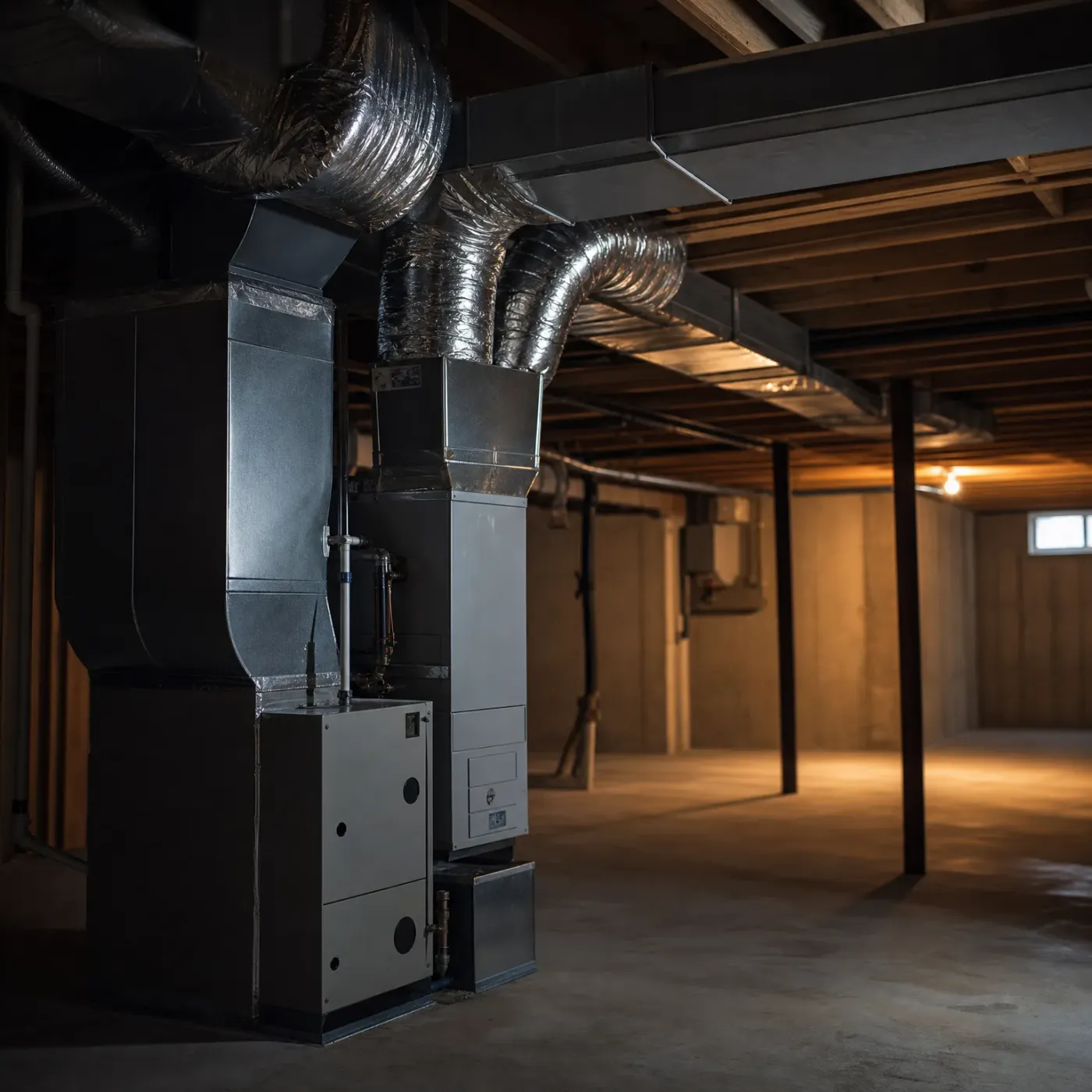
Metal stays bright and dry where it crosses the joists, no streaking down the seams. Air moving through doesn't pick up a smell on its way to the register. That's what a dry duct looks like no matter how sticky it gets outside.
Let someone else find the pro
A musty smell from your vents, or dark specks around the registers, usually means something is growing in the ductwork, and in a Tennessee summer the humidity gives it everything it needs. This page covers what to look for and what it means for your air. Once you send your request, a local contractor who works on duct systems regularly takes it from there.
I'm done searchingA musty smell when the air handler kicks on, dark spots around the supply registers, or dust that looks almost black are the signs people notice first. Mold needs moisture to grow, and a duct system that cools warm, wet summer air will collect condensation on its walls, especially where insulation has worn thin or a seam has come loose. That dampness sitting inside the metal gives mold what it needs, and once it takes hold it spreads along the duct runs rather than staying in one spot. If anyone in the house has started coughing more, or gets a stuffy nose that clears up when they leave, that is worth paying attention to alongside what you see and smell. None of this clears up on its own, because the moisture that started it is still there every time the system runs.






Metal stays bright and dry where it crosses the joists, no streaking down the seams. Air moving through doesn't pick up a smell on its way to the register. That's what a dry duct looks like no matter how sticky it gets outside.

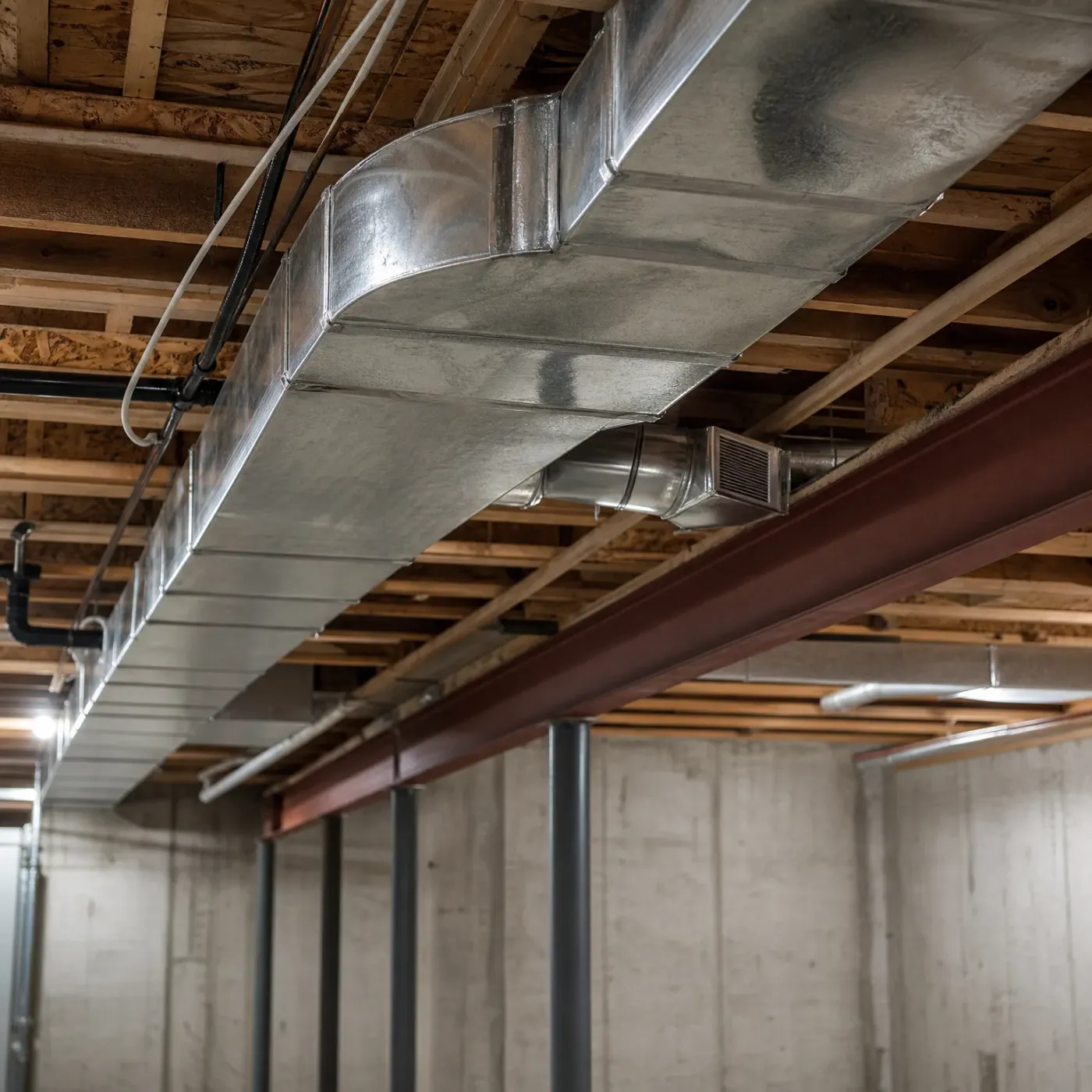
Where ducts branch near the drain pipes, condensation has a place to sit and the metal shows it. Moisture collecting at a joint like this is what lets mold get started, and once it does, cleaning the duct is what gets it out.


Your duct cleaning request goes to one local pro.
Send it once and finding someone is no longer on you.
No fee to send it, and nothing to sign.
You keep seeing mold turn up in the same stretch of ductwork, and you want to know what's actually feeding it rather than just wiping it off the register and hoping it doesn't come back.
The air handler cools warm, humid air as it passes through, and that drop in temperature condenses moisture right there on the metal. In a Tennessee summer, with the outdoor air as sticky as it gets, that condensation builds up faster than it can dry between cycles. Mold spores are already in the air everywhere, so the moment they land on wet metal or damp insulation inside the duct, they have what they need to take hold. A duct that stays sealed and dry never gives them that chance. One that holds moisture, from a slow leak, a poorly insulated run, or just the humidity load of the season, keeps feeding the growth every time the system runs.


Tennessee summers push outdoor dew points into the 70s, and the air inside a supply duct is often 20 degrees colder than the air around it. That difference is what forms condensation on the duct's outer skin, especially where it runs through an attic or crawlspace that never gets conditioned. Mold doesn't need standing water to take hold. It only needs a damp surface and something to feed on, and dust sitting on sheet metal is enough. Once a colony starts near a seam or a joint, it has a steady supply of both all summer long.
Wiping down registers or running an air purifier doesn't reach the places mold is actually growing. The colony sits inside the duct run, often several feet back from the register, where no household cleaning reaches it. Every time the air handler cycles, it pushes air across that same spot and carries the smell into the room. Airing out the house clears the smell for a few hours because it dilutes the air, not because it removes the source. Within a day or two, the handler has cycled enough times to bring the smell right back to where it started.
At 13.22 cents a kilowatt-hour, running the air handler longer to chase a musty smell out of the house doesn't hit your bill that hard. That's worth knowing before you put off a duct cleaning to save money, since the mold driving that smell won't clear out on its own no matter how long the blower runs.
EIA-861 2025 statewide residential average
A musty smell that keeps coming back, dark specks near the registers, and staining on the duct's outer skin all point the same direction. Mold needs moisture, and a Tennessee summer keeps feeding it through the condensation that forms where cold duct metal meets warm, wet air. Spotting the signs is the easy part. Knowing how far it's spread through the system, whether it's one short run near the air handler or something working its way through the whole house, takes someone who can get into the ductwork and look.
That's where a local contractor matters more than it might seem. Someone who services duct systems through this climate every summer has already seen what humidity does to a supply run over a season, where condensation tends to collect, and which joints and seams fail first. That's not guesswork for them. It's the same pattern, house after house, and they know where to check before they even open the duct.
Your request goes to one licensed local contractor, not a handful of companies all calling about the same job. You hear from someone who actually works in your area, not a dispatcher sorting leads.
The smell isn't the problem. It's what the moisture behind it is doing to the ductwork, and that doesn't resolve on its own. Getting it looked at now is a smaller job than getting it looked at after another summer.
The pro who reaches out is licensed in Tennessee.