

Ductwork doing what it should
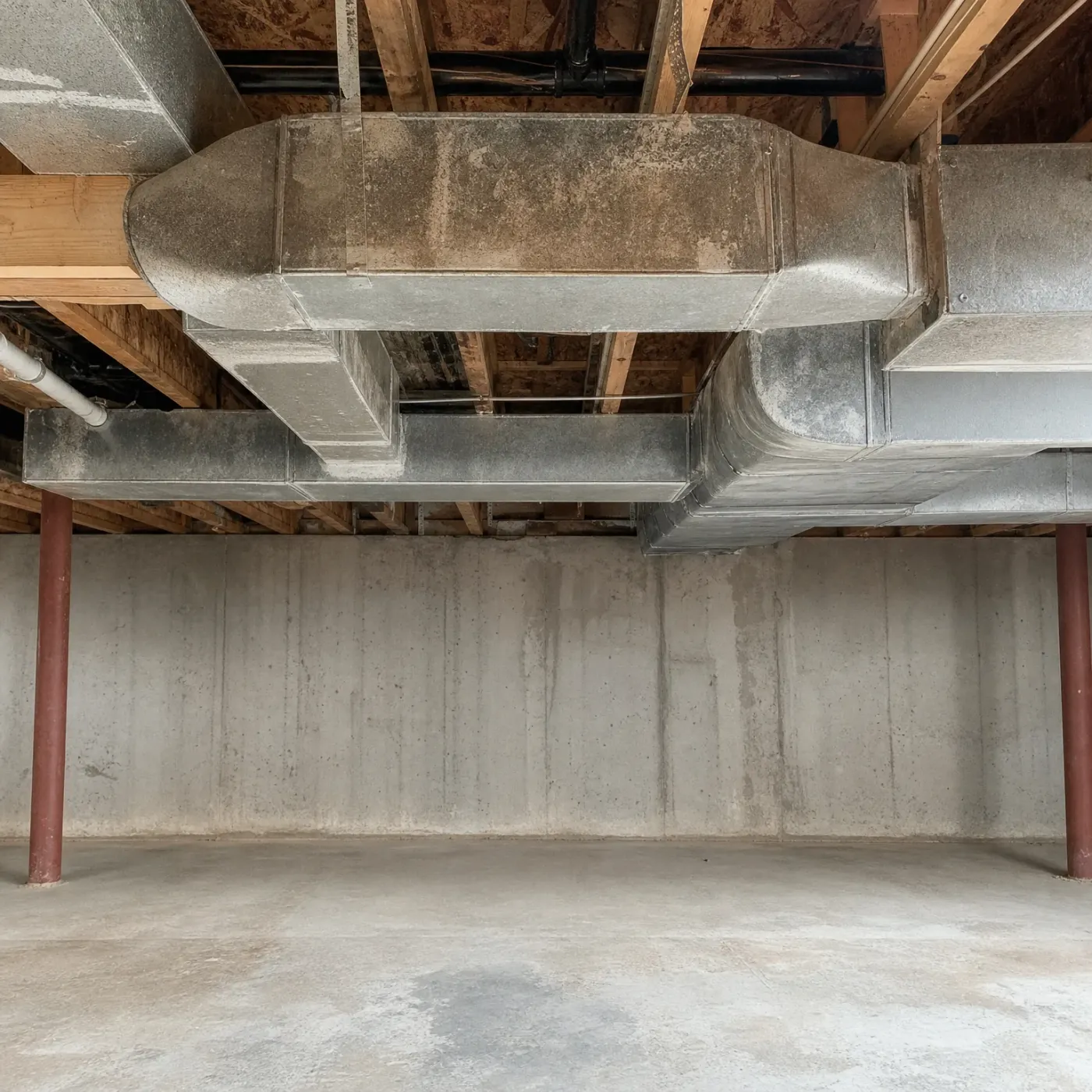
This is what a duct run looks like dry. The metal stays clean, the joints hold, and nothing on the joists or the slab shows water has ever touched them. Air moves through without picking up anything it shouldn't.
Get matched with a pro who works on ducts in Hamilton County.
Find a pro near meMold in your air ducts means moisture got in somewhere, and it's feeding on the dust sitting in there. Chattanooga summers stay muggy for months, and when warm, damp air hits a duct run cooled by the AC, it can leave condensation sitting on the inside of the metal or liner. That moisture, plus dust, is all mold needs. You might smell it before you see it, a musty smell when the system kicks on, or notice more sneezing and stuffiness when the air's running than when it isn't. A duct system that's sealed well and draining right shouldn't let water sit long enough for mold to take hold, so if you're seeing it, something in that system is holding moisture it shouldn't. It won't clear up on its own, and running the system just moves spores through the house.
Half the homes here were built by 1982
Half the homes in Hamilton County went up in 1982 or earlier, old enough that duct seams and insulation have had decades to work loose and let moisture in.
Heat runs October through April
Heat runs October through April here, seven months of the duct system warming up and cooling down, enough cycles for weak joints to sweat.
Cooling runs May through September
Cooling runs May through September, five months of muggy air meeting cold duct metal, which is exactly the condensation mold needs to take hold.
ACS 2020-2024 · NOAA nClimDiv 1991-2020
A musty smell when the system kicks on is often the first sign, and it can mean mold somewhere in the duct run even before you see anything. Air moving past a damp patch picks up the smell and carries it into every room the duct feeds. By the time you can see mold at a vent or return grille, it has usually had time to spread along the metal or inside the insulation. Either way points to moisture that needs to be found and dealt with, not just the mold itself. A contractor who inspects ducts can run a camera through the line to see how far it goes, which isn't something you can check by looking at a vent cover.
Mold showing up near one vent, in one room, usually means the moisture problem is local to that run, a leak nearby, a bad seal, standing water from condensation right there. Mold or that smell coming from registers all over the house points to something feeding the whole system, often the evaporator coil or the main trunk line where the AC ties in. That distinction matters for figuring out how far the cleaning needs to reach and what else needs a look. Telling a contractor which rooms are affected, and since when, saves a round of guessing and gets the right equipment to the house on the first visit.




A duct won't grow mold on its own. It takes moisture landing on a dusty surface the mold can hold onto, and sheet metal and flex duct both work fine for that. Once a contractor is in there, the actual cleaning is mechanical: a brush or whip run through each duct run to break the growth free, with a vacuum pulling from the trunk line or the return so nothing gets pushed further into the system. Most contractors run a camera through first, which is how they find out how far it's actually spread rather than guessing. The return side is worth watching closer than the supply side, since it's pulling air straight from the house and usually collects more dust. None of this holds if the moisture never gets addressed. Wiping a surface clean or sealing the duct back up without drying it first just leaves the same conditions in place, and spores left behind can regrow within days. The cleaning only lasts if whatever let the moisture in gets fixed too.

Moisture gets into the duct through a leaky seam or a cold surface.
Dust already sitting in the duct gives mold something to feed on.
Mold takes hold on the inside wall of the metal or flex duct.
Air moving through the system carries loose spores into the rooms.
A musty smell when the AC or furnace kicks on, stronger in some rooms than others. Dust coming out of the vents that looks darker or heavier than usual. A room that never quite smells clean no matter how often you wipe it down. Sometimes you can see it, dark spots around a vent cover or a return grille, or staining on the duct itself if you can get a look in the basement or crawlspace. If anyone in the house has started coughing more, or a sinus problem that won't clear up, that can point back to what's moving through the air they're breathing all day. None of this fixes itself. Mold in a duct keeps feeding on the dust passing through it and keeps spreading spores every time the system runs.

This is what a duct run looks like dry. The metal stays clean, the joints hold, and nothing on the joists or the slab shows water has ever touched them. Air moves through without picking up anything it shouldn't.
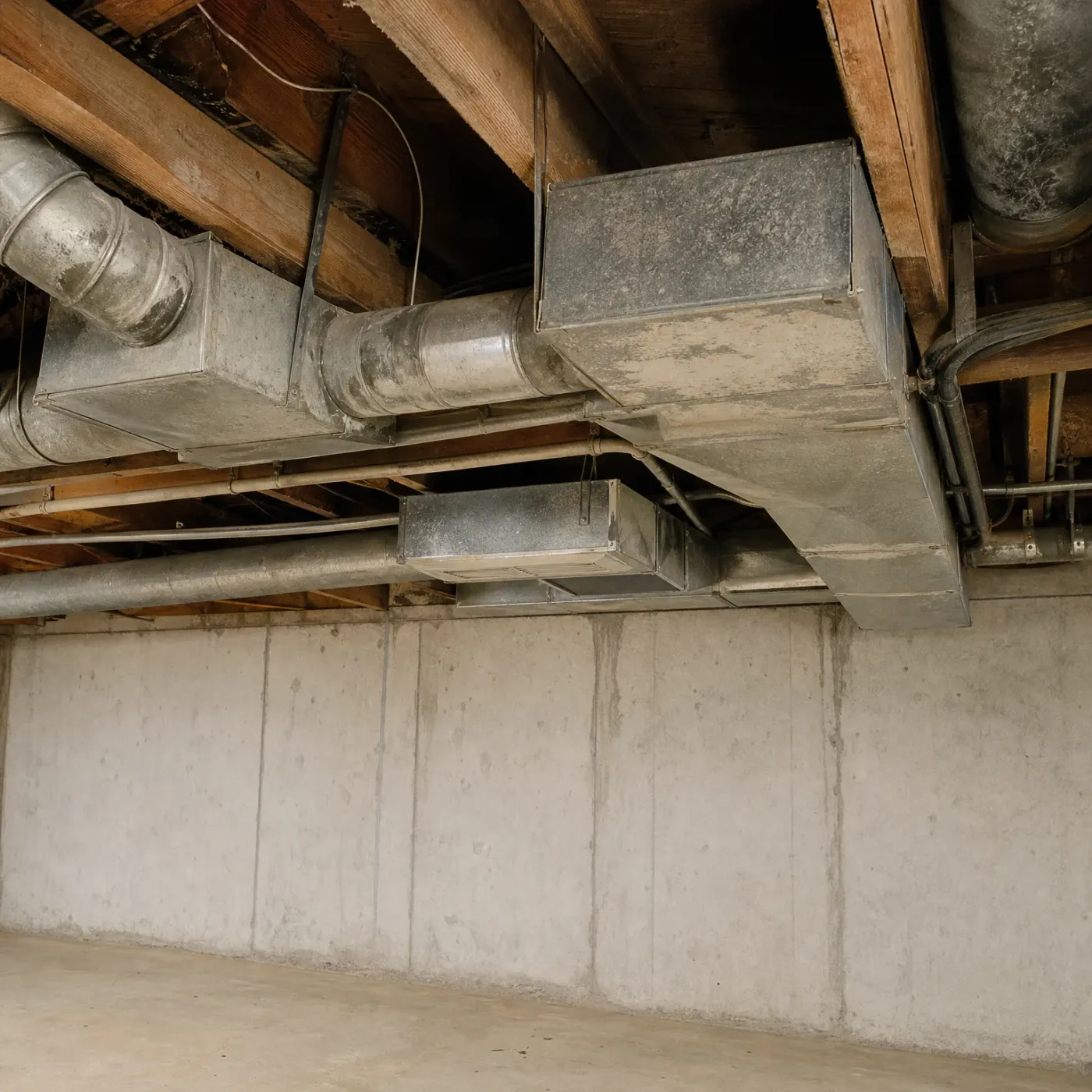
Here the trunk and branch lines sit against the same joists and foundation wall, but damp air has been working on the seams and fittings. Once a surface inside stays wet long enough, it stops being just metal and becomes something mold can grow on.


Skip searching for a duct system pro and answer a few questions instead.
Your request goes to a Hamilton County pro who takes ductwork jobs.
No charge to send it. You decide if you hire them.


At 12.98 cents a kilowatt-hour, running the AC hard through a Chattanooga summer doesn't punish your bill the way it might elsewhere. That's worth knowing before you put off a cleaning: keeping the system running longer to fight moisture in the ducts costs you less here than in most places, but it still costs you the mold.
EIA-861 2025

It's a Saturday afternoon in April and you've finally opened the windows to let the spring air in. Sun's coming through the living room window, lighting up the ceiling vent grille over the couch. You notice the dust on it first, a gray film thick enough to see from across the room, then you look down at the end table and the lamp shade and see the same dust settled there too. The furnace ran hard all winter and this is what it left behind. You run a finger along the vent slats and it comes away dark. You make a note to look into it before summer starts and the AC takes over blowing that same air through the room.
Can mold in the ducts actually make you sick?
Mold spores moving through the ducts don't affect everyone the same way. Someone with asthma, allergies, or a weak immune system can get a stuffy nose, a cough, or watery eyes that won't clear up while they're in the house and eases once they leave for a while. Someone else living in the same house might not notice a thing. Neither reaction tells you much about how much mold is actually in the duct run. A contractor who inspects the ductwork can tell you whether what's growing in there is enough to explain the symptoms, and whether it's reached the registers where it gets pushed into the rooms you spend the most time in.
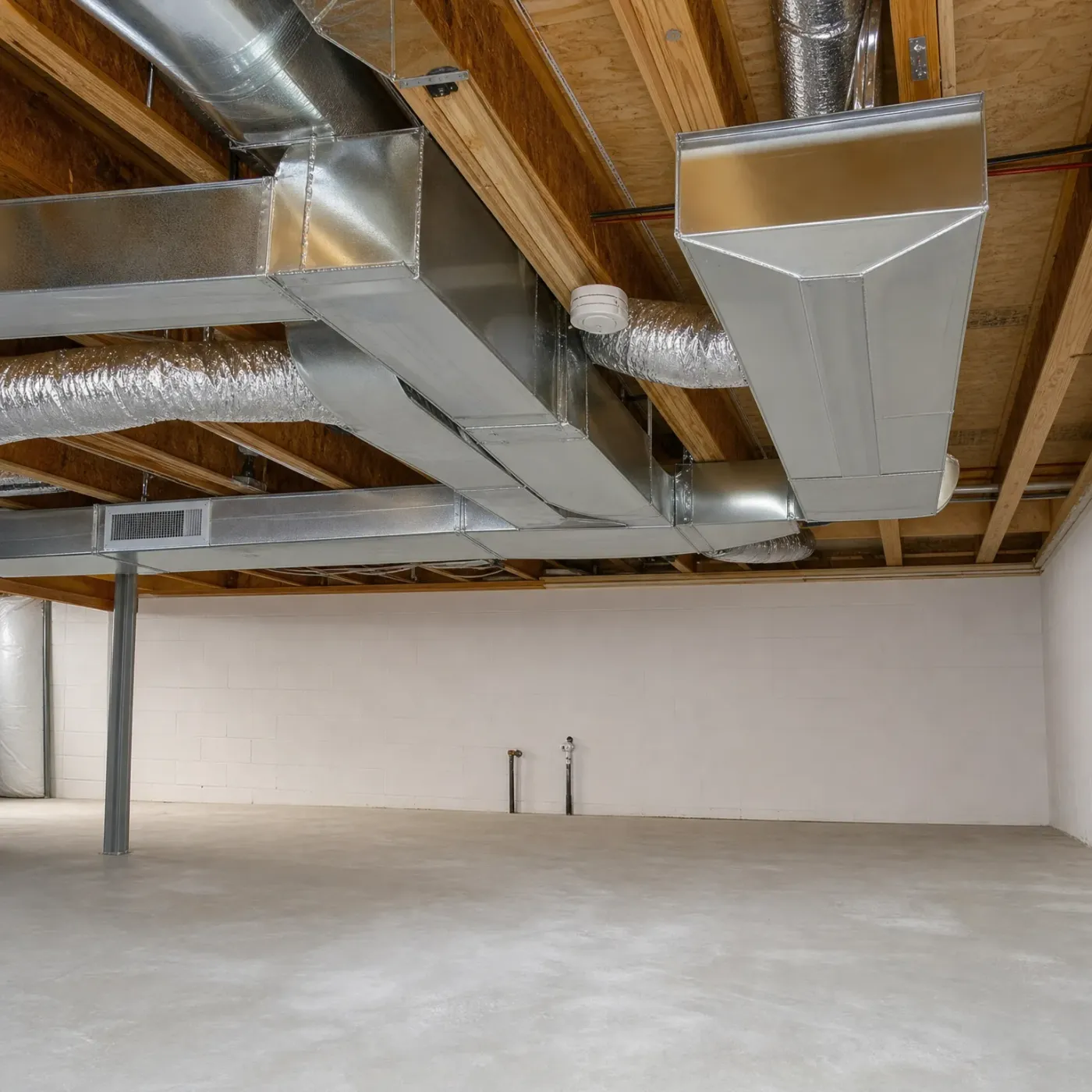
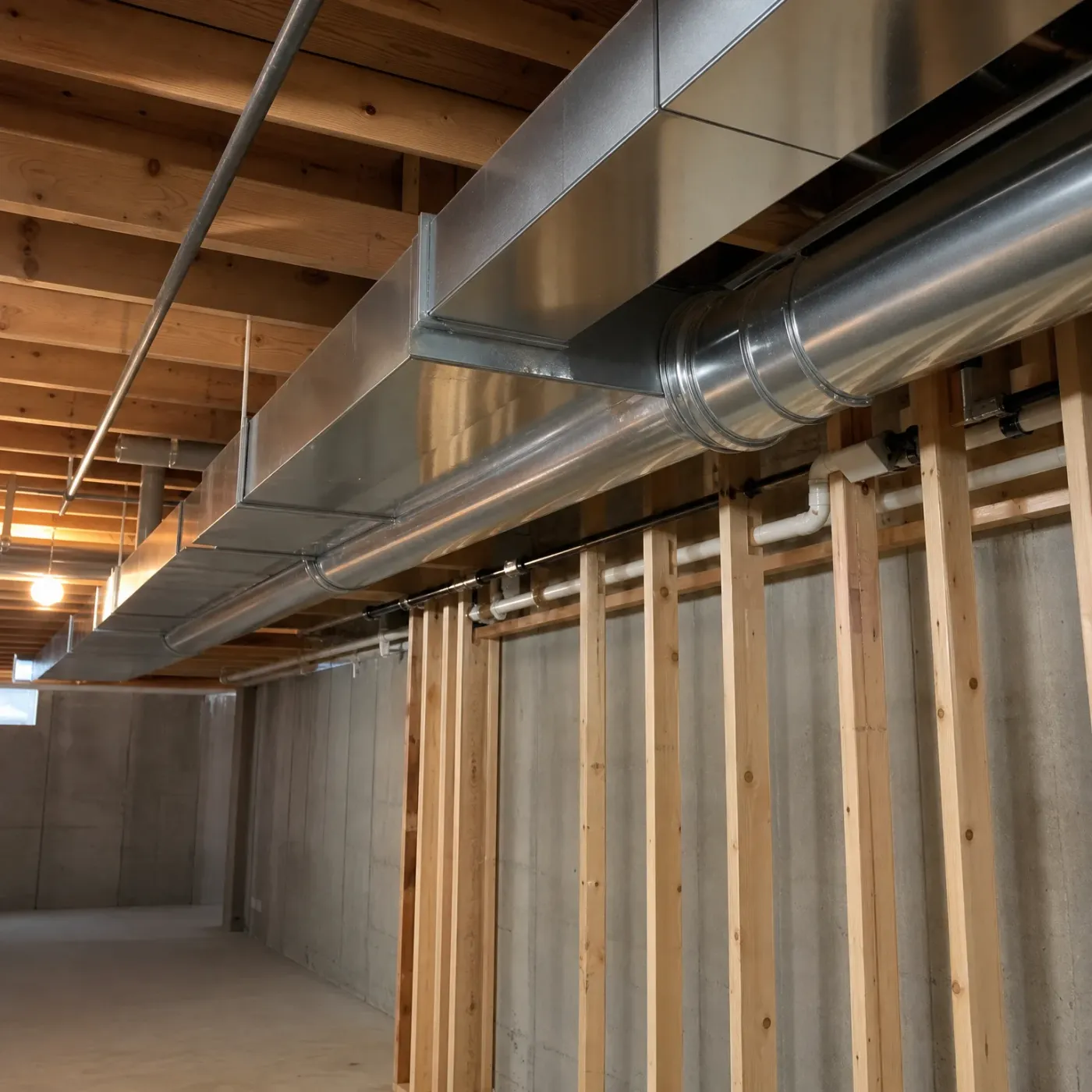
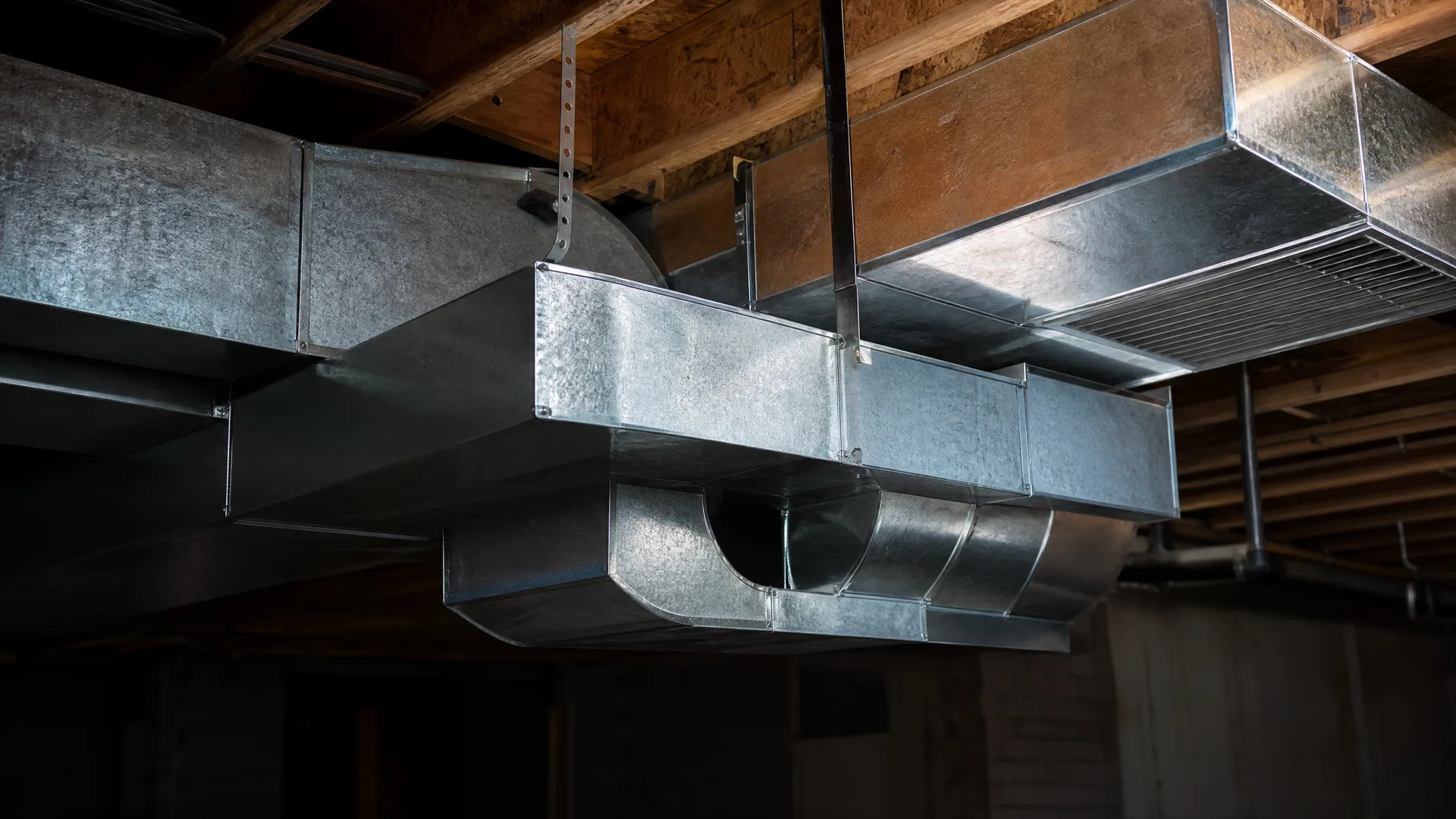
This is what a basement duct run should look like. Metal trunk lines and flex duct run along the joists, dry and bare, with nothing on the concrete floor or the block walls to say moisture ever got in. Air moves through without carrying anything into the rooms above.
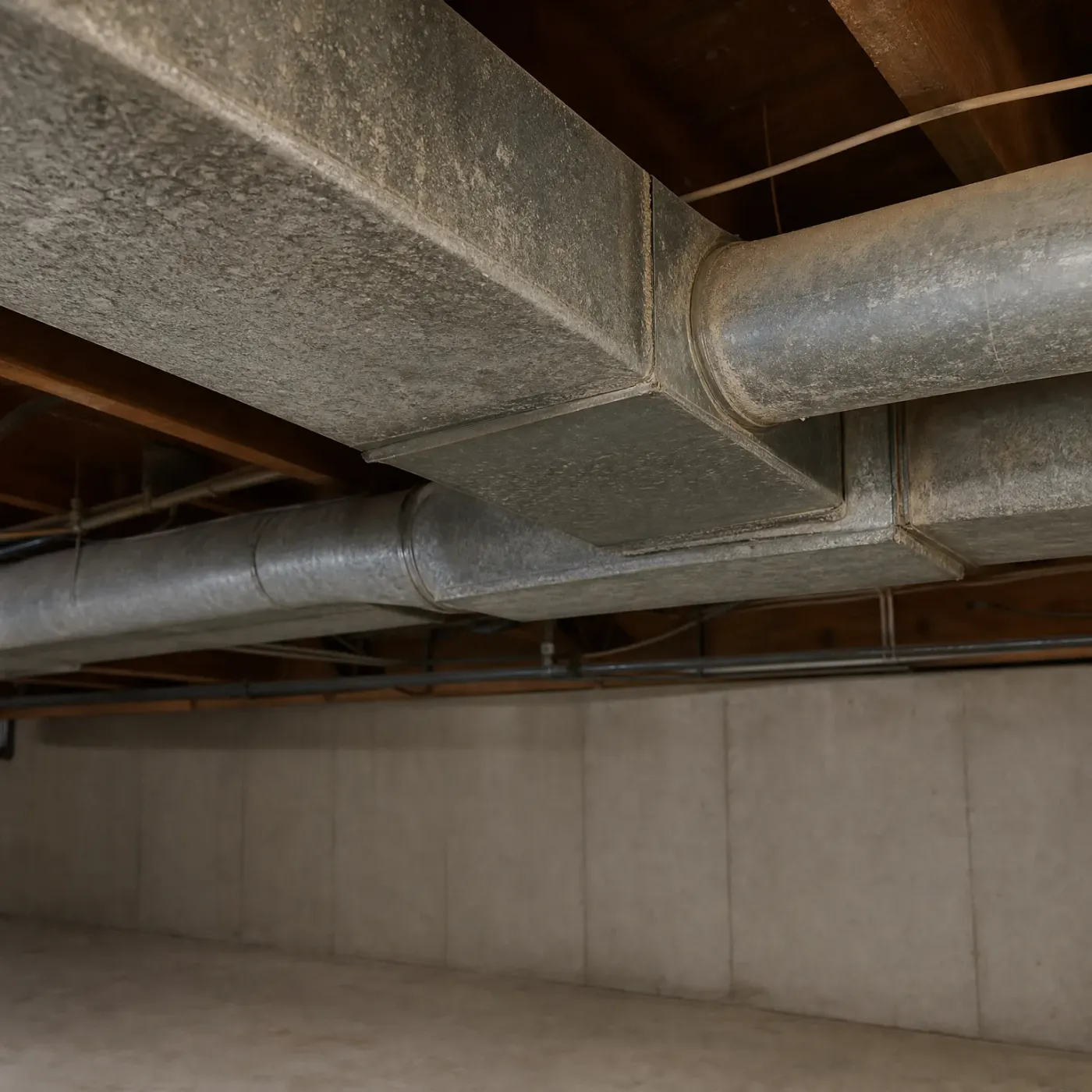
Here the trunk line and the round branch duct feeding off it are coated in a layer of dust and grime thick enough to see from across the room. That buildup didn't happen in a week. It's what gives mold something to grow on once moisture finds its way in.

What's growing in your ducts got there because moisture found a way in and dust gave it something to feed on. That's the whole story, whether it showed up as a smell when the air kicks on or as dark staining along a seam in the basement. Cleaning it out gets the spores and the buildup gone, but someone still has to find the moisture and close that off, or it comes back.
That part takes a contractor who's looked at a lot of ductwork in Hamilton County homes and knows what a damp seam near a cold surface looks like before it turns into something worse. Instead of calling around and describing the smell in your living room to three different companies, you can get matched with one who already handles this kind of job and have them reach out to you directly. You'll know where you stand without doing that legwork yourself.

Find a duct system cleaning pro in Hamilton County