Signs your ducts need cleaning in Nashville, TN

Skip searching for someone who cleans ducts in Davidson County.

Skip calling around

What are the signs your air ducts need cleaning?

Dust that comes back the day after you clean, a musty smell when the system kicks on, or more sneezing indoors than seems normal. With the AC running most of the summer and heat running hard in the winter, Nashville air moves through those ducts constantly, so what's living in there gets circulated through every room, over and over.

Dust buildup, a musty smell from the vents, and more allergy symptoms indoors are the main signs

Dust that settles back on furniture within a day or two usually means it's coming from the vents, not the air in the room. A musty or stale smell when the furnace or AC turns on points to mold or debris sitting inside the ductwork itself. Weak airflow from some rooms, or rooms that never cool down in summer, can mean a duct is clogged rather than a problem with the unit. If anyone in the house has started sneezing more, or the air feels harder to breathe indoors than outdoors, the ducts are worth a look. With a system running hard across a long Nashville summer and a cold winter, buildup inside the ducts gets pushed through the house for months before anyone notices it.

A smiling woman in a cream knit sweater sits at a marble counter with a glass of red wine, with a dining table, pendant lights, and French doors in the dim background.
A smiling woman with long dark hair in a cream sweater sits in a dimly lit open-plan home interior, with a glass of red wine in the foreground and a dining table, fireplace and shelving behind her.
A woman with long dark hair in a black turtleneck laughs while seated at a light stone counter with a glass of red wine, in a dimly lit interior with a potted plant, framed pictures and a hanging lamp behind her.
A woman in a dark sweater laughs while seated at a white marble counter with a glass of red wine, in a dimly lit open-plan interior with a pendant lamp and dining table behind her.

Why ducts in this area collect so much to begin with

  • Half the homes here were built by 1986

    Half the houses in Davidson County went up in 1986 or earlier, old enough that the ductwork has likely never been cleaned once.

  • Heat runs October through April

    Heat runs about seven months, October through April, and every one of those months is pushing air through the same ducts.

  • Cooling runs May through September

    Cooling runs about five months, May through September, so between the two there are only a handful of weeks the system sits idle and the ducts get a break.

ACS 2020-2024 · NOAA nClimDiv 1991-2020

Galvanized sheet-metal ductwork and pipes running along an unfinished basement ceiling beside a plain beige wall, with a gray equipment cabinet below.

When cleaning actually helps

If the dust and smell showed up recently, or after work on the house, cleaning the ducts clears out what's actually causing it. Renovation dust, drywall dust, insulation fibers, all of that settles in the duct runs and keeps circulating long after the job is done. The same goes if you just moved in and don't know the last time anyone cleaned them. A one-time cleaning resets the system so what you're breathing isn't years of buildup getting stirred up every time the furnace or AC kicks on.


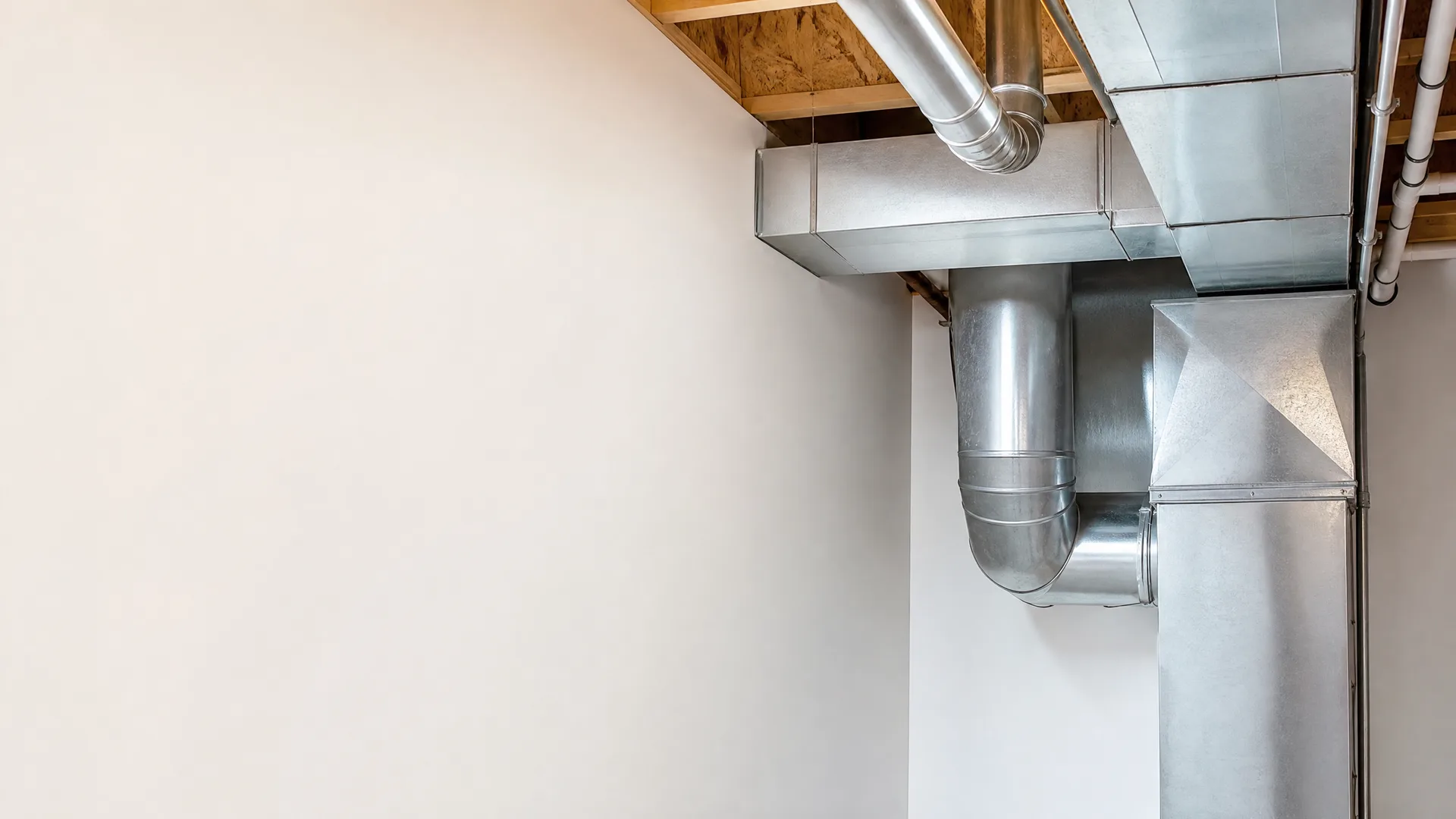
Galvanized sheet metal rectangular and round HVAC ducts running along a ceiling and down a white interior wall, with exposed wood joists and subfloor above.

When the problem is somewhere else

If the duct cleaning doesn't fix it, the dust or smell may not be coming from the ducts at all. A filter that's overdue gets pulled through fast and lets more through than it should. Standing water near the coil or in the drain pan causes the same musty smell people blame on dirty ducts. A contractor who looks at the whole system, not just the ductwork, can tell you whether cleaning is the fix or whether something else in the system needs attention first.

A closed laptop and a ceramic mug on a wooden table in front of a kitchen with green cabinets, marble counter, black pot, cutting board, wooden bowl, and a white vase with greenery.

What this looks like in your house

You dust the shelves on Saturday and by Wednesday there's a film again. A vent in one of the back bedrooms blows noticeably less air than the one in the living room. Maybe someone in the house has started waking up congested, or the cat hair seems to be everywhere no matter how often you vacuum. These are the ordinary signs, and in a house that's gone years without the ducts ever being cleaned, they tend to show up together rather than one at a time.

None of this means you need to start calling around Nashville, explaining the same thing to three or four companies and setting them against each other on price. A local contractor who cleans ducts in this area every week has seen this exact pattern in houses like yours, and knows what a system that's gone a decade without service usually looks like inside. One call, one visit, one answer on whether it's worth doing now.

A light gray sofa with gray and beige textured throw pillows and a cream knit blanket beside a white-framed window, with a small round side table holding a ceramic vase and potted greenery.
Unfinished basement with concrete walls and floor, a steel beam on posts, and exposed wooden joists with sheet-metal ductwork and piping overhead.

Ducts in good shape

This is what a duct run looks like when it's doing its job. The metal is clean, the joints are sealed, and air moves through without pulling dust out of every seam along the way. A system like this can go a long stretch between cleanings.

Unfinished basement with bare concrete walls and floor, and galvanized sheet-metal HVAC ducts, pipes and wiring running along the wood-joist ceiling.

Ducts overdue

Runs like this, tucked along the joists next to the wiring and pipes, collect more than people expect. Years of summer AC and winter heat push air through the same metal, and whatever settles inside gets carried into every room it feeds.

Why does the dust in your house keep coming back

Run a finger along the top of a door frame a day after cleaning. If it's already gray, that's air moving through dirty ducts, not a sign you missed a spot. Check the return vent cover too. A gray, matted layer on the grille means the system is pulling that same dust through the house on every cycle. Look at the supply vents in rooms you don't use much, a guest room or a basement vent. Heavier buildup there than at the vents you dust often tells you it's been collecting undisturbed for a while. None of this is cosmetic. Dust that recirculates is what settles in noses and throats, and it's what's landing on every surface you've already cleaned.

A smiling bearded man in a dark green sweater sits at a dinner table with a glass of red wine, a bowl of salad and a lit candle in the foreground, in a dimly lit room with a framed picture, lamp and potted plants behind him.
A woman in a cream knit sweater reclines on a sofa with her eyes closed and a slight smile, a closed dark book resting on a blanket in the foreground and a lit lamp and small potted plant behind her.

No calling every shop in Davidson County

You can keep wiping down the same shelf every few days, or get someone out to look at the ducts themselves. Finding that person is usually its own chore: searching for duct cleaners near you, calling two or three, describing the same dust and the same smell each time, then trying to tell apart quotes that all use different words for the same job. This connects you with one licensed Nashville contractor instead, someone who works on duct systems around Davidson County all year and has a good idea what seven months of heat and a long muggy summer do to a system that's gone decades without attention. You explain your situation once. If the gray film on the door frame and the musty smell when the furnace kicks on sound familiar, that's worth having someone look at before another winter and summer go by pulling the same dust through the same ducts.

How dust actually moves through ducts

  • Dust in a duct system settles out of moving air the same way it settles on a shelf, just inside metal you can't see.
  • A return plenum pulls air from every room in the house, so dust from one bedroom ends up circulating through all of them.
  • The blower pushes air past the evaporator coil and through the supply ducts on every single cycle, stirring up whatever has settled since the last run.
  • Flex duct has a ribbed interior liner that catches more dust than smooth metal duct, which is why cleaning helps more in some houses than others.
  • A cleaning crew runs a brush or whip through each run and vacuums from a negative-pressure machine, not just at the vent opening.
  • The return side usually holds more buildup than the supply side, since that's the air coming back in from the house before the filter catches it.

Air in a duct system never really stops moving, not in the way a room does. Every time the blower kicks on, whether that's the furnace in January or the AC running through a muggy July, air gets pulled in through the return side, pushed past the evaporator coil, and sent back out through the supply runs into every room. Dust rides along with it. Some settles out along the way, the same way it settles on a shelf, except it's inside metal you can't see and don't wipe down. The return plenum is the part doing the pulling. It draws air from every room in the house, which is why dust that starts in one bedroom doesn't stay there. It moves through the whole system and comes back out somewhere else. The filter catches some of it, but the filter only sits in one spot, and plenty of air finds its way past before that happens. What a duct is made of matters too. Metal duct has a smooth interior, and air moves through it without catching much. Flex duct has a ribbed liner inside, and that ribbing gives dust somewhere to hold on that smooth metal doesn't. A cleaning crew deals with this by running a brush or whip through each duct run and pulling the loosened dust out with a vacuum built for negative pressure, not just suctioning at the vent cover where the duct meets the room.

Power here costs 13.86 cents per kilowatt-hour

At 13.86 cents a kilowatt-hour, that blower runs for pennies an hour, but it runs almost constantly through a Nashville summer. Dirty ducts make the system work harder to push the same air, so clogged runs cost you more over those months than clean ones would.

EIA-861 2025

  1. Dust and dander settle out of slow-moving air inside the ducts.

  2. The return pulls that air back from every room in the house.

  3. A technician opens access ports along the trunk line and the branches.

  4. A vacuum collects the debris while a brush or air whip knocks it loose.

The signs are simple once you know to look for them: dust that's back in a day, a musty smell when the blower starts, vents that seem to blow weaker in one room than another. What they mean is dust and dander moving through the ducts and settling out along the way, same as it would on a shelf, except you can't see it happening. A contractor who services ducts around Nashville year-round has opened up plenty of trunk lines in houses like yours and knows what seven months of heat and a long muggy summer leave behind in them. Getting that looked at doesn't mean fielding calls from three different companies trying to win the job. One licensed local contractor takes the request, looks at what you're describing, and tells you whether cleaning is what the house actually needs. You already know the dust is coming back. What's left is finding out why, and that part doesn't have to be the chore it sounds like.

Dim interior with a dark gray wall, exposed wood joist ceiling, sheet-metal ductwork, conduit, pipes and a sprinkler head.

Skip calling around

A licensed pro who works in Davidson County gets your request.

Duct and vent cleaningDucts or ventsDavidson County, TN
Step 1 of 2

What ZIP code is the job in?