
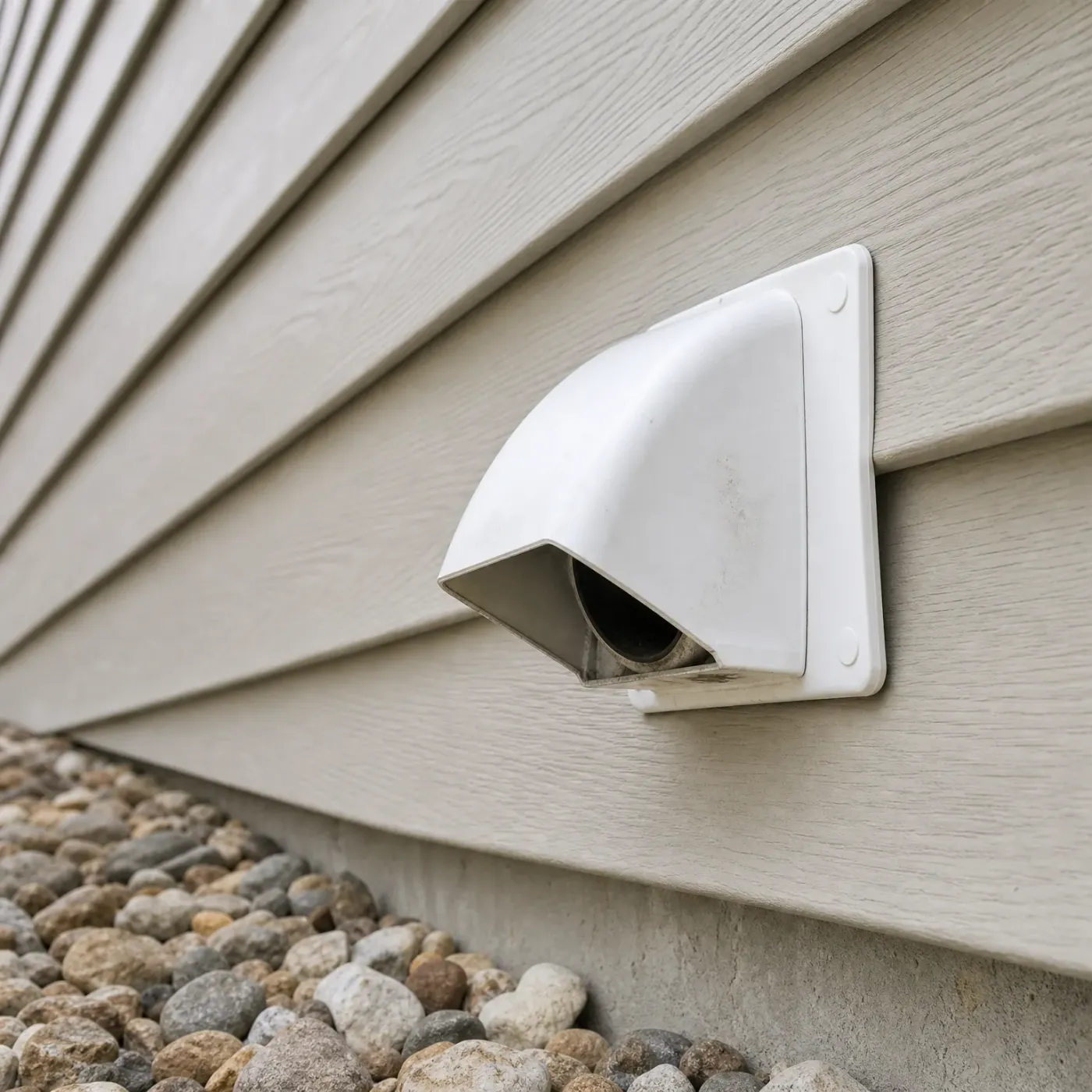
The hood doing its job
Air pushes the flap open wide during every cycle and it falls shut the moment the dryer stops. The screen stays clear, the opening stays open, and the hot, damp air gets outside as fast as the dryer sends it.
Send the form and finding a dryer vent cleaner is handled.
Send my requestA load that used to take forty minutes now runs through two or three cycles before anything comes out dry, or clothes come out hot and damp instead of finished. You check the lint trap, clean it out, and run it again, and it still doesn't fix it. In Hamilton County, where summers stay muggy for months, you want to know if that's part of it or if something is actually wrong.
Lint builds up inside the vent line long before it collects in the trap, and once enough of it packs in, the hot moist air from your clothes has nowhere to go. The dryer keeps running its full cycle, but the air isn't leaving the house, so your clothes sit in damp heat instead of drying. That buildup happens faster during the humid stretch from spring through fall here, when the air moving through the vent is already carrying more moisture to begin with. A dryer that's taking two or three cycles to finish a load is usually telling you the vent is restricted, not that the machine is failing.




2.38 people per household on average
With 2.38 people in the average Hamilton County household, that dryer is running load after load most weeks, and lint builds up in the vent with every one of them.
Half the homes here were built by 1982
Half the homes here were built in 1982 or earlier, and a vent run that old has had decades to collect lint in bends and joints a newer duct wouldn't have.
Power here costs 12.98 cents per kilowatt-hour
At 12.98 cents per kilowatt-hour, a dryer forcing hot air through a clogged vent runs longer and burns more power to finish the same load.
ACS 2020-2024 · EIA-861 2025
Skip the vent cleaning and the dryer just keeps working harder, pulling more power to push air through a line that's half blocked, while your electric bill creeps up for a machine that isn't drying any faster.
Get the vent cleared and the dryer goes back to doing what it was built to do: one cycle, done, clothes dry and the air out of the house instead of lint piling up behind your wall.


A dryer doesn't dry clothes by itself. It heats the air, tumbles the load, and pushes that hot, wet air down a pipe and out through a hood on the outside wall. Everything about how fast a load finishes comes down to how easily that air makes the trip. Lint doesn't just sit in the trap. It rides the airflow and sticks to the inside of the duct, a little more with every load, until the path narrows and the air moving through it slows down. Once that happens, the moisture the dryer is supposed to be pushing outside stays in the drum longer, so the machine keeps running past the point where the load should be done. The heat has somewhere to go wrong too. A blocked vent lets heat build up inside the dryer itself, and that's what trips the thermal fuse, a safety part that cuts the heating element off so the dryer doesn't overheat. Once it trips, you get a dryer that tumbles but never gets warm. The duct material matters as much as the blockage. Rigid metal holds its shape and gives air a straight path, while flexible foil or plastic duct sags and catches lint at every bend. And the flap on the outside hood needs to swing open fully when the dryer runs. If lint has built up around it or the spring has gone weak, it won't open all the way, and the air backs up right where it's supposed to leave the house.


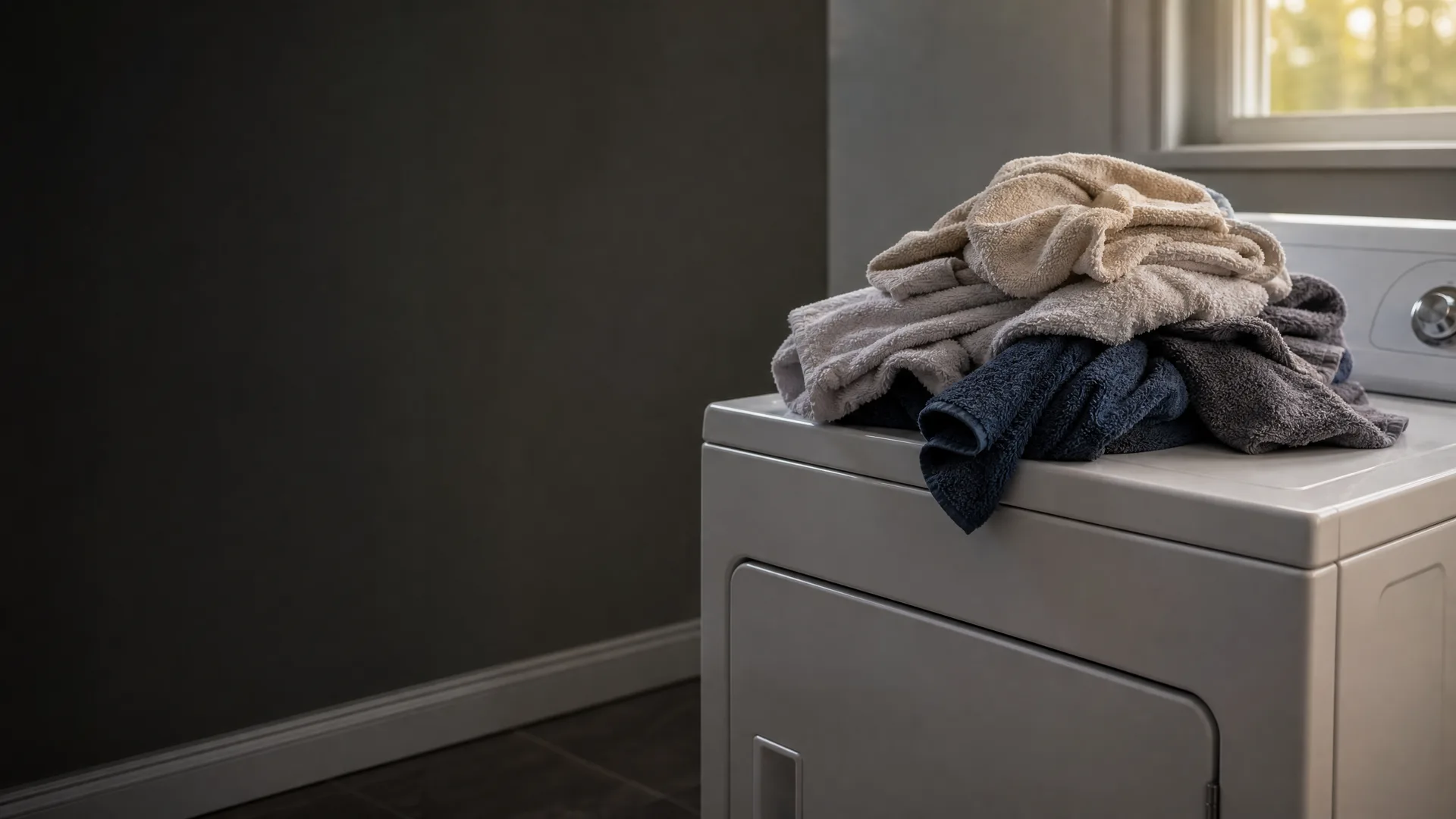
It's almost nine on a Tuesday and you're still in the laundry room. The towels have been through twice now, and they're still damp enough that you can wring a little water out at the corners. You open the dryer door and that wall of heat rolls out, but the load underneath is barely warm, just humid. You pile the towels on top of the dryer while you decide whether a third cycle is worth it, and outside, past the kitchen window, it's already dark. The vent hood on the side of the house hangs there doing nothing you can see. You're tired, and tomorrow's work clothes are still in the hamper.
The lint trap screen looks clean but the room still gets warmer than it should, and the dryer runs hot to the touch on the outside panel. You smell something faintly like burning dust partway through the cycle. The vent hood outside barely flaps when the dryer's running, where it used to kick open with a strong, steady stream of air. Clothes come out of the machine hotter than usual but not actually dry, and towels in particular seem to need a second or third round no matter what setting you use. Left alone, a blocked vent makes the dryer run longer and hotter than it was built for, and that heat has nowhere to go but back into the room and the machine itself.


Describe your dryer vent job once, to one pro.
One request and the dryer vent cleaning stops waiting on you.
You're not committing to anything by asking.

A dryer vent runs from the back of the machine to a hood on the outside wall, usually a straight run or close to it. Rigid metal pipe holds its shape and gives lint less to grab onto than the coiled foil or plastic hose some setups still have. The shorter and straighter that path, the faster the air moves. Every bend in the pipe slows the air down a little more, and lint settles at each one first.

That flap on the outside hood is a damper, and it only opens when air is pushing through it from inside. Walk out during a cycle and watch it. A strong, steady draft holds it open and you can feel warm air moving against your hand. If it barely lifts, or opens partway and falls back, the air pushing it isn't strong enough anymore, and that's the air that's supposed to be carrying moisture out of your dryer.

Right now you're the one who keeps the laundry moving. You run a load, come back, find it still damp, run it again, and that's an hour of your evening gone to towels that should have been done and folded already. Keep that up for months and the heating element or the motor is working harder than it was built to, cycle after cycle, to push air through a vent that's fighting it the whole way.
What you don't have to do is figure out who clears a dryer vent and whether they're any good at it. Send the form and the search part is done: no calling around, no explaining the burning smell and the damp towels to three different companies, no sorting through quotes to guess who's being straight with you. Someone qualified gets in touch, and your evenings go back to being yours.

At 2.38 people, most Hamilton County households still run a load almost every day. Each one pushes more damp air and lint through the same vent, so the buildup you're waiting on tonight is the same buildup from yesterday and the day before.
ACS 2020-2024

Air pushes the flap open wide during every cycle and it falls shut the moment the dryer stops. The screen stays clear, the opening stays open, and the hot, damp air gets outside as fast as the dryer sends it.

Lint has caked around the opening and hangs loose from the flap itself. Air can barely get past it, so the moisture that should be venting outside stays in the drum, and the dryer keeps running to finish a load that won't dry.
A dryer that takes two or three cycles to finish a load almost always comes down to the same thing: a vent too clogged with lint to move the air out fast enough. Clean that vent and the dryer goes back to sensing dry clothes and shutting off on its own, the way it did when the house was new. What's left is finding someone to do it, and that's the part that eats an evening you don't have to spend that way, looking up companies, calling a few, explaining the same thing about the damp towels and the hot panel to each one, then sitting with a stack of quotes trying to tell them apart. Send the form and that work is off your plate. You're not chasing anyone down or repeating yourself to a third contractor who still needs the story from the start. You know what's wrong with the vent. What's left is someone to clear it.

Skip searching for someone who cleans dryer vents in Hamilton County.