
HVAC Repair in Elizabethton, TN
Homes here need heat from October through May and cooling from June through August. If your system quits, tell us what it's doing and a licensed contractor who covers Carter County will get in touch.
Tell us about the job
It takes about a minute.

Eleven months of work for one system
Your furnace and your air conditioner both earn their keep here. Heat runs October through May, eight months. Cooling picks up June through August. Only a few weeks of the year ask nothing of either one.
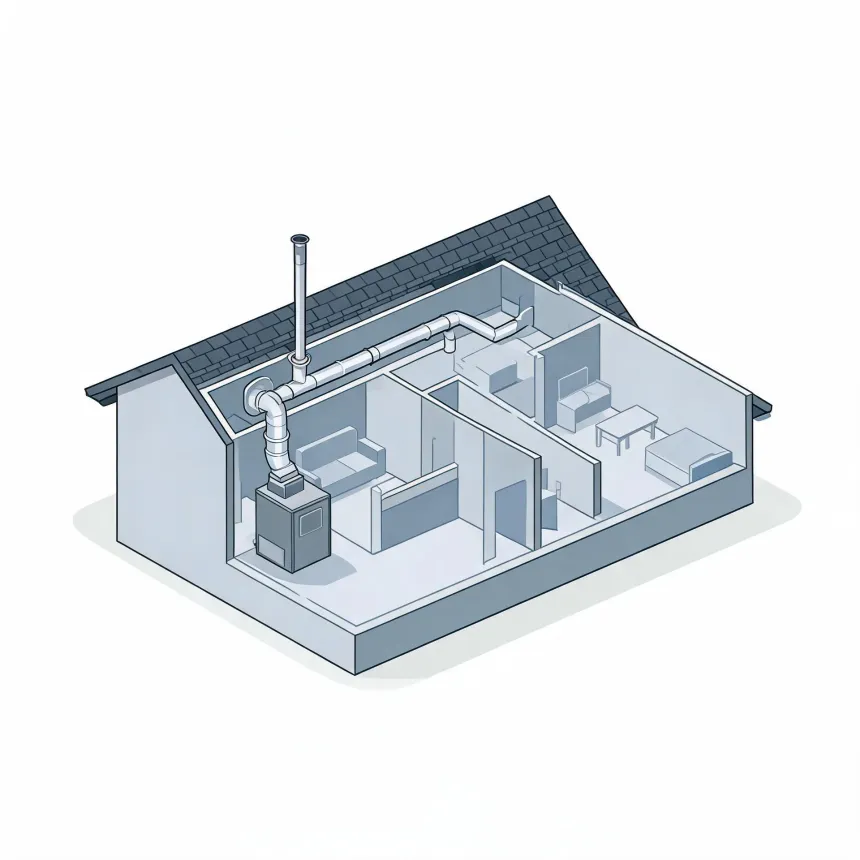
Winter nights averaging 27°F mean the burner cycles on and off for hours at a stretch, and each start puts wear on the igniter. Summer afternoons near 81°F put the same kind of load on the compressor, all season long. Most homes here heat with electricity, so when a winter storm knocks out power, the furnace stops with it. Carter County has seen 33 winter storms and 24 damaging wind events over the past ten years, and across Tennessee, 20 percent of households lost power for a full day or more in 2024. When the system won't start back up on its own after an outage, or it's been cycling hard all season and finally quits, that's when it needs a look.
- 8 months
- October through May, your system heats
- 3 months
- June through August, it cools
- 27°F
- the average winter night it heats against
- 81°F
- the average summer afternoon it cools against
NOAA nClimDiv, 1991–2020 normals
- Why is my heat not working?
- Start with the thermostat and the breaker panel before you assume the worst. If it's electric heat, a tripped breaker will stop it cold, so check that first. Gas furnaces often stop over a bad igniter or a flame sensor that needs cleaning, and either one will shut the system down as a safety measure rather than let it run wrong. With most winter nights here dropping into the 20s, a furnace that quits isn't something to wait out, so if the breaker is fine and the thermostat is set right, it's time to get a contractor out to look at it.
- Why is my system running but not cooling the house?
- The fan is moving air but something is stopping that air from actually being cold. A dirty filter is the first thing to check, since a clogged one starves the coil of airflow and can cause it to freeze over, which cuts cooling even though the blower keeps running. Low refrigerant from a leak does the same thing, and that's not something you can fix by yourself. If the filter looks clean and the vents are open, the next step is a contractor checking the refrigerant charge and the coil itself.
- What can I check before calling for HVAC repair?
- Check the thermostat settings first, since a system set to the wrong mode or a dead thermostat battery can look like a bigger problem than it is. Look at the breaker panel next, especially after a storm, since 20% of Tennessee households lost power for at least a day in 2024 and a tripped breaker is an easy fix. Check the filter and make sure it's not clogged, since that alone can stop a system from heating or cooling right. If those all check out and the system still isn't working, that's the point to call a contractor rather than keep guessing.