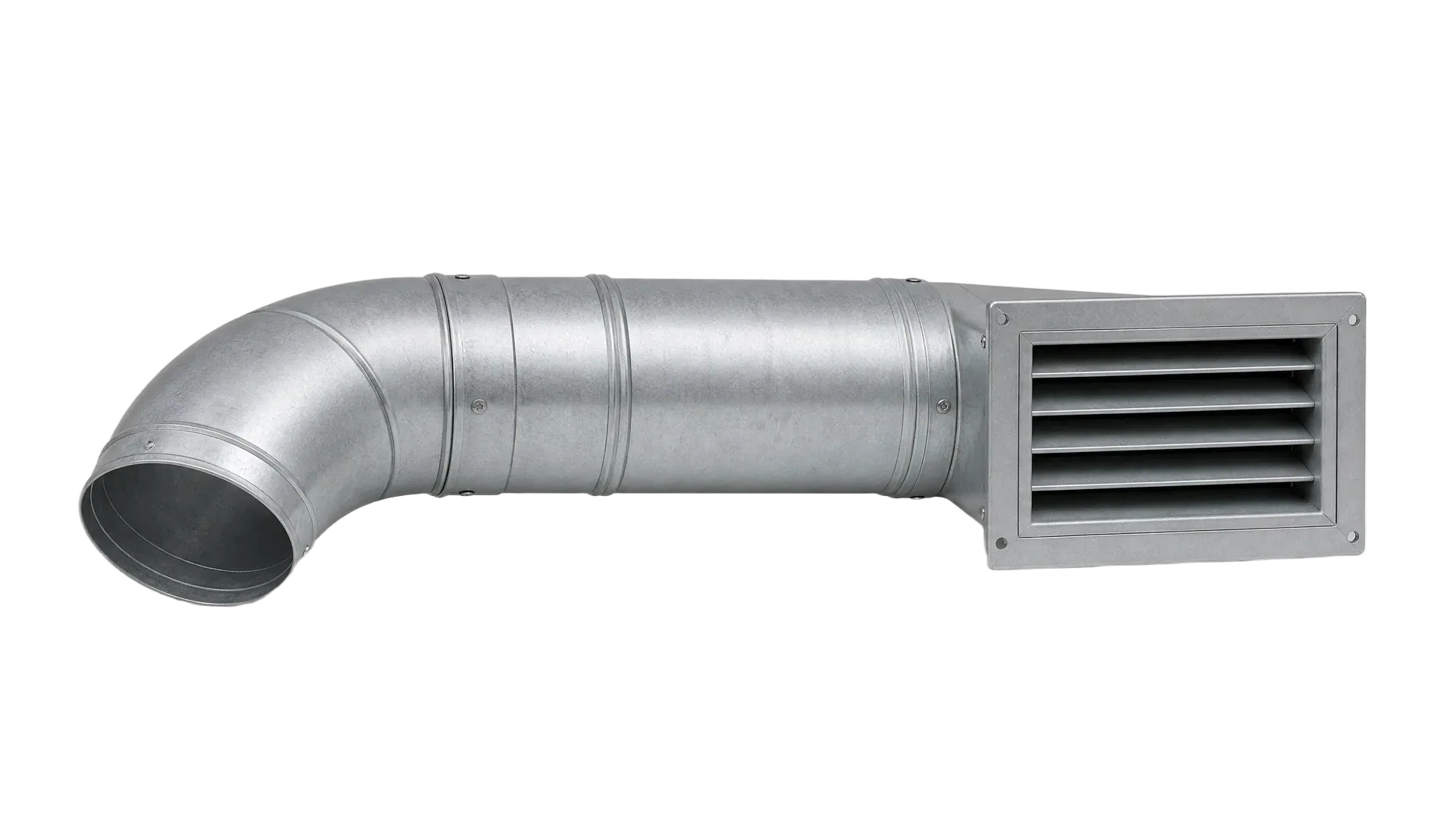

Ducts running right
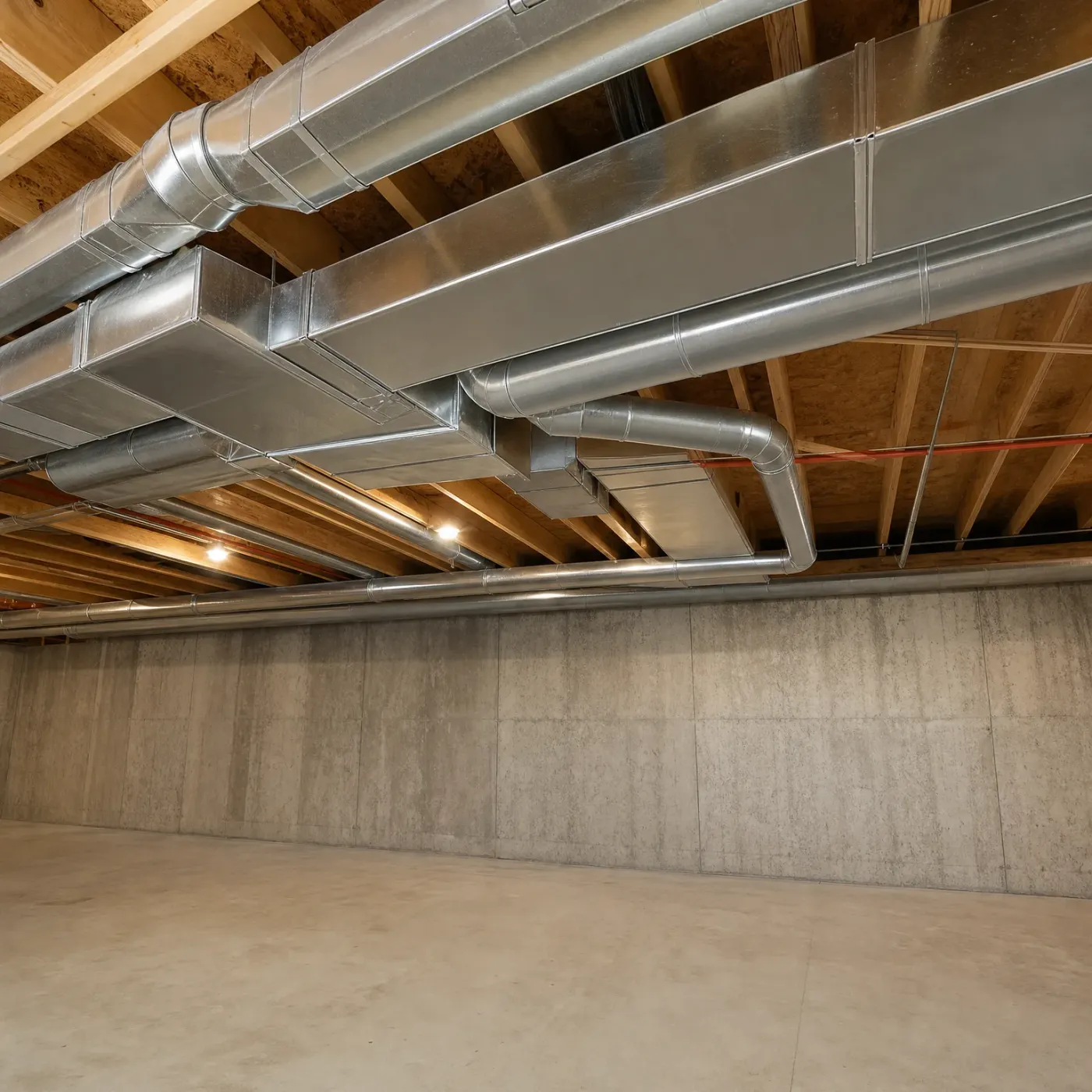
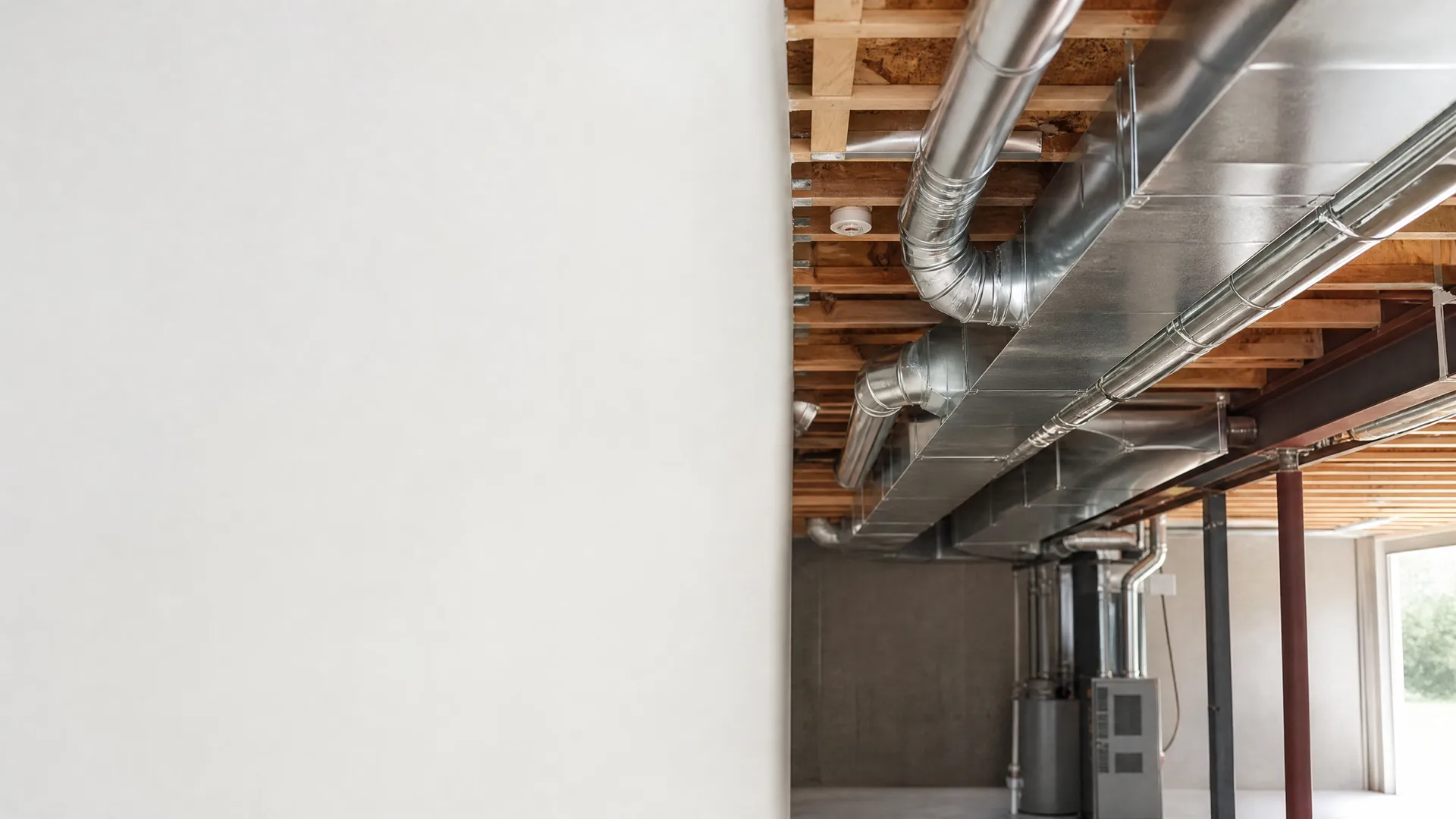
This is what a basement duct run looks like when it's sealed. The metal stays clean, the joists around it stay clean, and there's no dust ringing any of the seams. Air goes where the furnace sent it, straight out to the register.
A few rooms stay too warm in summer and too cold in winter while others feel fine, your energy bills climb even though nothing else changed, and you may see dust collecting faster near the vents or feel a draft in the attic or basement where ducts run. This happens because the joints and seams in ductwork separate over time, or because a section gets crushed or disconnected in a crawlspace or attic. Duct runs through unconditioned attic space take a beating here, since Chattanooga attics swing from near-freezing mornings in winter to well over 100 degrees in summer, and that expansion and contraction works the seams loose. Air you paid to heat or cool is escaping into spaces you don't live in, which is why your system seems to run longer than it should to keep the house comfortable. A duct system that's leaking enough to notice is usually leaking enough to matter on your power bill too.
Half the homes here were built by 1982
Half the homes in Hamilton County were built in 1982 or earlier, so if yours is one of them, the duct joints and seals have had decades to loosen.
Heat runs October through April
Your furnace runs about seven months a year here, October through April, and every one of those months pushes air through the same leaks.
Cooling runs May through September
Cooling runs May through September here, so the other five months of the year, any leak is losing air you paid to cool.
ACS 2020-2024 · NOAA nClimDiv 1991-2020




Walk through the house and put your hand near the supply vents in a few different rooms. Some blow strong and cold, others barely push air at all, and that's air slipping out through the ducts before it gets to the register. Check the attic or crawlspace where the ductwork runs and look for flattened or disconnected sections, or insulation that looks darker near a seam, a sign conditioned air has been blowing against it for a while. Listen near the return for a faint whistling or hissing when the system kicks on. A duct system losing air this way makes your furnace and AC run longer to hit the thermostat setting, and that extra runtime wears on the blower motor and the furnace's heat exchanger well before they'd otherwise show their age.
A duct leak means your furnace or blower runs longer to push the same amount of air into the rooms you're heating or cooling. That extra runtime shows up on the gas or electric bill, and it also wears on the blower motor and the furnace's other parts faster than normal. The equipment isn't broken, it's just working harder than it should to make up for air that never reaches a vent.
Leaks tend to show up at the joints, the seams where two duct sections meet, and at the connections to the furnace or air handler itself. These spots were sealed once, often with tape or mastic, and that seal is what gives out over time. A straight run of metal duct rarely fails on its own. It's the places where sections join, bend, or connect to a register that let air escape.
You've noticed the comfort problems and the higher bills, but before you call anyone you want to know what you're actually dealing with. A furnace problem and a duct problem can look similar from inside the house, both leave rooms too warm or too cold, and you don't want to describe the wrong thing to a contractor or pay for a repair that doesn't fix it.
A furnace problem shows up at the source. If the air coming out of the vents is weak or cool everywhere in the house, or the furnace is short-cycling or not heating at all, that points to the unit itself. A duct leak shows up unevenly instead. Some rooms get strong, warm air and others barely get any, even though they're on the same system. If you go room to room and find that pattern, the furnace is doing its job, the air just isn't making it where it should. Dust around vent covers, a musty smell from the attic or basement where the ducts run, and higher bills with no other explanation all point the same direction.
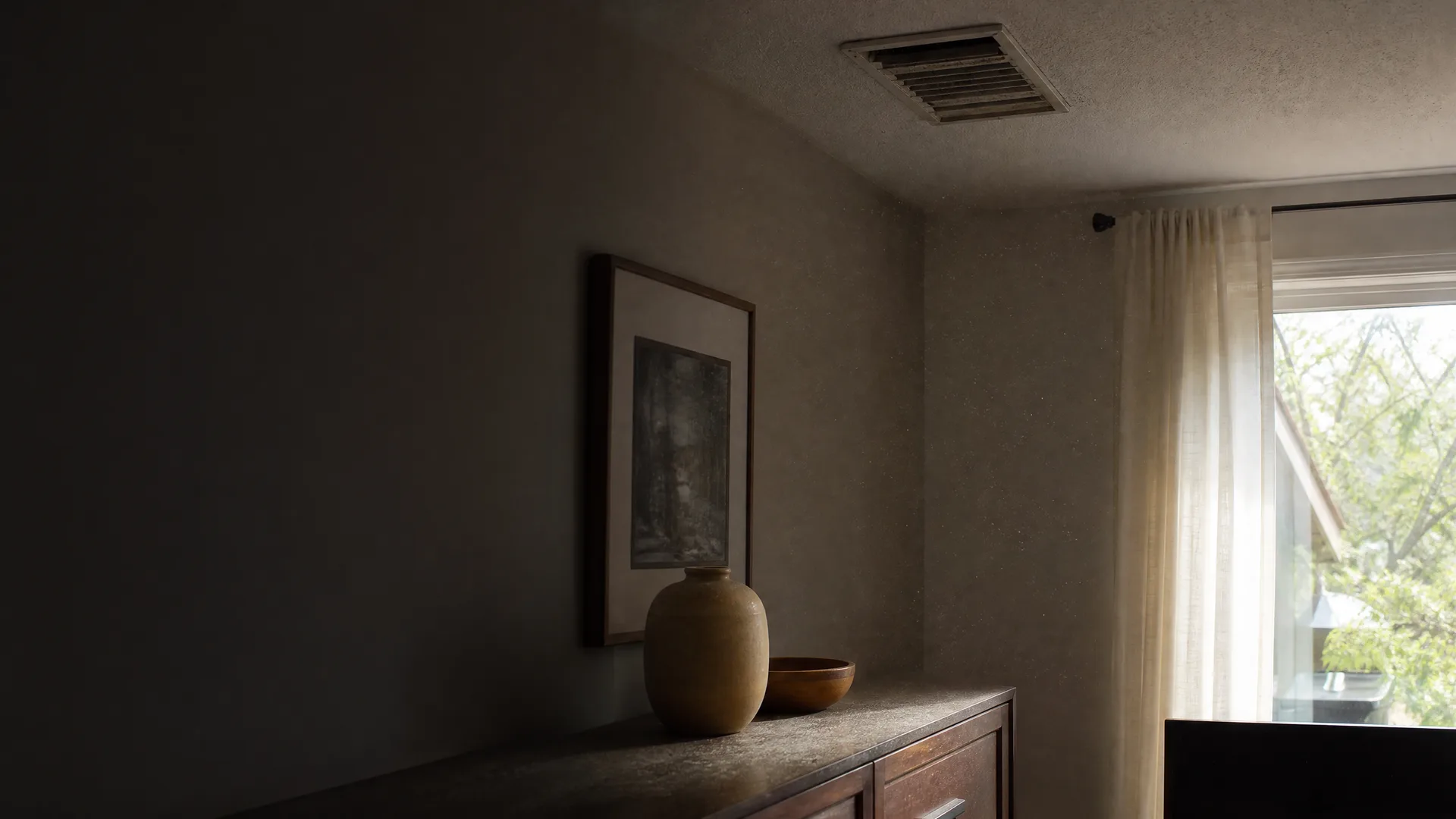
You're dusting the living room on a Saturday in April, windows cracked for the first warm day of the year, and you notice the ceiling vent grille is gray with dust along every slat. The end table under it has a thin film too, the kind that comes back a day after you wipe it. The furnace hasn't run in weeks. You check the grille again, run a finger along the edge, and the dust is fine and dark, more than the rest of the room has gathered. It's been like this near that one vent for a while, you just hadn't stood under it long enough to see it.
You've already checked the vents, felt the warm room that won't cool and the cold one that won't heat, and maybe heard the furnace running longer than it used to. At this point you know enough to act on it, even without climbing into the attic to see the leak yourself. Finding someone to look at it is its own chore: searching for a duct contractor, calling a few, explaining the uneven rooms and the rising bills each time, then trying to compare quotes that don't line up. Handing that off means one contractor who works on ducts in Hamilton County gets your request and reaches out to you directly. You skip the calling around and the repeating yourself, and you get someone who can look at the actual runs under your house or in your attic and tell you what's really going on. That beats guessing room by room all winter.
You patch the duct where you can reach it and call it done, figuring a short run through the attic can't account for much.
A single disconnected joint can dump a large share of the air your furnace is pushing, and most of the duct run is sealed up inside the attic or crawlspace where you'll never see it to check.
At 12.98 cents a kilowatt-hour, every cubic foot of air your furnace or AC pushes out through a torn duct is air you paid to heat or cool and never used. With most homes here running on electric heat, that loss shows up on your bill every month, not just in summer.
EIA-861 2025
This is what a basement duct run looks like when it's sealed. The metal stays clean, the joists around it stay clean, and there's no dust ringing any of the seams. Air goes where the furnace sent it, straight out to the register.

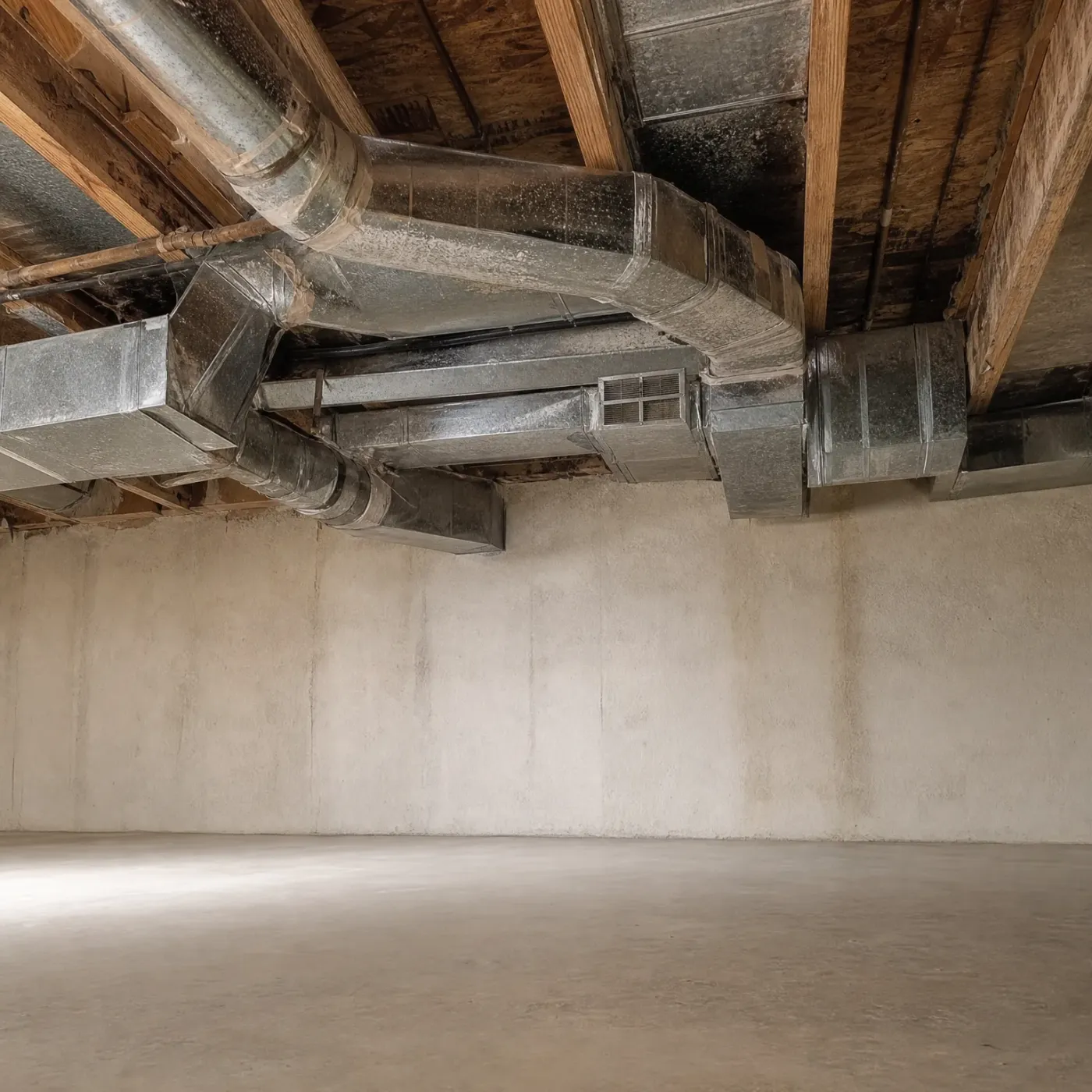
This is the same kind of run losing air along the way. You can see the small pipes and flex duct tucked between the joists, plenty of places for a seam to open. That single vent at the end only gets what's left by the time air makes it that far.
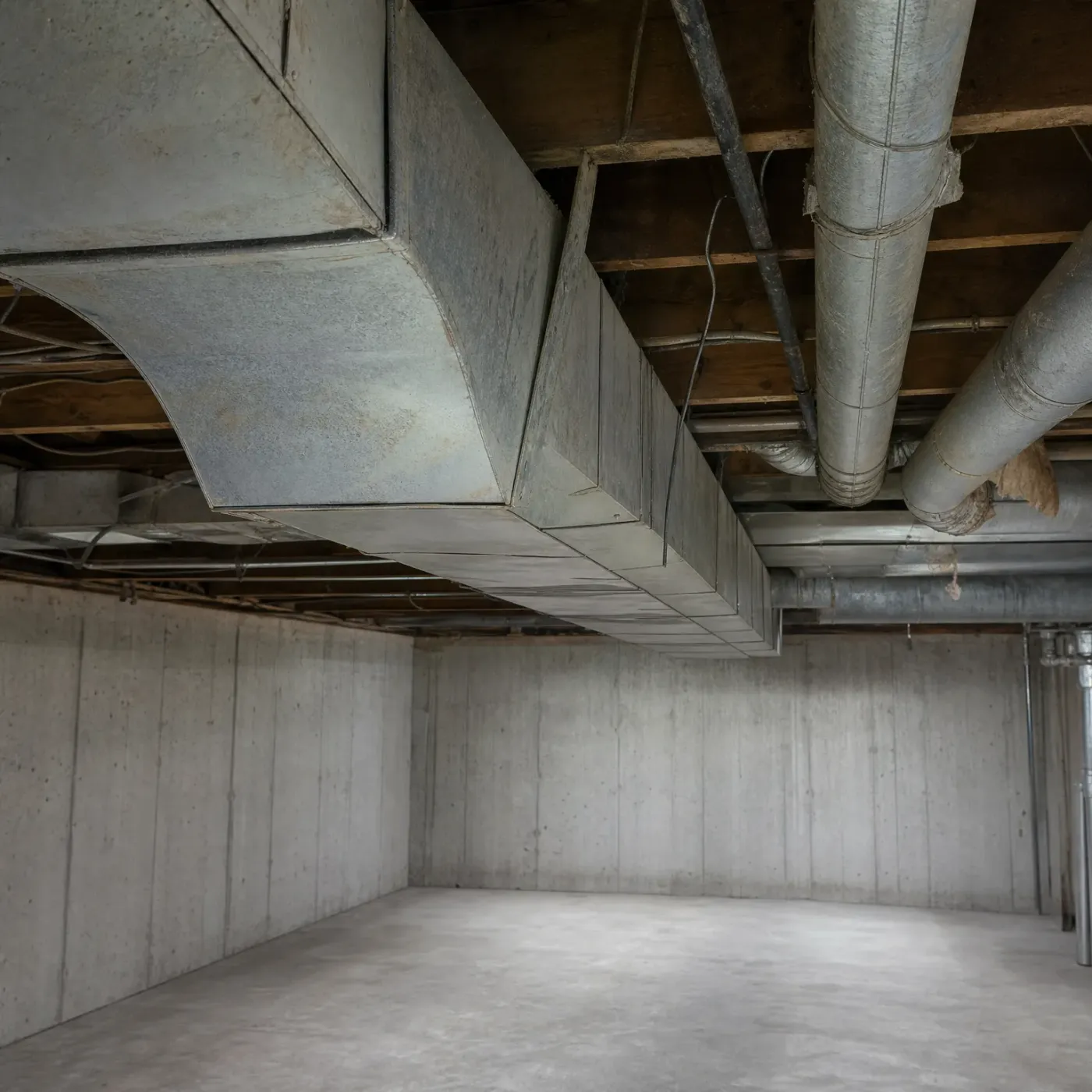
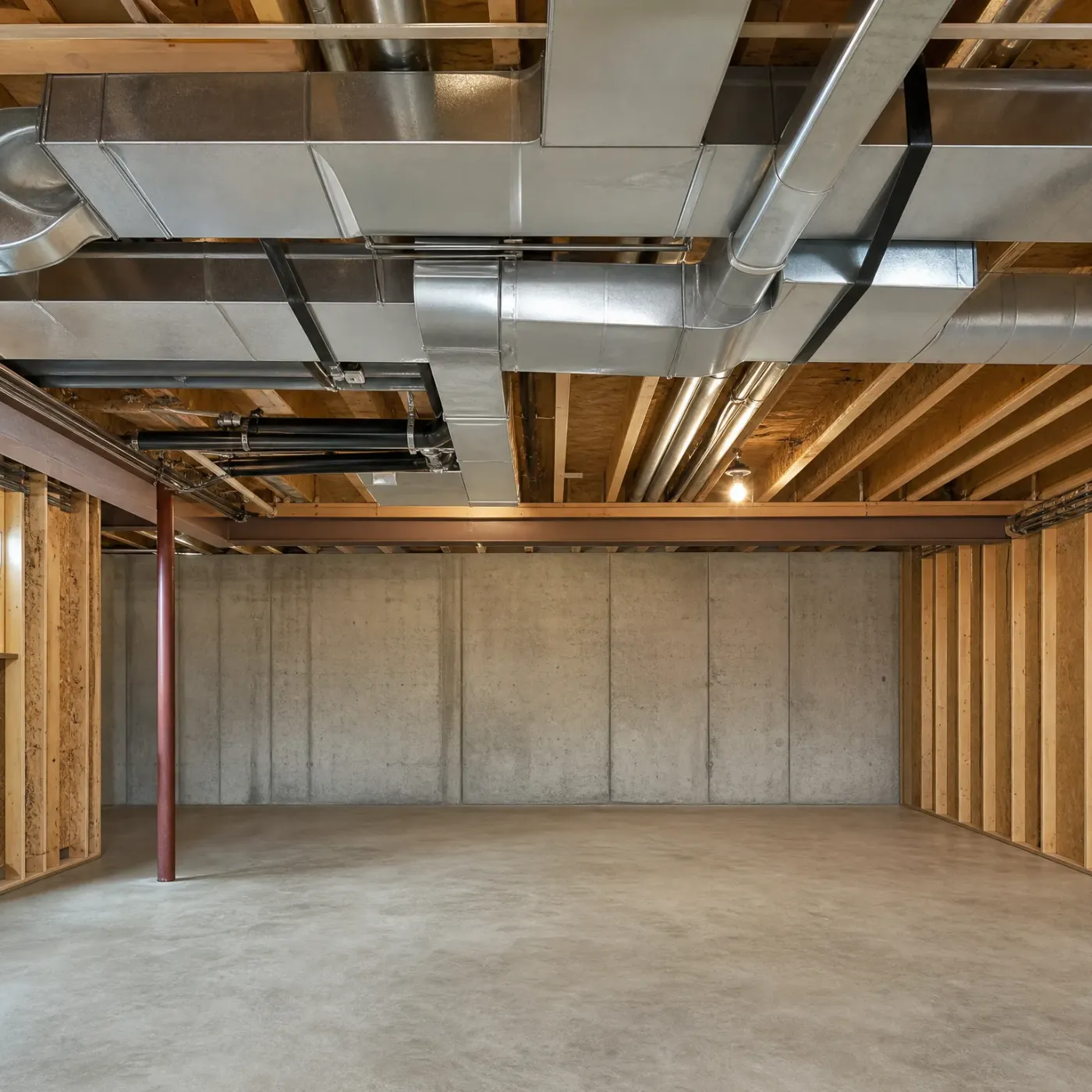
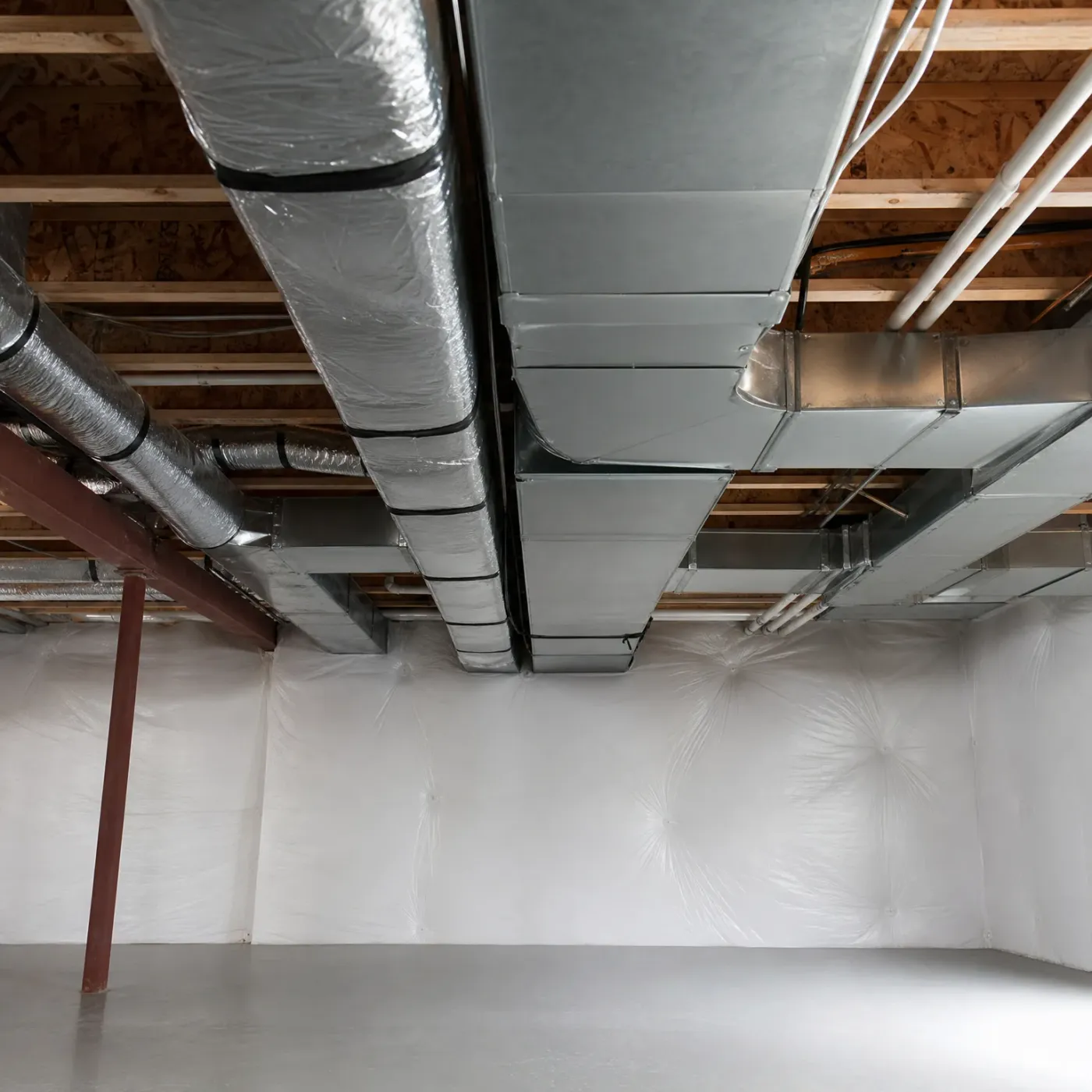
The sheet-metal trunk lines and the flex runs sit clean against the joists, no streaking anywhere on the metal. The plastic sheeting on the walls stays white, not gray. Air that leaves the furnace is air that reaches the register.
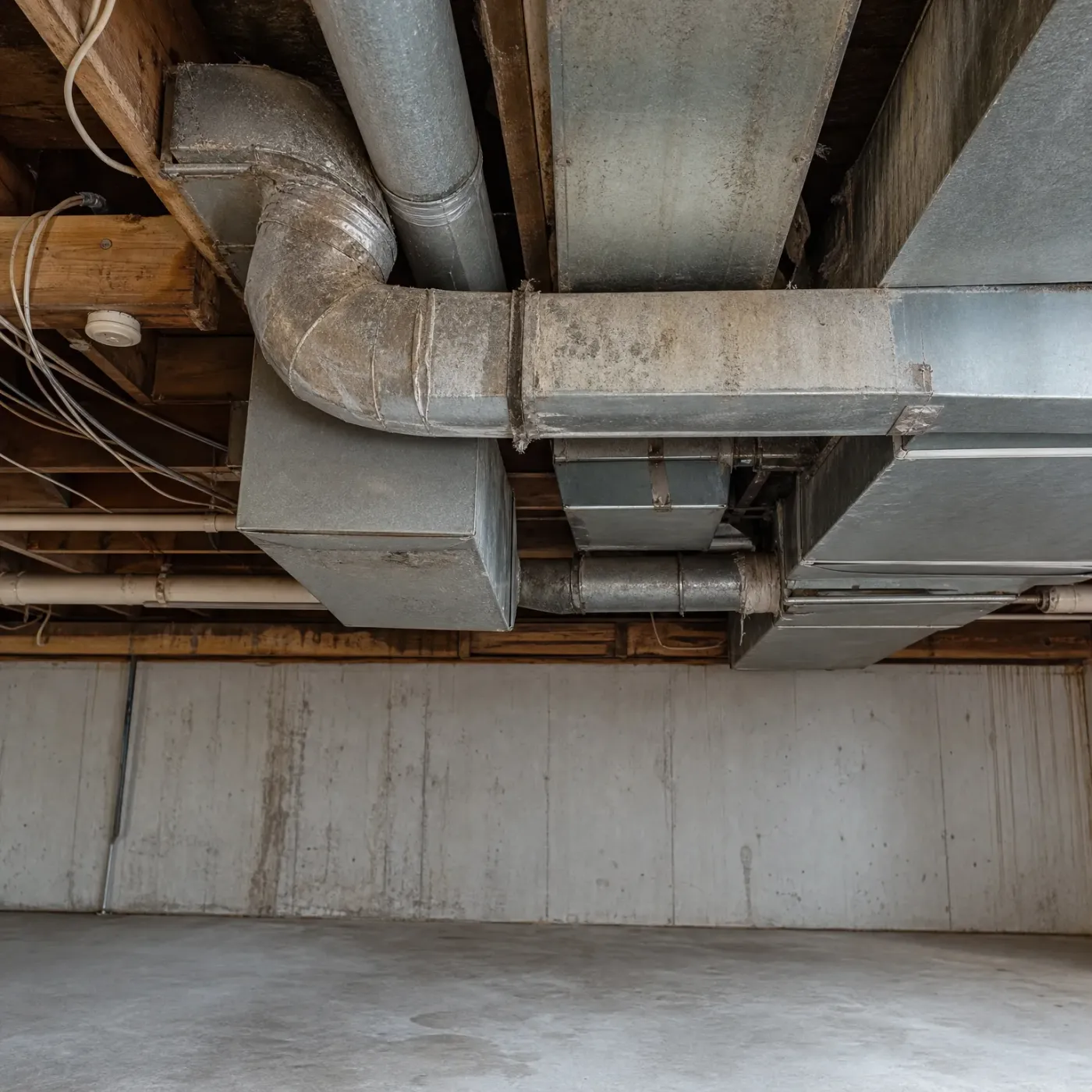
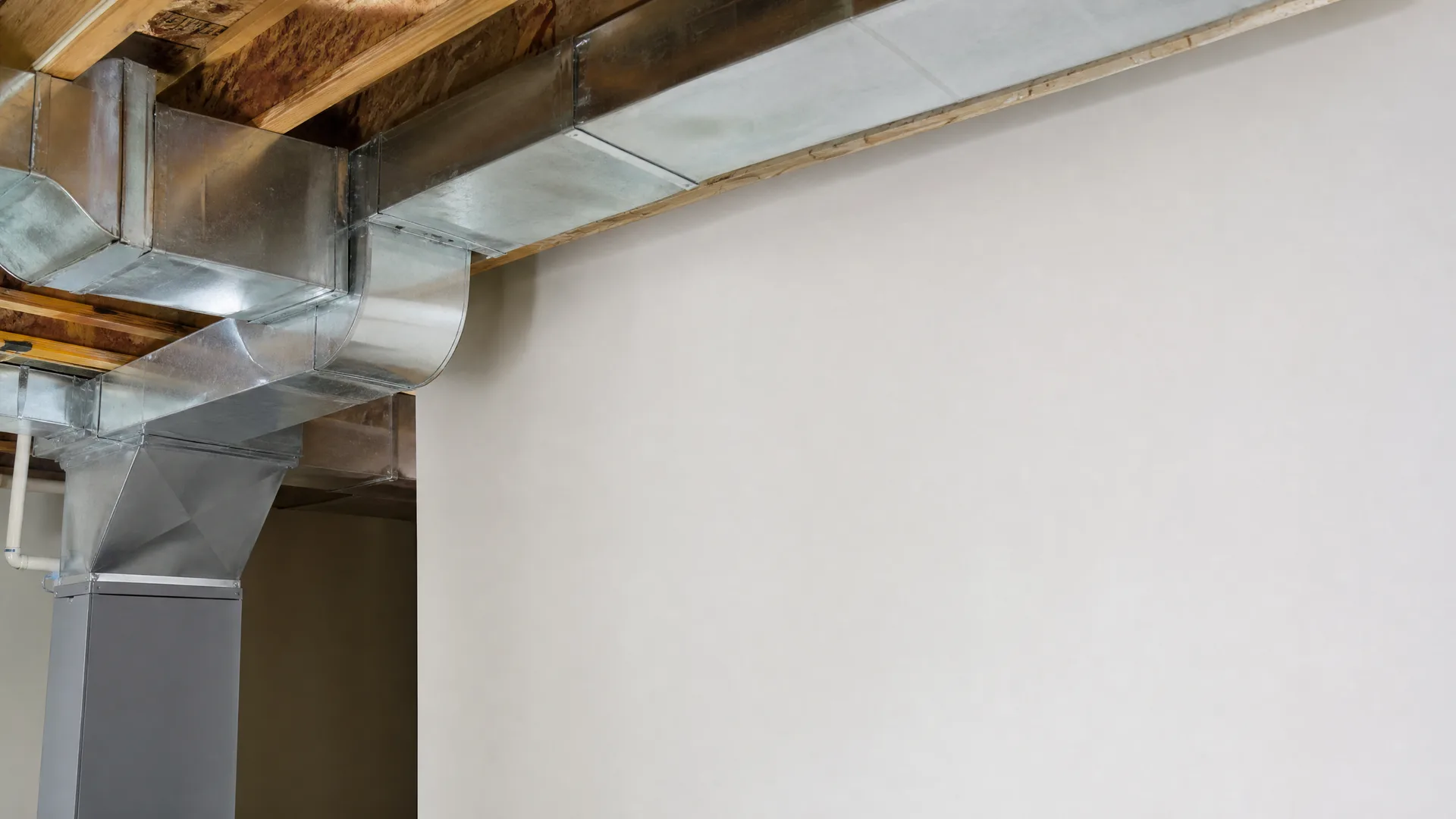
Look at the seams on the trunk line and the elbow connector where two sections meet. That's where a joint works loose over the years and starts pushing air into the joists instead of down the duct. The wiring and foundation wall nearby tell you nothing; the seam does.

A room that won't hold its temperature, a bill that keeps climbing, dust that gathers fast near a vent or a streak along a duct seam in the attic or basement. Any one of those points the same direction. Your ducts are losing air they were supposed to deliver.
You don't have to sort out on your own whether it's a disconnected joint, a torn seam, or something else, and you don't have to track down someone qualified to check it, explain the problem over the phone, then do it again with the next company while you compare quotes. A contractor who works on ductwork in Hamilton County homes can look at what you've found and tell you what it actually is, matched to your situation, and reach out to you directly.

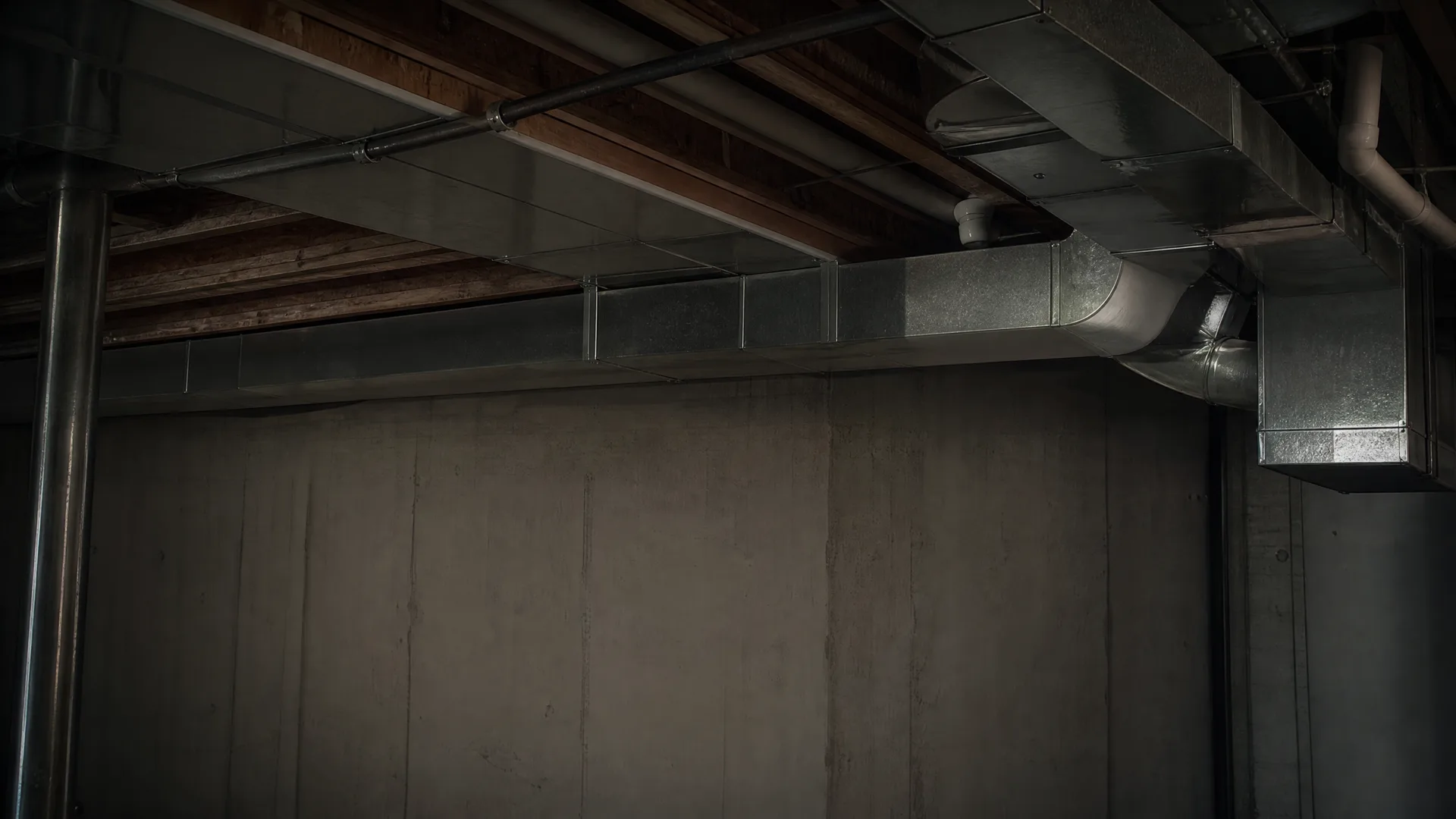
Describe your ductwork job once, to one pro.