

Signs of leaky ductwork in Memphis, TN

A galvanized steel round duct with a 90-degree elbow and a white louvered vent cover on one end, shown against a plain gray background.
Skip calling around

What are the signs of leaky ductwork in my house?

You've noticed something off about your system, maybe a room that never gets quite cool enough, or a power bill that seems high for what your thermostat says it's doing. Leaky ducts are a common reason, and the signs tend to show up in specific rooms and specific habits rather than all at once. Knowing what to look for tells you whether your ductwork is the problem before you call anyone.

Uneven temperatures and higher bills are the main signs of leaky ducts

A room that stays warmer or colder than the rest of the house, especially one far from the air handler, usually means air is escaping the ducts before it gets there. Dust building up fast around vents is another sign, since a leak in the return side pulls in air from attics and crawl spaces instead of the room. You might also hear more air running through the system without feeling much coming out of the vents. In Shelby County, where summers stay muggy for months and electricity runs most homes, a leaky system has to work longer to make up for the air it's losing, which shows up on the bill before you can see the leak itself.

  1. Conditioned air leaves the furnace or air handler under pressure

  2. Air travels through seams, joints, and connections in the ductwork

  3. Gaps and loose connections let air escape into the attic or crawlspace

  4. Lost air never reaches the room it was meant for

A closed laptop and a speckled ceramic mug sit on a wooden table beside a stoneware vase with a leafy branch, with a wooden chair, kitchen counter with cutting board and bowl, and dark upper cabinets in the dim background.

What this is doing to your house right now

Every month those leaks run, you're paying to cool or heat the attic instead of your living room. In Shelby County, with power cheap but summers long and winters genuinely cold, that waste adds up on both ends of the year, not just one season. The room farthest from the furnace or air handler is usually the one that shows it first, staying warmer in summer and colder in winter no matter where you set the thermostat.

There's a comfort cost too. A duct leaking into a crawlspace can pull in dust and humid air and push it right back into your house. If you've already started asking around about it, you know the rest of the trouble: finding a contractor who actually works on ducts, explaining the same symptoms to three different companies, then sitting with quotes you can't really compare because nobody looked at the same thing. A local contractor who deals with this kind of leak every season can usually tell what's going on before they've even opened the attic hatch.

Living room interior with a light sofa holding a dark green cushion and a brown knit throw, a tall leafy plant by a black-framed window, a wooden coffee table with a round tray, and wooden shelves holding vases and books.

Why does duct age matter so much in Shelby County?

  • Half the homes here were built by 1977

    Half the homes in Shelby County were built in 1977 or earlier. Ductwork that old has had decades of joints working loose.

  • Heat runs November through March

    Heat runs November through March here. Five months of warm air pushed through gaps is five months of higher bills.

  • Cooling runs May through September

    Cooling runs May through September. That's the long stretch where leaky ducts cost you the most, every single month.

ACS 2020-2024 · NOAA nClimDiv 1991-2020

Ducts you can get to and see

Ductwork running through a basement or crawlspace is the easier case. A contractor can walk the lines, feel for air at the joints, and look for the disconnected sections or crushed flex duct that cause the worst losses. Sealing those runs doesn't mean opening a wall or ceiling. Metal tape and mastic go on where the leak is, and the work gets checked by hand before anyone calls it done. If your system runs through an unfinished basement, this is likely what you're dealing with.


Ducts buried in the attic

A lot of Shelby County houses run their ductwork through the attic instead, and that's a harder problem. Insulation hides the duct runs, summer attic heat makes the work miserable, and reaching a leak at a far joint can mean crawling the length of the attic on plywood boards. The leak is still findable and still fixable, it just takes longer and costs more in labor. If your vents are in the ceiling, this is probably your situation, and it's worth asking a contractor how they access the lines before they start.

Empty basement with bare concrete walls and floor, a steel support column, and galvanized sheet-metal ductwork and pipes running along the exposed wood joist ceiling.
Before you get your ductwork cleaning
Empty unfinished basement with concrete walls and floor, exposed wood joists, metal HVAC ducts and pipes overhead, and a steel support column near a framed wall.
After you get your ductwork cleaning

No calling every shop in Shelby County

The pro who gets in touch is licensed in Tennessee and works in Shelby County.

You only hire the pro if you want to.

What a pressure test actually finds

A visual check catches the joints a contractor can reach and see, but plenty of duct runs sit inside walls or above ceilings where nobody can look. A duct blaster test seals off the registers, pressurizes the system with a calibrated fan, and measures how much air it takes to hold that pressure. The reading tells you how much air the system is losing to leaks, not just the ones in view. It's the same test used to confirm a sealing job worked, because the number before and the number after can be compared directly. Without it, you're going on what can be seen, which in a lot of Shelby County homes is only part of the system.

Where the lost air actually goes

Supply ducts run at higher pressure than return ducts, so a leak on the supply side pushes air out into the attic or crawlspace, and a leak on the return side pulls unconditioned air in from whatever space the duct passes through. A return leak in a hot attic means the system is drawing in attic air, sometimes 130 degrees or more in July, and trying to cool it along with the air from your rooms. That's a different problem than a supply leak, and it's one reason the same house can have both a hot upstairs bedroom and a furnace that runs longer than it should.

A smiling middle-aged man in a dark knit sweater sits at a dimly lit dinner table with a glass of red wine, a bowl of food, and a lit candle in the foreground.
A woman with long wavy brown hair in a knit sweater reclines on a couch with eyes closed under a textured blanket, an open book on her lap, beside a lit table lamp and potted plant.

Walking the ductwork and feeling for air at the joints only tells you about the runs a contractor can reach. A duct blaster test checks the whole system at once. The registers get sealed, then a calibrated fan pressurizes the ducts and measures what it takes to hold that pressure. A tight system holds it easily. One with gaps in the runs behind a wall or above a ceiling makes the fan work harder, and that difference shows up as a real number, cubic feet per minute lost, instead of a guess. A smoke pencil can back it up at any seam that looks suspect, since moving air pulls the smoke sideways right where the leak is. Some contractors isolate one supply line at a time to find which run is losing more air than the others. And because most places set a limit on how much a duct system is allowed to leak, the test doubles as a pass or fail against that mark, not just a number on a page.

What a duct blaster test shows

  • A duct blaster test pressurizes the whole system with a calibrated fan while registers stay sealed off.
  • The fan has to push harder to hold pressure when there's a bigger hole somewhere in the run, and that extra air tells the contractor how much is leaking.
  • Results come back as a number, cubic feet per minute of air lost, not a guess from walking the attic.
  • A smoke pencil held at a seam shows the leak directly when air pulls the smoke sideways instead of letting it drift.
  • Contractors sometimes check room by room with the test, isolating one supply line at a time to find which run is worse than the others.
  • Code in most places calls for total leakage under a set percentage of the system's airflow, so the test also tells you whether the ductwork passes or fails that mark.
A woman in a beige V-neck sweater laughs while seated at a white marble counter with a glass of white wine, with a living room containing a gray sectional sofa, lamp, and dark windows behind her.
A woman with long dark hair in a cream sweater laughs while seated at a light stone counter with a glass of red wine, with a blurred dining table and living room behind her.
A woman in a dark green sweater laughs while seated at a marble kitchen island with a glass of red wine, with open shelving, cabinets and a living room visible behind her.
A smiling woman with dark shoulder-length hair in a cream V-neck sweater sits at a marble counter with a glass of red wine, with a kitchen and softly lit living room behind her.
Unfinished basement with concrete floor and walls, exposed wood joists, steel support posts, and large galvanized sheet-metal ductwork running to a furnace or air handler against the far wall.

Ductwork tied together and sealed

Here the supply and return runs connect straight into the furnace with tight joints along the way. Air moving through sheet metal like this stays inside the duct until it reaches a register, so a room gets what the thermostat is calling for.

Galvanized sheet-metal ductwork and round pipes run along a wooden floor joist ceiling above a bare concrete wall and floor.

Ductwork left to leak

Runs like this one cross a lot of joists before reaching any room, and every seam along the way is a place air can get out. A gap here pushes conditioned air into the floor cavity instead of the house, and nobody sees it happen.

Power here costs 13.20 cents per kilowatt-hour

At 13.20 cents per kilowatt-hour, air leaking out of your ducts before it reaches a register is cheap compared to other places, but it's still air you paid to move. A leak that wastes a third of your airflow means a third of that bill bought nothing for the room it was supposed to cool or heat.

EIA-861 2025

The signs are usually simple once you know to look for them: rooms that stay warmer or cooler than the rest of the house, a bill that doesn't match what the thermostat is doing, dust around registers, ductwork you can feel leaking when you put a hand near a joint. A contractor who works on duct systems around Shelby County every week has a good sense of where a house this old tends to lose air before they even open the attic hatch, because the joints that fail are the same joints that have always failed. Getting a pressure test or a visual inspection means one licensed contractor comes out, looks at your actual ductwork, and tells you what's leaking and what it would take to fix it. No sorting through quotes from five companies, no retelling the story of your power bill to every one of them. Just someone who knows this equipment, looking at your house, giving you a straight answer about where your air is going.

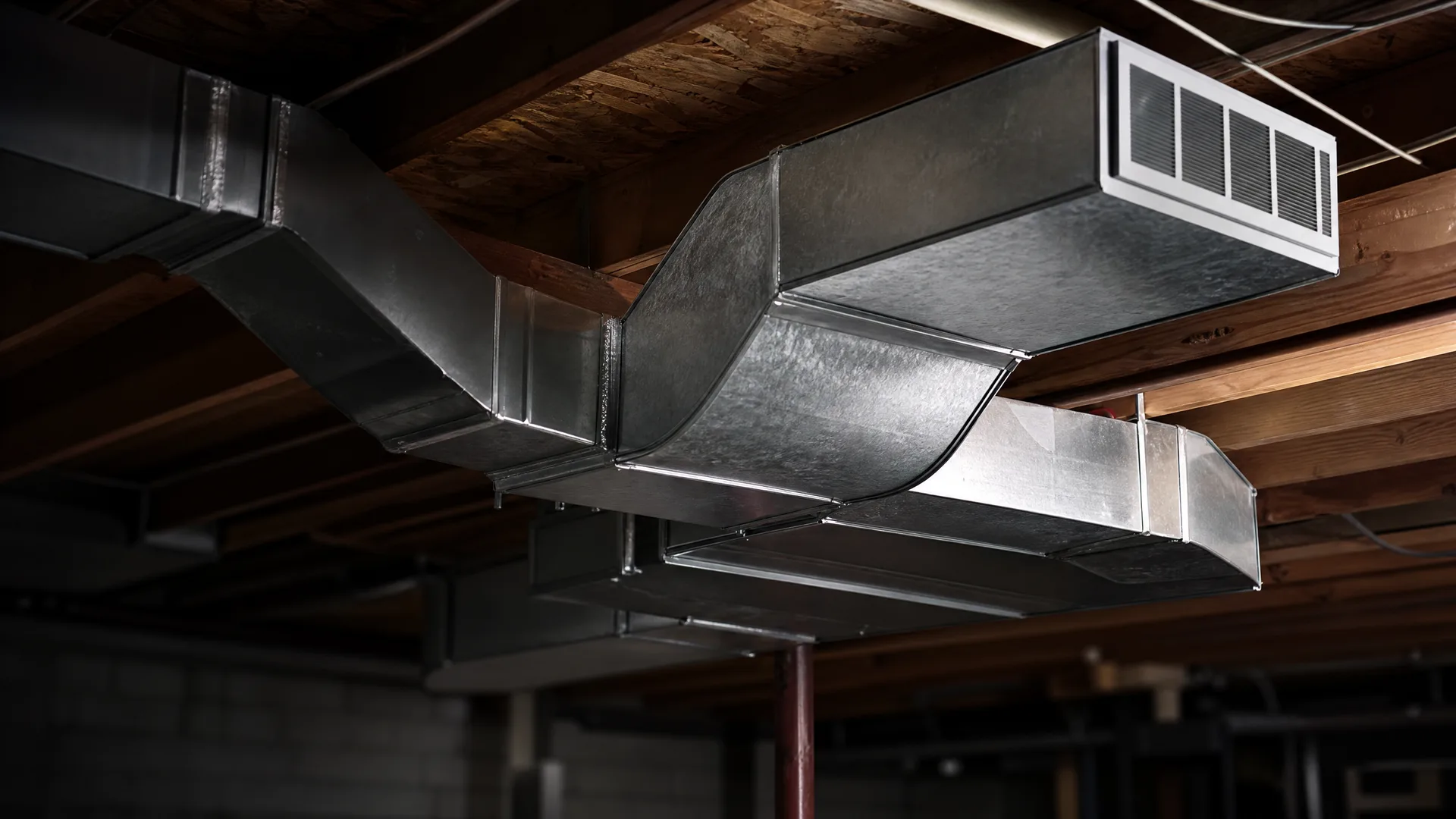
Galvanized sheet metal HVAC ductwork with a white vent grille, mounted against wooden floor joists in a dim basement with concrete block walls.

One form, no calling around

Duct and vent cleaningDucts or ventsShelby County, TN
Step 1 of 2

What ZIP code is the job in?