 I'm done searching
Why your AC is blowing dust in Tennessee
Send the form and the air conditioner tune-up stops being something to remember.
Dust coming out of your vents usually means your air conditioner isn't filtering the air the way it should. A dirty filter is the first place to look. If it's packed with dust, the system pulls air around it instead of through it, and whatever is in your ductwork or your house gets pushed right back out into your rooms.
A filter that's the wrong size or too loose in its slot does the same thing. So does a return vent with a bad seal, or ductwork that's come loose somewhere and is pulling in air from a crawlspace or attic instead of the room you're trying to cool. None of these are things you can see by looking at the vent in your ceiling. Someone has to open the system up and check.
In Tennessee, summers get muggy enough that an AC runs long hours, day after day, and that means more air moving through the filter and the ducts than in a mild climate. A small gap or a filter that should have been swapped out weeks ago shows up faster here than it would somewhere cooler and drier.
This is the kind of thing a maintenance visit catches. A local contractor who works on systems like yours all summer knows what tends to fail first, and checks the filter fit, the seals, and the duct connections as a matter of course, not as a special request.
Send the request and you're done with the hard part. No need to search around for who's reliable or wait on hold with a company that doesn't know your system. One licensed contractor near you gets your information, and from there, finding your way to cleaner air is off your plate.
Dust blowing out of your vents usually comes down to air moving where it shouldn't. A clogged filter is the common cause, but it isn't the only one. Loose duct connections and leaky returns pull in dust from your attic or crawlspace and push it right through the system into your rooms. In Tennessee's humidity, that dust can mix with moisture inside the ductwork and coat the coil, which then sheds particles back into the airflow. Cracked or disconnected duct runs do the same thing, just with more of it. If you've changed the filter and the dust keeps coming, the problem is further back in the system, not at the vent you're looking at. A coil or duct inspection will usually show where the air is actually getting dirty.


A filter only stops dust if air actually passes through it. Once it's clogged, your system finds the easiest path, and that's often around the filter's edges or through a gap at the duct connection.
That gap doesn't close itself. Someone has to check the filter fit, seal the loose connections, and confirm the return isn't pulling air from your attic before the dust stops coming through your vents.





Air gets pulled in through the return before it reaches the filter
A clogged or ill-fitting filter lets air slip around its edges
Unfiltered air picks up dust sitting in the ducts
Loose joints and gaps in the ductwork pull in more dust from the attic
Check It Yourself, or Have It Checked
Check it yourself
- Pull the filter and hold it up to a light. If you can't see light through it, air is going around it, not through it.
- Look at the duct connections you can reach, like at the air handler, for gaps or tape that's peeled back.
- Check the return grille for a loose seal against the wall or ceiling, since that draws in attic or crawlspace air.
- Watch how fast dust builds back up after you wipe a surface. A day or two means something is still feeding it in.
- Note which rooms get dusty fastest. A single bad room often points to one leaky duct run instead of the whole system.
Have it checked
- A technician who services AC systems all summer knows which duct joints in Tennessee homes tend to come loose first.
- Maintenance includes pulling the blower access panel and coil cover, parts you wouldn't normally open on your own.
- A pressure check on the ductwork finds leaks that don't show up just by looking at a joint.
- The same visit catches a dirty blower wheel, which keeps spreading dust even after the filter's been replaced.
- One licensed, local contractor handles the whole visit, so you're not explaining the problem twice to different companies.

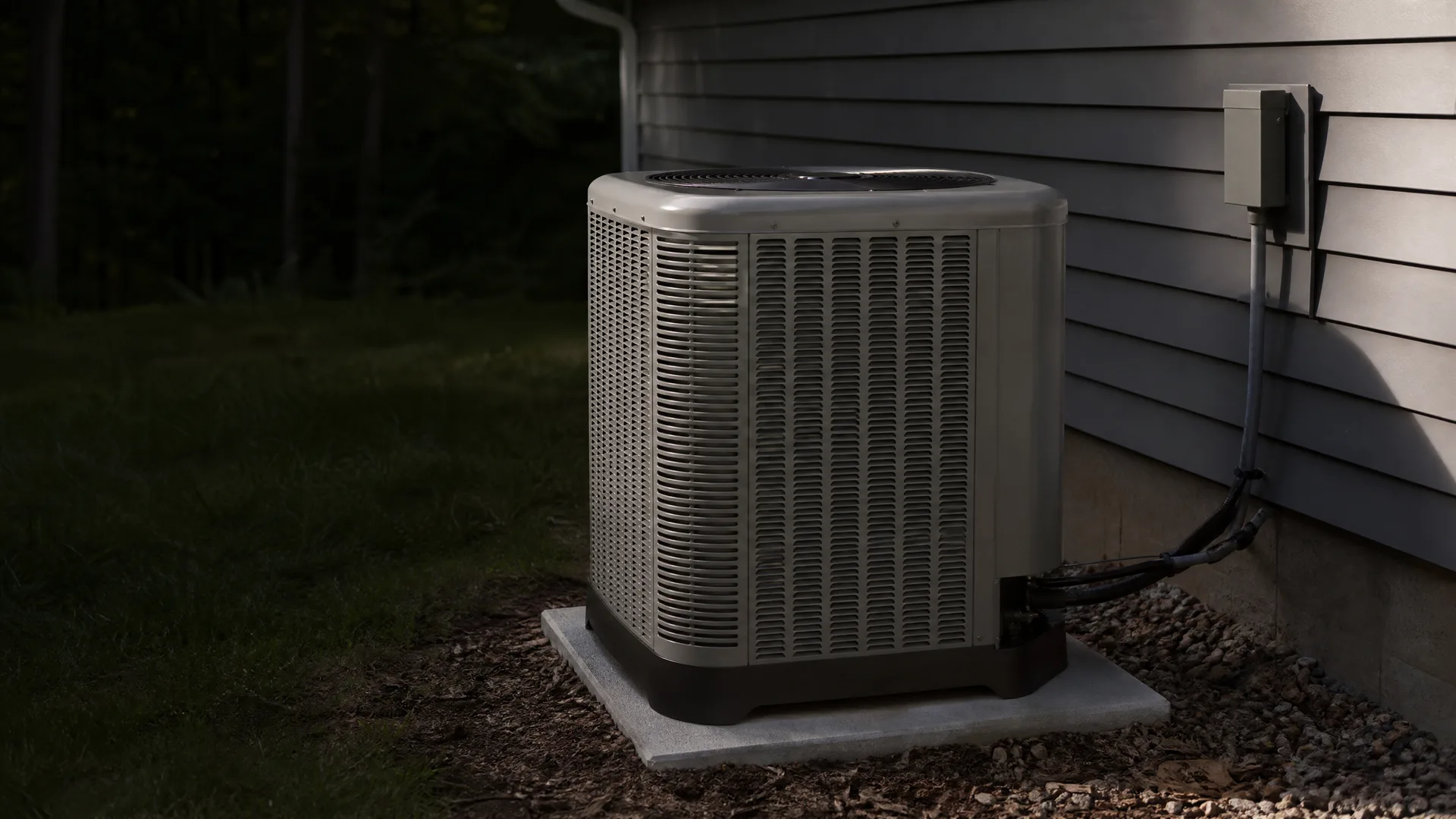
You're out pulling weeds along the side of the house in May when you notice it. The condenser fins are white, matted thick with cottonwood fluff, the kind that drifts across every yard in Tennessee this time of year. You run a finger along one fin and it barely moves air. Inside, you already know what that means. The dust on the TV stand this week, the film on the ceiling fan blades, that's the same unit straining to pull air through fins it can't breathe through anymore. You pull out your phone and send the request. From here, finding someone to clear it is off your plate.
Let someone else find the pro

A licensed local pro takes the request for your air conditioner tune-up.
It costs nothing to send, and you don't have to hire anyone.

Summer air here carries a dew point around 66°F, averaged across June, July and August for homes in Tennessee, according to NOAA climate data. Air that heavy means your air conditioner spends more of each cycle pulling moisture out before it ever cools the room, which means longer run times. Longer run times move more air across a dirty filter and through any gap around it. That's more dust riding along with the air your system pushes into the house, and more of it settling on furniture and floors between cleanings.
NASA POWER T2MDEW county cells weighted by homes
Can a dirty evaporator coil cause dust in my vents?
You keep hearing that the coil could be part of the problem, but it seems backward. The coil is inside the unit, behind the filter, so it's not obvious how something back there would send dust out through your vents instead of just sitting there.
A dirty coil doesn't add dust, but it lets more of it through
The coil itself isn't where dust comes from. It's downstream of the filter, so by the time air reaches it, the filter was supposed to have already caught what it could. But when a coil is caked with dirt, airflow across it drops, and the system has to work harder to move the same amount of air through the house. That strain shows up as weaker airflow at your vents, and weaker airflow means less force pushing dust out of the ducts and more of it settling along the way, only to get stirred up again the next time the system kicks on. A coil gets dirty largely because something upstream, like the filter, already let too much through.


Power costs 13.22 cents per kilowatt-hour statewide
At 13.22 cents a kilowatt-hour, running your blower longer than it needs to costs you something every month. A clogged filter makes the system work harder to push air through, and that's electricity spent moving air around dust instead of through it.
EIA-861 2025 statewide residential average


Where This Leaves You
- Dust in your vents almost always traces back to a filter that stopped doing its job or a gap in the ductwork.
- Checking the filter against a light and looking at the duct joints you can reach tells you most of what you need to know.
- A local contractor who services air conditioners all summer in Tennessee has seen which connections fail first and where filters get skipped.
- Sending one request means one contractor calls, not a string of them competing for your number.
- Catching this now, while it's just dust, keeps it from turning into a coil caked with grime or a blower working harder than it should.
Dust in your vents is airflow going where it shouldn't, either through a filter that's stopped working or through a gap somewhere in the ductwork. You can check both yourself. Hold the filter to a light and look at the joints you can reach near the air handler. Most of the time that tells you enough to know whether this is a quick fix or something that needs a closer look.
If it's the second case, you want someone who already knows this equipment, not someone seeing it for the first time. A contractor who works on air conditioners all summer in Tennessee has opened up enough of these systems to know which duct joints tend to separate first and which filters get the wrong size slapped in because nobody checked. That's the kind of thing you can't tell from pulling a filter out once and looking at it.
Send one request and one contractor calls, the one matched to your job, not three or four competing to get there first. That's less to sort through on your end, and less chance of getting someone unfamiliar with how homes here are built or cooled.
Dust is usually the easy stage. Left alone, it's what ends up caked on the coil or pulling more current through the blower than it needs to. Catching it now, while it's still just dust coming out of a vent, is the cheap part of this problem.
One request and it's handed off