









Side profile of a bearded man wearing a dark faded baseball cap and a dark gray t-shirt against a plain light background.

Why your house is so dusty in Knoxville, TN

Duct and vent cleaningDucts or ventsKnox County, TN
Step 1 of 2

What ZIP code is the job in?

Dust that keeps coming back usually means your duct system is pushing it, not just holding it. Ducts pull air from every room and send it back through the house, and any dust already inside them, from the attic, a crawlspace, or a return that leaks air from an unconditioned space, rides along with it. Knoxville summers run long and sticky, so the system cycles on and off for months straight, moving far more air through those ducts than a mild climate would. A dirty or poorly sealed filter lets fine dust pass right through instead of catching it. Leaky ducts do something else: they pull in attic or crawlspace air at the leak points and carry that dust straight into your living room. If you're changing filters on schedule and still wiping down shelves every few days, the dust is coming from inside the system itself, not from open windows or foot traffic.

A bearded man in a plaid flannel shirt over a gray tee looks out a frosted multi-pane window with snow outside, a steaming dark mug on the sill beside him and shelves of dishware behind.
A smiling bearded man in a blue-gray t-shirt sits on a gray couch in a living room with wooden shelving and a bright window behind him, looking down toward a device at the lower edge of the frame.

Why does Knox County dust build up in your ducts year after year?

  • Half the homes here were built by 1985

    Half the homes in Knox County were built in 1985 or earlier, so a lot of duct systems here are old enough to have gaps and seams that pull in dust.

  • Heat runs October through April

    Heat runs October through April here, about seven months, and that's seven months of air moving dust through the house every day.

  • Cooling runs May through September

    Cooling runs May through September, so between the two, your system is pushing air through those ducts most of the year.

ACS 2020-2024 · NOAA nClimDiv 1991-2020

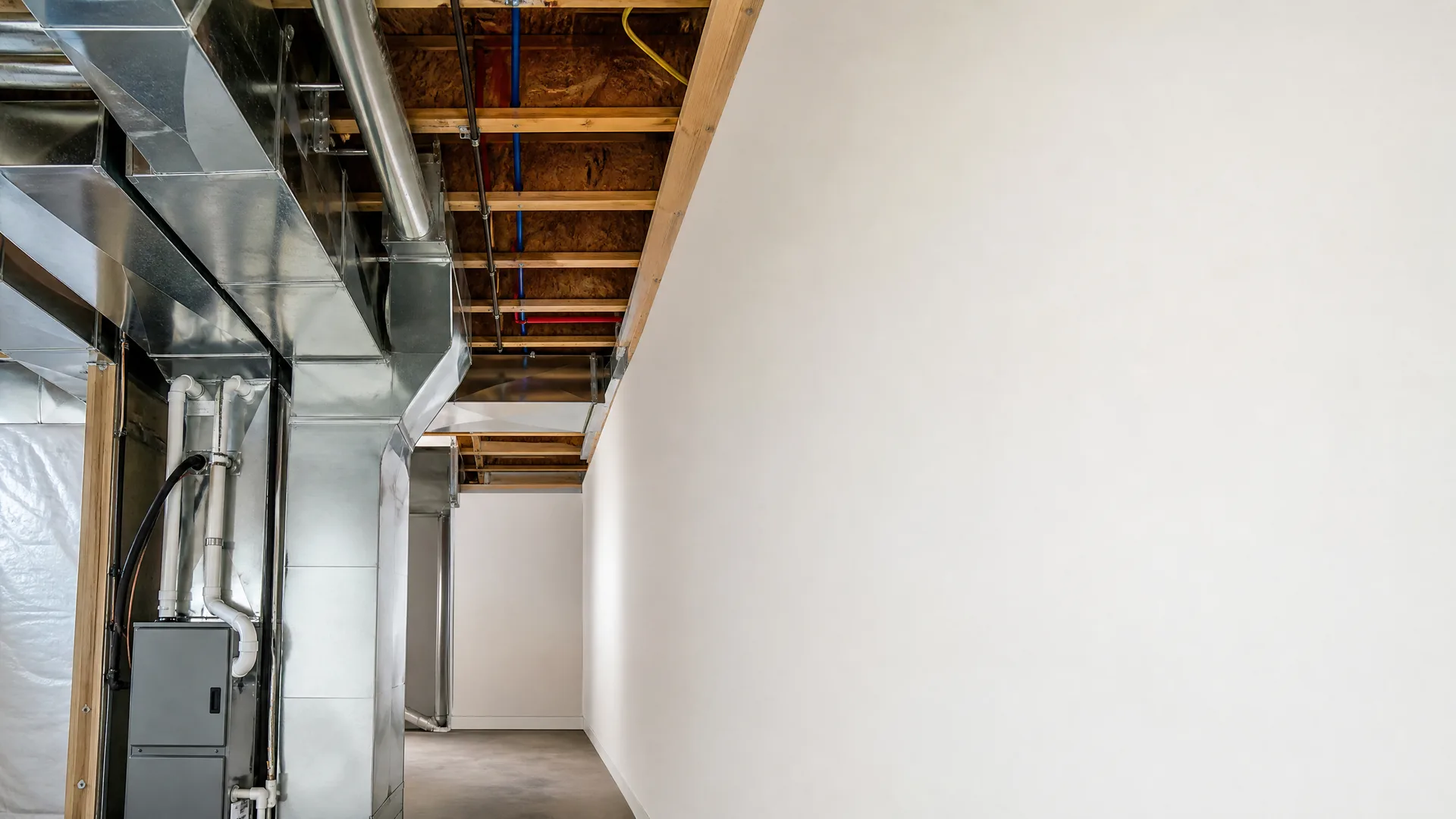
Unfinished basement corridor with exposed wood floor joists, pipes and wiring overhead, sheet-metal HVAC ductwork and an electrical panel along the left wall, and a blank white wall on the right.

Dust from a leaky return

A return duct that runs through the attic or crawlspace can pull air from those spaces instead of just the room it's supposed to draw from. Every seam that isn't sealed tight is a place where attic dust, insulation fibers, and crawlspace grit get pulled in and pushed right back out through your vents. You end up cleaning the same dust that your own ducts keep handing back to you.

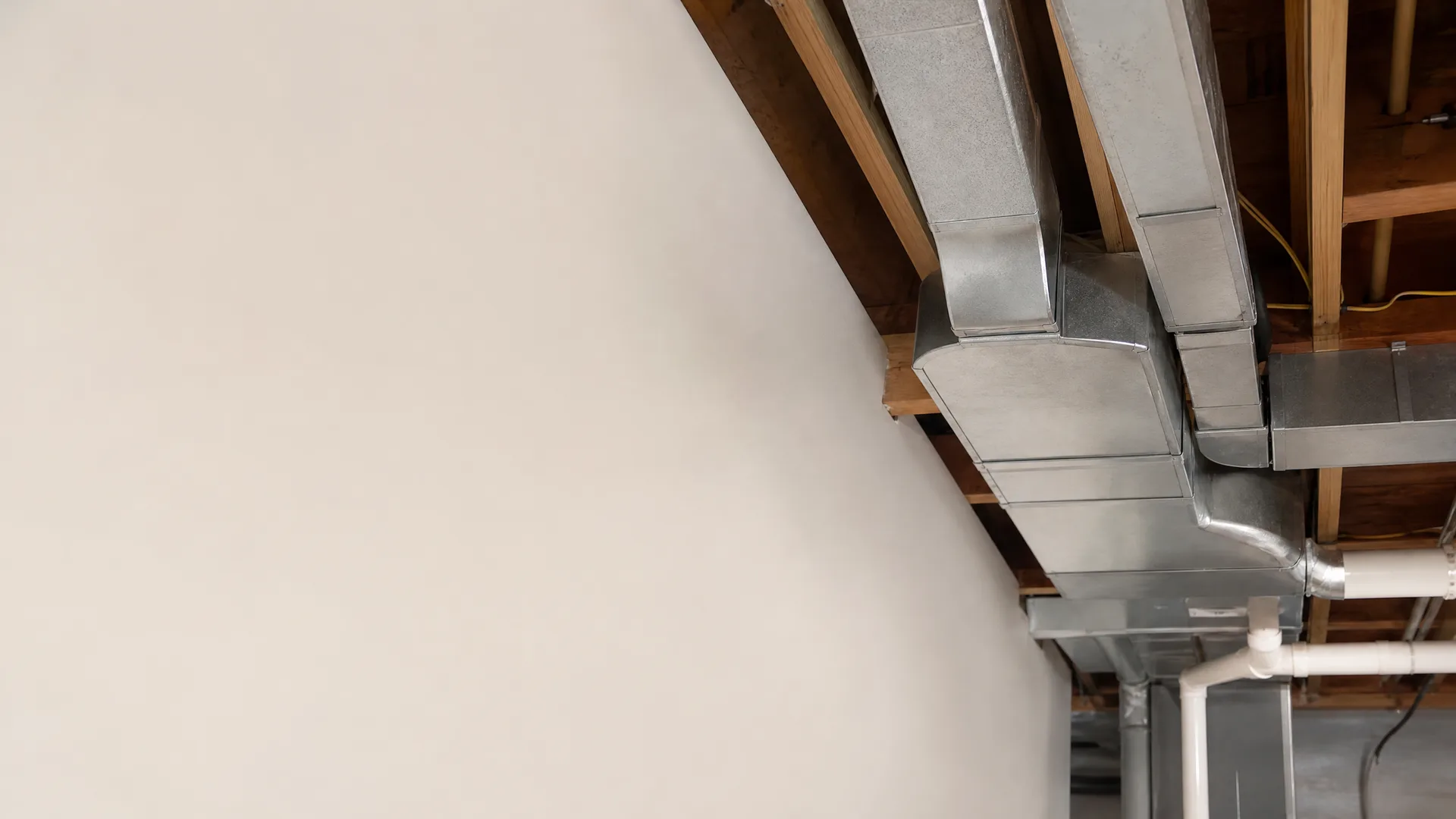
Interior basement ceiling with exposed wooden joists, sheet-metal HVAC ducts, and white PVC pipes beside a plain off-white wall.

Dust from the house itself

Skin, pet hair, and fabric fibers settle in a house no matter what the ducts are doing. That part is normal and every home deals with it. The difference shows up in how fast it comes back. If your furnace filter is gray within a few weeks or you're dusting the same shelf every few days, the ducts are likely adding to what the house already makes on its own.

Is the dust in your house actually getting worse

You dust the shelves and by the weekend they're gray again. It settles on the TV screen, collects along the baseboards, shows up in a fine layer on the ceiling fan blades days after you wiped them down. You might notice it worse near the floor vents or feel it in the air when the system kicks on, a little musty or just heavier. Some households notice it first as a cough that clears up when they leave the house, or eyes that itch more at home than anywhere else. None of that means your house is dirty. It usually means the air moving through your ducts is carrying more than it should, and until that's addressed, cleaning the furniture only buys you a few days.

  1. Dust and debris collect inside the ducts over months of use.

  2. Air pulled through leaky seams carries in attic or crawlspace dust.

  3. The blower sends that dust through every supply vent in the house.

  4. A brush and vacuum unit loosens and pulls dust from the duct walls.

Unfinished basement with bare concrete floor and walls, exposed wood joists, metal ductwork, a furnace unit, steel support posts, and a small window.
Ducts sealed tight move air from your rooms and back again without picking up anything extra along the way.
Empty basement with bare concrete walls and floor beneath an exposed wood-joist ceiling carrying galvanized sheet-metal ductwork, round ducts and pipes.
Open seams along these joists let the ducts pull in dust from the space around them every time the blower runs.
A woman in a cream turtleneck sweater stands beside a multi-pane window looking out at falling snow, with a dimly lit living room containing a lamp, sofa and shelves behind her.
A woman in a beige turtleneck sweater stands by a large window with snow-covered trees outside, in a living room with a lit lamp, sofa with cushions, and a wood stove with visible flames.
A woman with long dark hair in a beige knit turtleneck sweater stands beside a window with snow outside, looking off to the side, with a warmly lit living room containing a sofa, lamps and a coffee table behind her.
A woman with shoulder-length brown hair in a beige knit sweater stands near a window looking outside at falling snow and snow-covered evergreens, with a dimly lit living room, sofa, lamp, bookshelf and framed landscape painting behind her.

A duct system pro near you

A duct system doesn't fix itself. Once seams open up and attic or crawlspace dust gets pulled in, that dust keeps riding the air into every room with a supply vent, load after load, until someone gets in there and cleans the lines and checks the seals. You can keep dusting shelves and wiping down the ceiling fan, but if the ducts are the source, the gray film comes back within days. That's the part a rag can't reach. A contractor who works on duct systems in Knox County can look at what's actually running through your supply and return lines, find where the air is picking up dust it shouldn't, and clean it out. Getting that looked at now means you stop guessing at what's behind the dust and start dealing with where it's actually coming from.

What a dirty filter lets through

A filter only catches what passes through it, and a clogged one makes the blower work harder without catching any more dust. Once it's packed with lint and debris, air starts finding the path around the edges instead of through the media. That unfiltered air carries dust straight to the supply vents. Swapping the filter on a regular basis matters, but it won't stop dust that's entering the system from a leaky return before it ever reaches the filter.


What a clean duct still can't stop

Cleaning the inside of the ducts clears out what's already built up, dust, debris, pet hair, whatever has settled on the walls of the line over time. It doesn't close the gaps that let new dust in. If a return pulls air from the attic or crawlspace through an open seam, that air brings dust with it right after the cleaning is done. The ducts get cleaned out, and the house still goes gray on the same schedule.

Power here costs 13.47 cents per kilowatt-hour

At under 14 cents a kilowatt-hour, running the blower longer to chase dust around the house doesn't hit your bill hard the way it might elsewhere. That's not a reason to let dirty ducts keep recirculating it. Cleaning the lines fixes the dust. Running the blower more just moves it around faster.

EIA-861 2025

A filter cleaned on schedule still leaves a dirty duct system pushing dust through every vent, because the filter only catches what passes through the return before it gets there.

A duct system cleaned and sealed stops pulling in dust from the attic or crawlspace, so the filter is catching less to begin with and the air coming through the vents stays clean.

Basement ceiling with galvanized sheet-metal ductwork, wooden joists and subfloor, black and white pipes, above a concrete wall and floor.
Before you get your ductwork cleaning
Unfinished basement with bare concrete walls and floor, exposed wood joists, and galvanized sheet-metal HVAC ductwork and pipes running across the ceiling.
After you get your ductwork cleaning

What the dust in your house means

  • Dust that comes back fast after cleaning almost always traces to the ducts, not the housekeeping.
  • A sealed duct system stops pulling in attic and crawlspace dust every time the blower kicks on.
  • A clean filter can't make up for open seams feeding dust into the air behind it.
  • Once the ducts are cleaned and sealed, dust across the house drops without changing anything else.
  • Finding a contractor to look at your system is a form away, not another thing on your list.
  • The dust itself is the clearest sign of what's going on inside the ducts.

The dust settling on your shelves again a few days after you wipe them down is coming from somewhere. In most Knox County homes with a duct system, it's coming from the ducts. A seam that's opened up in the attic or under the house pulls in dust every time the blower runs, and that air goes straight back out through every vent you've got. Wiping surfaces or swapping the filter more often treats what's already landed, not what keeps arriving behind it. A filter catches what passes through the return. It can't do anything about dust entering the system somewhere else.

Knowing this changes what the fix looks like. It isn't a cleaning schedule for your furniture. It's getting the ducts themselves cleaned out and the seams that are feeding them checked and sealed. Once that's done, the blower is only moving air that was already clean, and the dust that kept showing up on the same surfaces within days stops having a source. Nothing else in the house needs to change for that to hold.

Getting to that point starts with having someone look at the system, and that part doesn't have to sit on your list for weeks. A form is what it takes to get a contractor who handles this looking at your specific setup. From there, it's their job to reach you and work out what your ducts need, not yours to track down who does this kind of work.

Interior room corner with sunlight from a window, showing peeling paint and damaged plaster on the wall above a white baseboard, a wooden cabinet with a pale bowl on top, hardwood floor and a patterned rug.
Interior corner of a room with tan walls, white profiled baseboard and window trim, a wood-plank floor in sunlight, and green foliage visible through the window.
An empty room corner with cream walls, white baseboard, two windows with deep sills showing green foliage outside, and a wood plank floor lit by sunlight.
Empty room corner with beige walls, white beadboard wainscoting, chair rail and baseboard, a window with green foliage outside, and sunlight casting leaf shadows on the wall above a wood floor.
Sunlit room corner with a multi-pane window, beige walls, white baseboard, wood floor with a woven rug, and a dark wooden cabinet holding a ceramic table lamp below a framed picture.

Get matched with a duct system pro in Knox County

Send it once and finding someone is no longer on you.

Get a local pro

Sending the form costs nothing.




