

Metal ducts, sealed and dry
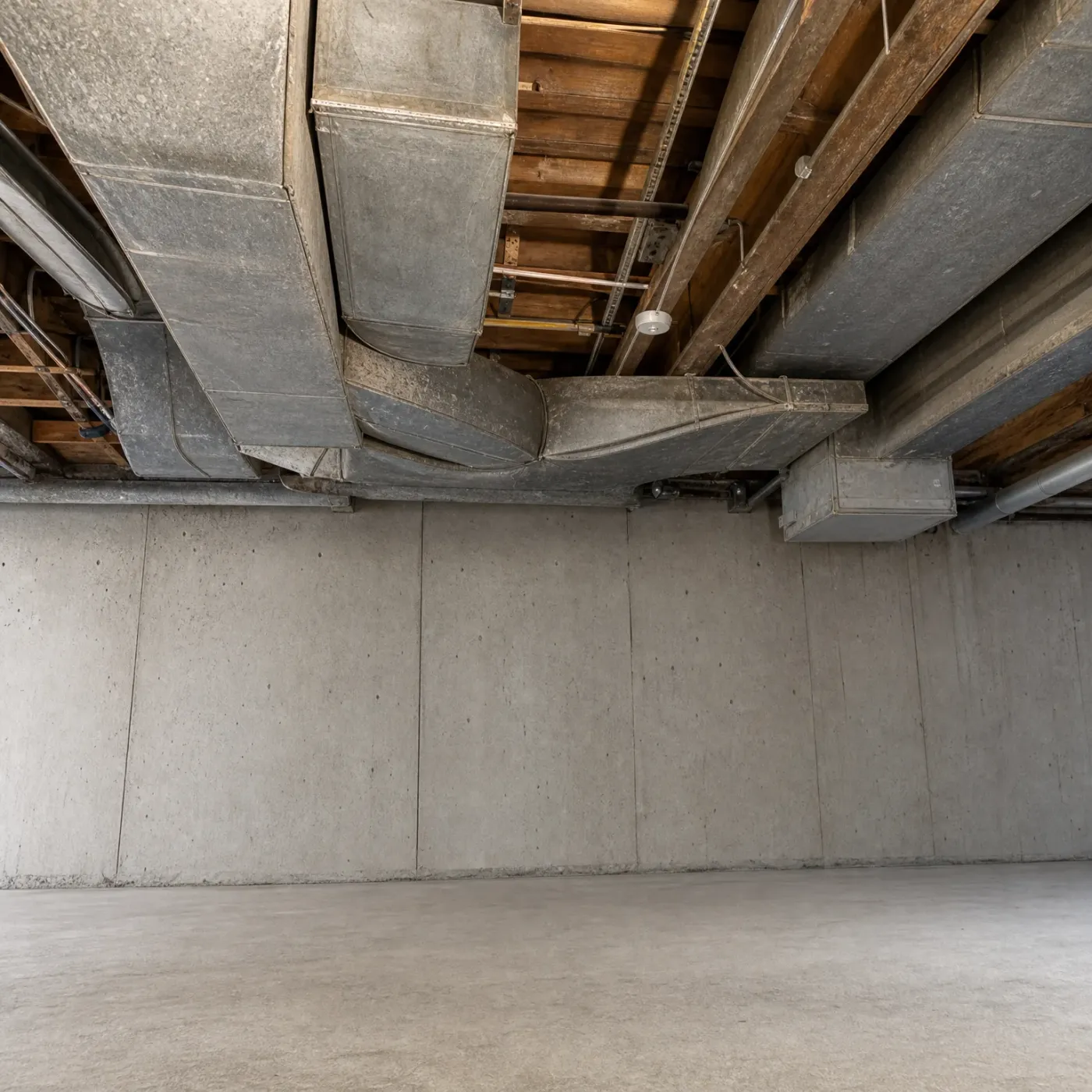
These runs are rigid metal, sealed at the joints, sitting above a dry concrete floor. The furnace ties into them cleanly along the wall. Air moves through without anything for mold to grab onto.
Get matched with a pro who works on ducts in Knox County.
Find a pro near meThat musty smell is almost always moisture sitting somewhere in your duct system or on the evaporator coil inside your air handler. Knoxville summers run long and sticky, and when warm humid air hits a cold coil, the coil sweats. If the condensate drain is draining slowly or the coil stays wet between cooling cycles, mold and mildew start growing right on the metal and in the duct lining near it, and every time the blower kicks on, it pushes that smell through the vents into your rooms. Sometimes it's not the coil at all but a damp spot in ductwork that runs through a crawlspace or attic. Either way, the smell is a sign of standing moisture, not dirty air by itself, and it tends to get worse through the humid months and ease up some in winter. It won't go away on its own, since the mold keeps growing as long as the moisture is there. Cleaning the ducts and coil removes what's growing now, though whatever let the moisture collect in the first place is worth finding too.
Half the homes here were built by 1985
Half the homes in Knox County were built in 1985 or earlier, and ductwork that old has had decades to collect dust the coil can turn damp.
Heat runs October through April
Cooling runs May through September here, five straight months of warm air meeting a cold coil, which is plenty of time for moisture to settle into the ducts.
Cooling runs May through September
Heat runs October through April, so the system switches off and on with the seasons, and dust sitting in dry ducts turns musty once summer humidity returns.
ACS 2020-2024 · NOAA nClimDiv 1991-2020
The coil is the starting point. Every time your AC runs, it pulls humidity out of the air and that water collects on the coil's surface, then drips down into a shallow pan below it. A line carries that water out of the house. When it's clear, you'd never know any of this is happening. When it clogs with algae or dust, the water has nowhere to go but back into the pan, and a pan that stays full stays wet long after the system shuts off. That constant wetness is what lets dust sitting in the return duct start to break down instead of just sitting there dry. A filter is supposed to catch most of that dust before it reaches the coil. One that's overdue lets more through, so more of it ends up stuck to a wet surface instead of trapped in the filter where it belongs. Where your ducts run matters too. Flex duct through an attic or crawl space depends on its insulation jacket staying intact. A gap there lets warm, humid air from outside the duct meet the cooler air moving through it, and you get the same condensation happening along the duct wall itself. None of this smells strong while the blower is idle. The moment the system kicks on and air starts moving again, it carries whatever's been sitting on that wet coil and inside that duct straight into the room with it.




If the smell only shows up when the AC is running, the problem is likely sitting at the coil or the drain pan, and it travels from there into whatever room the air reaches. That is why one musty register rarely stays the only one for long. A drain line that backs up does not always show itself as a puddle. It can sit in the pan and soak into the subfloor or the ceiling below the air handler before you ever see water. Meanwhile the dust already in your return duct gives mold something to grow on, and with the AC running May through September, it has months to work with. If anyone in the house has allergies or asthma, they may notice the air feels off before the smell is strong enough for everyone else to catch. None of this clears up on its own. Another summer running the system as is just gives the growth more duct to spread into, and more of it to clear out later.
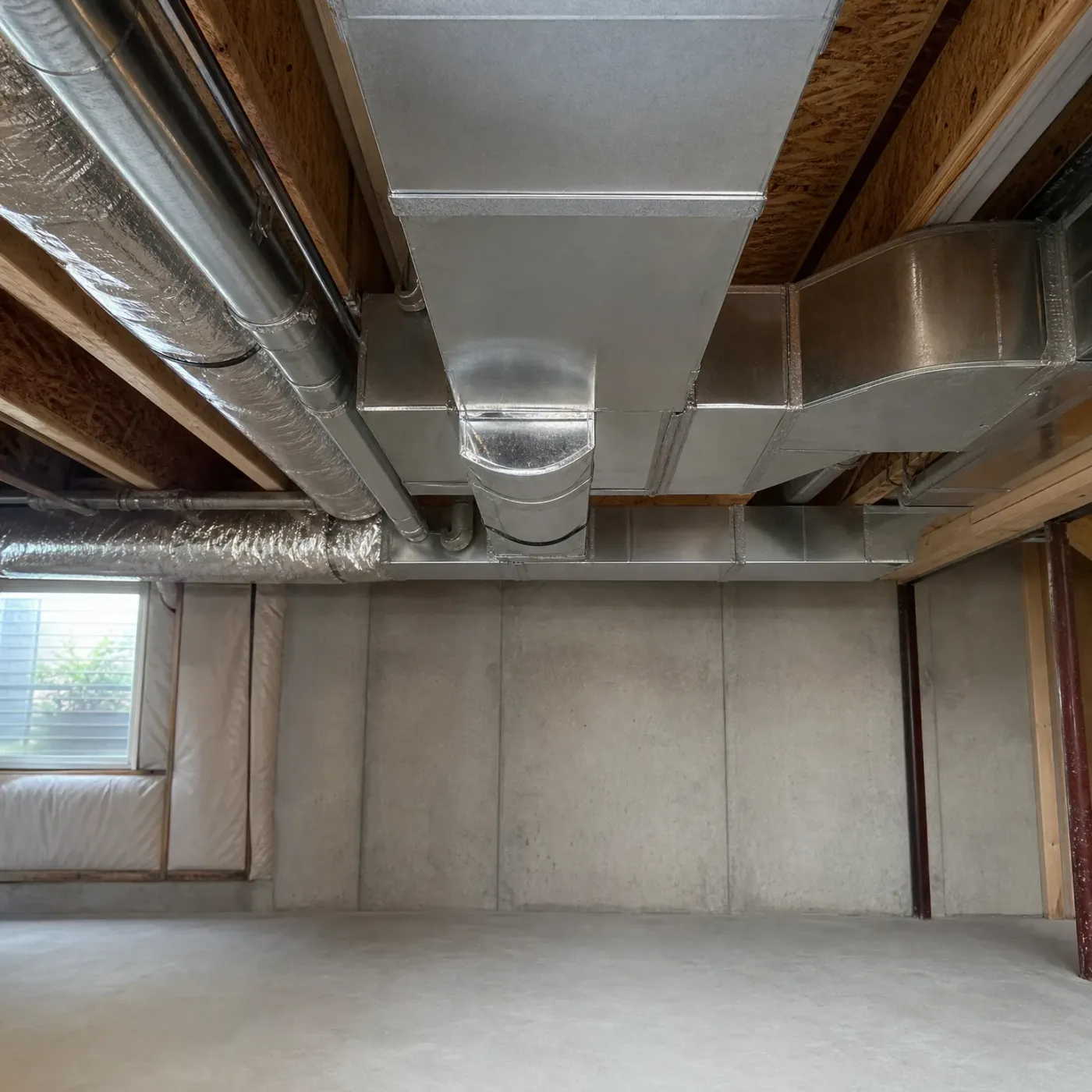
Warm humid air hits the cold evaporator coil and the coil sweats.
Water drips off the coil into the condensate drain pan below.
The drain line carries that water out of the house.
A clog or sag lets water sit and mold starts growing.


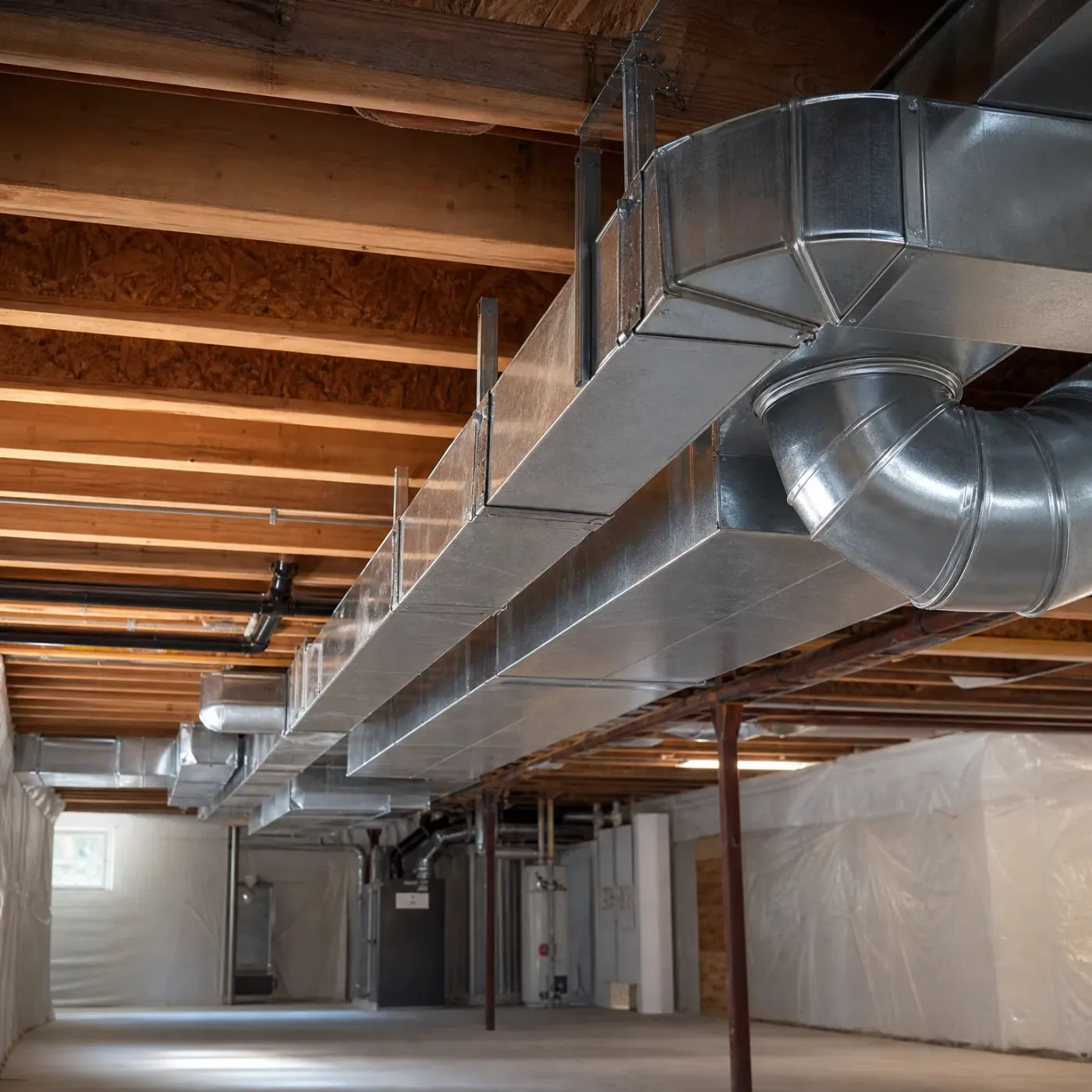
The pro who gets in touch is licensed in Tennessee and works in Knox County.
Your request goes to a Knox County pro who takes ductwork jobs.
No fee to send it, and nothing to sign.
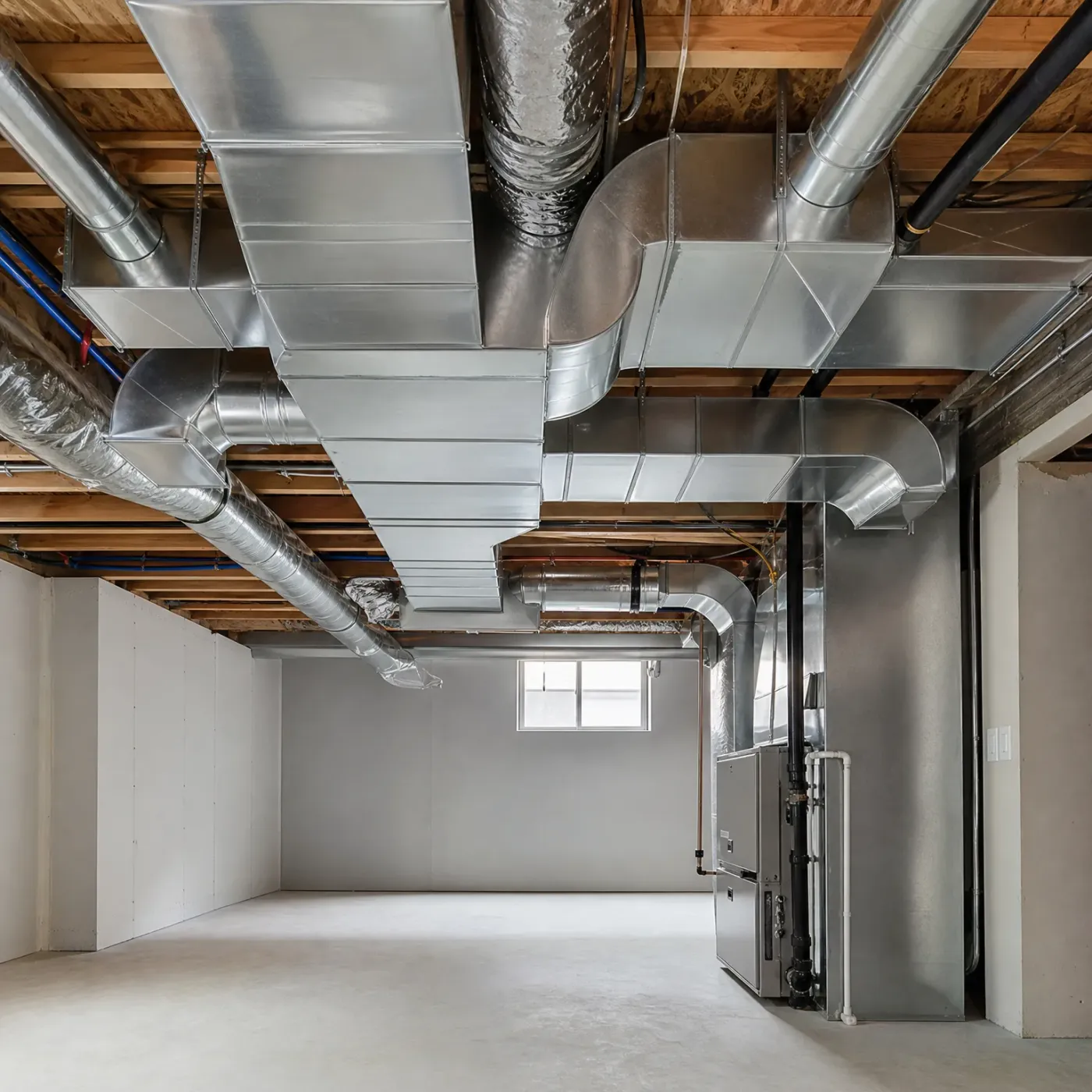
These runs are rigid metal, sealed at the joints, sitting above a dry concrete floor. The furnace ties into them cleanly along the wall. Air moves through without anything for mold to grab onto.
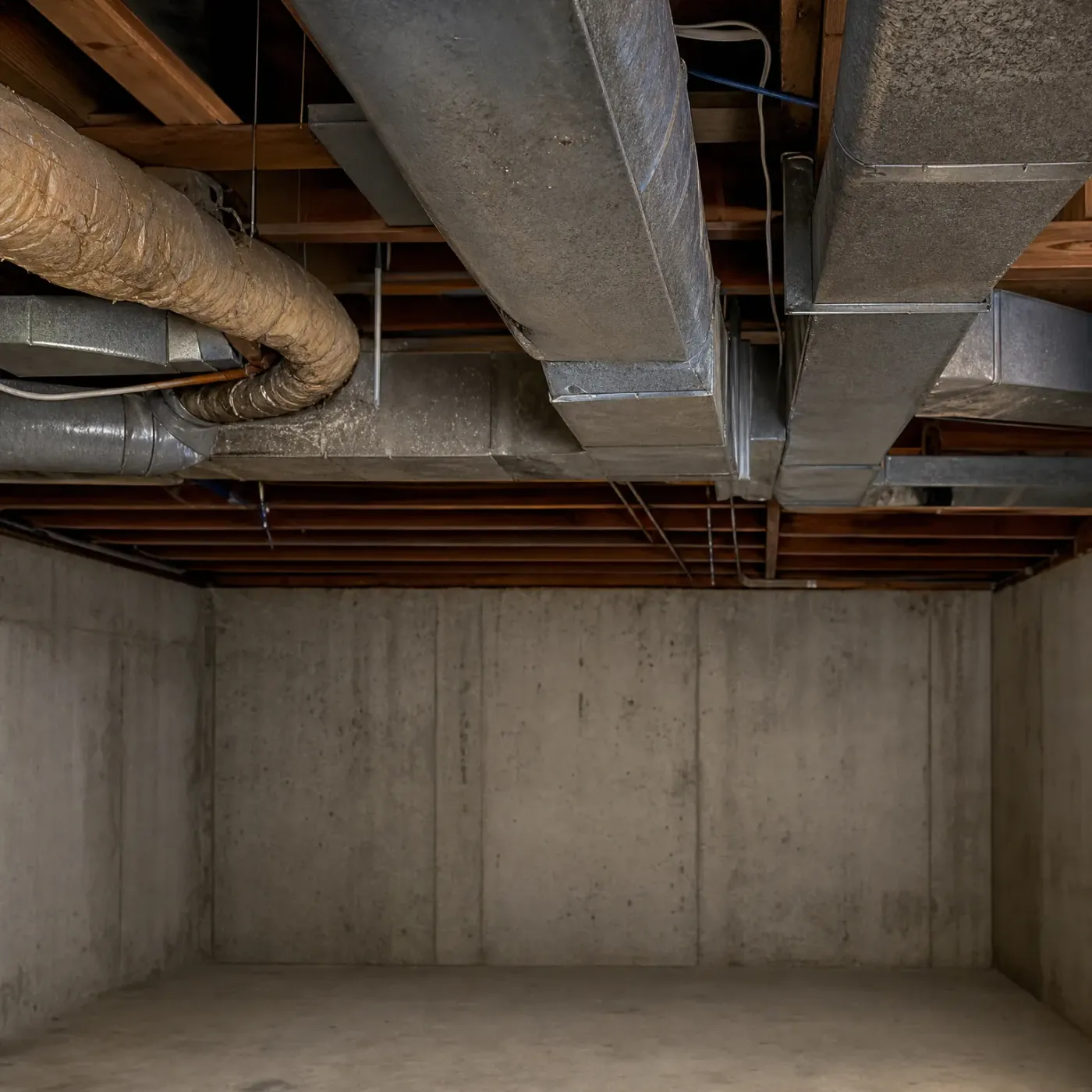
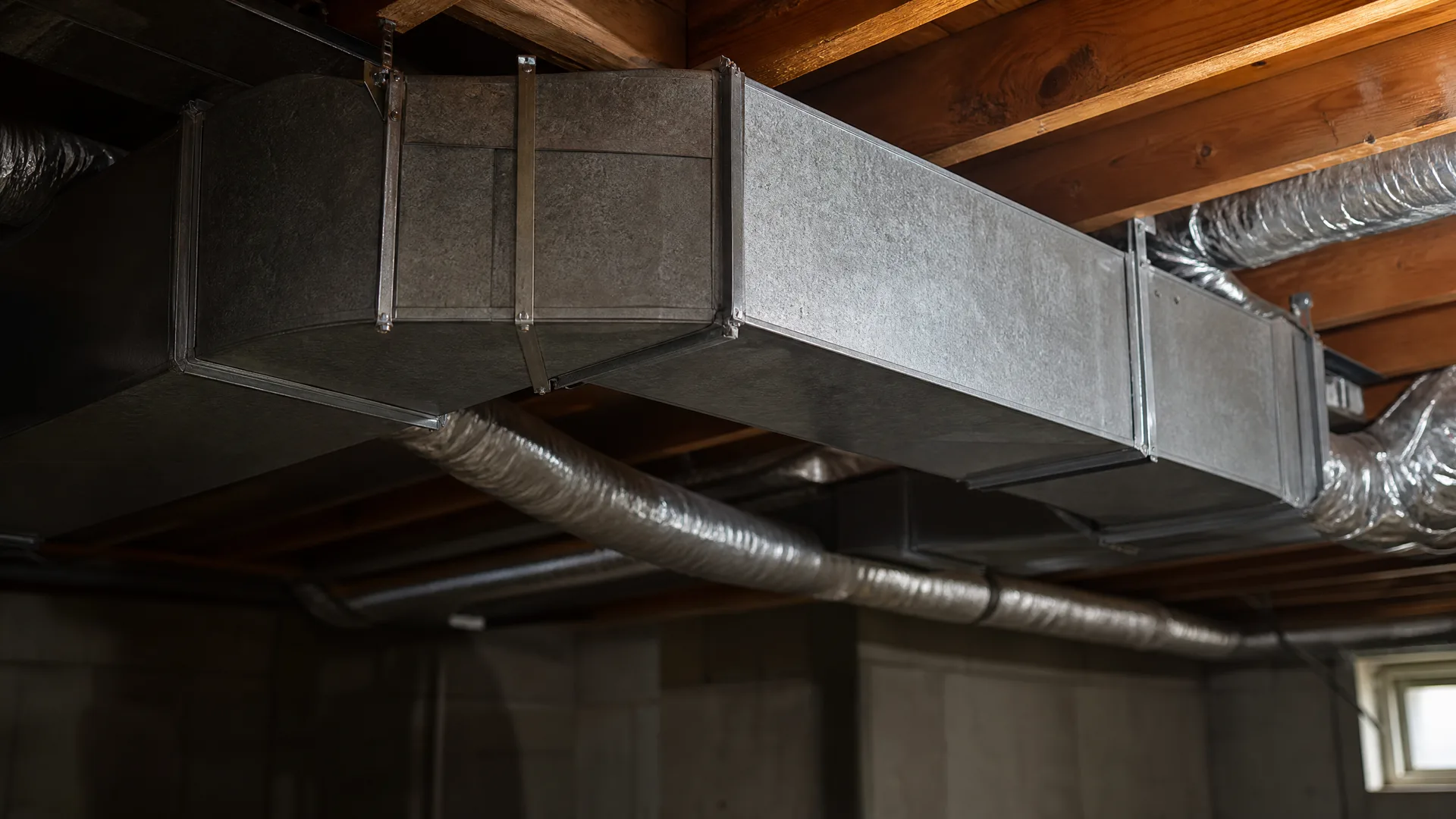
Here the ductwork runs through open floor joists with conduit and wiring crowded into the same space. Flex duct like this can sag and settle against cold surfaces, and the tight bay makes it harder for a tech to reach the whole run during a cleaning.
That coil has to run during five months of sticky Knoxville summer, and at 13.47 cents per kilowatt-hour, a coil caked with dust works harder to cool the same air. A clean coil and clear drain line keep that cost from creeping up along with the smell.
EIA-861 2025

You're home on a Saturday in April, windows still shut from the cool night before, and the AC kicks on for the first real stretch since winter. You catch it right away, that damp, closed-up smell drifting down from the ceiling vent in the living room. You get up on a chair to look and there it is, a soft gray film of dust caked across the grille slats. When you run a finger along the coffee table underneath, it's covered too, a fine layer that wasn't there last week. The TV stand, the lamp shade, all of it dusted the same way, like it settled overnight while the system was off all those mild March days.

A musty smell from your vents points to water sitting somewhere it shouldn't, on the evaporator coil, in the drain pan, or in a duct run that's been holding moisture against it for years. Which one it is changes what needs to happen next. A dirty coil needs a different fix than a sagging flex run against bare joists, and cleaning the ducts alone won't help if the coil's the real source.
A contractor who works on Knox County duct systems every summer has seen both and knows what to check first. Since you're matched with one contractor rather than several, the person who calls you is already thinking about your house specifically, not working down a list. They can look at your coil, your drain line, and your ductwork, and tell you which one is actually causing the smell before anything gets pulled apart.

Find a duct system cleaning pro in Knox County